Ireland must retain triple lock to protect peacekeeping role, says former PDForra chief
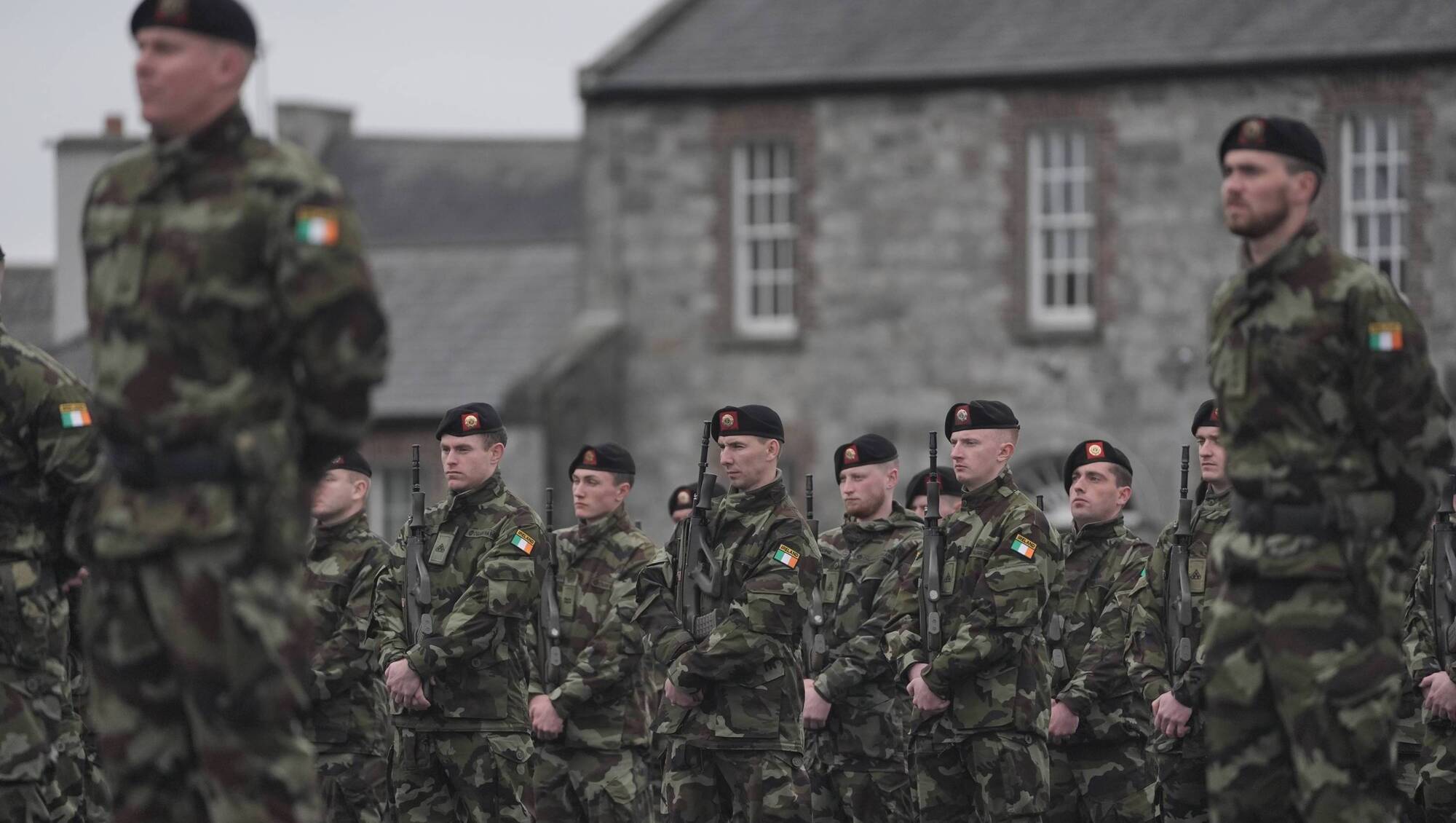
Men and women of the 125th Infantry Battalion at Custume Barracks, Athlone, Co Westmeath, ahead of their six-month deployment to South Lebanon as part of United Nations Interim Force in Lebanon (Unifil) in October 2024. Picture: Brian Lawless/PA Wire
A former general secretary of the country’s largest military representative association has said Ireland must preserve the so-called triple lock and pursue a policy of active neutrality to continue in its peacekeeping role.
Former PDForra general secretary Gerry Rooney said Ireland’s first major overseas deployment took place in 1960, when troops were sent to the Congo as part of the UN mission ONUC.
“This deployment was enabled by the Defence (Amendment) Act 1960, which established what is now known as the triple lock. Within this framework, overseas peacekeeping missions require approval from the Government, Dáil Éireann, and either the UN Security Council or the UN General Assembly," explained Mr Rooney.
"This ensured Ireland’s participation in such missions is aligned with international law and remained consistent with the Constitution."
At the time, taoiseach Seán Lemass and external affairs minister Frank Aiken maintained UN peacekeeping was compatible with Irish neutrality, as it did not involve alignment with military alliances such as Nato.
Instead, the UN was viewed as a legitimate system of collective security, distinct from Cold War military blocs. Peacekeeping was seen as part of Ireland’s active neutrality.
Since then, the Defence Forces have taken part in more than 30 peacekeeping missions, maintaining continuous service with the UN and earning a reputation for impartiality and suitability for peacekeeping roles.
In March 2025, the Government proposed reforms to the triple lock, including removing the requirement for UN approval and replacing it with approval from the EU or other regional organisations, potentially including Nato.
The Government has argued the reform would remove the need for UN Security Council approval for Irish overseas deployments, preventing permanent members — notably Russia — from exercising a veto. Ministers say lifting this constraint would strengthen Ireland’s ability to pursue an independent foreign policy, although Russia has never vetoed an Irish peacekeeping mission.
The proposed reliance on regional organisations raises other questions, according to Mr Rooney.
"Under Article 53 of the UN Charter, bodies such as the EU can already lead peacekeeping missions with UN approval. The EUFOR mission in Chad, in which Ireland played a significant role, demonstrates that this model is already in operation. The EU has never conducted a large-scale peacekeeping mission independently of the UN,” Mr Rooney said.
“Furthermore, shifting decision-making to the EU may not reduce the risk of vetoes. The EU has 27 member states, each with veto powers in certain areas. Achieving unanimity in this context could prove even more difficult, potentially eliminating rather than facilitating peacekeeping involvement.” he said.
Ireland’s approval of the Nice and Lisbon treaties was based in part on assurances the country could retain the triple lock and control over defence and foreign policy.
“As a result, some commentators argue removing the triple lock would require a referendum to be legally and democratically valid. Public opinion continues to strongly support neutrality, with recent polling indicating clear majority backing,” Mr Rooney said.
In 1960, the government and public supported neutrality and the triple lock, with UN peacekeeping seen as part of being actively neutral.
“Moving away from this position towards other regional organisations won't increase Ireland’s involvement in peacekeeping and could weaken its long-standing reputation for impartiality in this area.
"Maintaining the triple lock and strengthening engagement with the UN alongside other neutral states would offer a more effective path for sustaining Ireland’s peacekeeping role and neutrality,” he said.
CONNECT WITH US TODAY



Be the first to know the latest news and updates