Planning decision for Cork incinerator delayed for 10th time
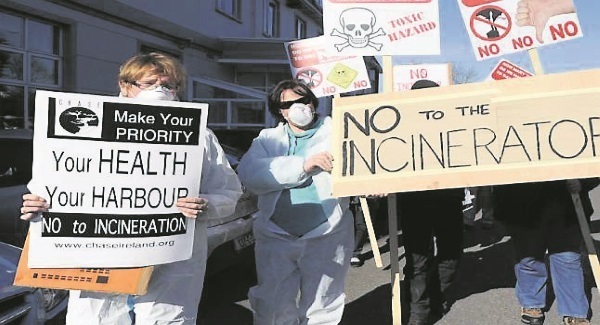
An Bord Pleanála was due to decide by tomorrow whether to give the go-ahead to Indaver Ireland to build a €160m, 240,000-tonnes-a-year waste-to-energy facility at Ringaskiddy, Co Cork.
A spokesman for the board confirmed to the that the deadline of February 28 will not be met.
“The case will be completed within the next three months,” he said.
This timeframe is to give the board “enough latitude” to reach a decision.
He said the case is “at a pivotal point” and there is “a certain amount of work to be done” before the process is completed. He declined to elaborate further.
The planning authority’s own guidelines state there is “a duty on the board to make its decision as expeditiously as is consistent with proper planning and sustainable development and to avoid delays”.
There is also a statutory objective to make decisions within 18 weeks. The planning application was lodged in January 2016, an oral hearing took place in April/May of that year, and a ruling from the board was due on July 12, 2016. It is the third time since 2001 that Indaver has applied to build an incinerator in Ringaskiddy.
Environmental lobby group Chase (Cork Harbour Alliance for a Safe Environment) said that, in the two years since the application was lodged, a number of developments have taken place which demonstrate incineration is no longer a requirement to deal with waste.
Chase spokeswoman Linda Fitzpatrick said that a report from the Environmental Protection Agency (EPA) on progress to EU targets, published in December 2017, “shows that Ireland has already met or is on target to meet its EU waste framework directive and landfill directive targets”, with the exception of two end-of-life vehicles directive targets missed for January 2015.
“Any case presented by Indaver to An Bord Pleanála regarding ‘need’ for the proposed incinerator on the basis of compliance with waste framework directives should be struck out at this stage, as this report shows Ireland does not need further incinerator capacity in order to meet its EU obligations,” Ms Fitzpatrick said.
The European Commission issued warnings on incinerator overcapacity in January 2017, Ms Fitzpatrick said, “with recommendations to phase out public money for incinerators, to introduce a moratorium on new facilities and to introduce or increase incineration taxes as part of a commitment to move efficiently towards a closed-loop, sustainable circular economy”.
Separately, the board is considering a proposal to build a €180m motorway, the M28, linking Cork city to Ringaskiddy. The project would mean an upgrade of the existing primary route, the N28, along which Indaver trucks would travel to reach the incinerator. The board’s spokesman said a decision on this proposal is due on April 12 and the case was “going along well” at the moment.
The Ringaskiddy incinerator proposal is to treat household, commercial, industrial, non-hazardous, and suitable hazardous waste and generate approximately 18.5MW of electricity for export to the national grid.
CONNECT WITH US TODAY



Be the first to know the latest news and updates