'I was 41 for my first pregnancy' - Meet the mums proving that age is just a number

Mothers giving birth after 40 has become far more common in recent years, and these women show that there is no wrong time to start a family.
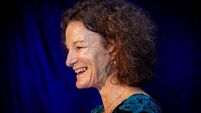
From left: Orla Clancy, Vicky McCabe, Catherine O'Keeffe, Joanne Clancy Hynes with son Dylan.

From left: Orla Clancy, Vicky McCabe, Catherine O'Keeffe, Joanne Clancy Hynes with son Dylan.

Galway mum Joanne Clancy Hynes was 41 when her son Dylan was born 11 years ago

“Everyone was so happy for us that we were pregnant. I’d get smiles, even from people on the street, in supermarket queues.”

A senior brand manager for a health supplement company, the 52-year-old never felt people were looking at her “like an old mother”. If anything, this kind of judgement was more “internal” to herself.

Joanne Clancy Hynes with son Dylan

“I’d arrive for my health checks and multiple women would be down for the same checks at the same time. We’d be asked for our date of birth and when I’d say 1974 — and the next person would be 1986, 1990 — internally I’d be going ‘Oh God!’

“Sometimes I’d get a look from another mother. I never took it as negative — it was just the reality.”

However, after having her son — Clancy Hynes had a miscarriage before her pregnancy with Dylan and again after he was born — she did experience hurtful remarks.

“People saying ‘Poor little fella, no siblings’, and ‘you can’t leave him on his own — when are you going to have the next?’ That hurt to the core,” she remembers.

Clancy Hynes met her husband, Thomas, at 38: “We were realistic that we mightn’t be able to have children.” She would like people to be “acutely aware that they have no insights into someone’s personal life” — and that thoughtless comments can be damaging.

According to CSO data, the 10 years between 2013 and 2023 saw an almost 25% increase in births to mothers 40 years and over. And 2023 saw the highest number of babies born to women 45 years and over — 408 births, up 80.5% since 2013.

Menopause coach and founder of wellnesswarrior.ie Catherine O’Keeffe was thrilled to get pregnant with her third child at 41. “A family member asked if I was nuts — to add insult to injury, I’d had a miscarriage a few months before.”

The comment didn’t surprise O’Keeffe. “People say the weirdest things. Fourteen years on, people might be a bit more guarded but it’s still there — ‘You’re leaving it too late’, and ‘Is it fair on the child?’”

Catherine O'Keeffe of the Menopause Summit became pregnant with her third child at 41

Even a five-minute look online throws up questions with a negative bias that are bothering women expecting babies — often first babies — in their 40s.

Examples include “Is it irresponsible to have babies in your 40s?” and “Do you ever worry as a first-time mom after 40 that you won’t be around as long for your child?”

Women confide feeling nervous that friends and family will think they’re “mad”, and have had comments from similarly-aged friends like “I wouldn’t want to have another at my age”.

Thoughtless comments

Balbriggan-based Vicky McCabe, 54, has two daughters, aged nine and 12. Married to Alan and a full-time civil servant, she had her first child at 42, her second at 44.

I was 41 when I first became pregnant. I had her naturally, no intervention. But booking my appointment, I was told, ‘We’re not going to let you go past your due date, you’ll definitely be induced’.

 Vicky McCabe, who had her first child at 42 and her second at 44
Vicky McCabe, who had her first child at 42 and her second at 44

“There was no conversation about what my plan was. It was ‘this is the plan because of your age’.” After having her first child, what surprised McCabe was the number of women who’d say hello to the baby in supermarkets or coffee shops and after hearing her age, say “fair play to you — there’s hope for me”.

But she experienced the opposite, too. In her early 40s at the time, McCabe looked younger, which most likely saw off some potential negative comments. “It was only when I’d say my age that some people said: ‘How are you going to manage? You’re going to need some energy’. And I’ve also heard, ‘How old will you be when they’re teenagers?’”

Such comments usually came from strangers rather than from family. “My family knew how much I wanted a baby.”

She also got asked a lot why she had waited. “But I hadn’t deliberately waited. I didn’t meet the man I wanted to spend my life with until my late 30s. Luckily, I did — luckily, he wanted children too.”

After she’d had her girls, she was also persistently asked, “When are you going to give him a boy?” Such questions, McCabe says, are personal and shouldn’t be asked. “You don’t know what somebody’s journey is.”

In more recent years at school pick-up, she has encountered the grandmother presumption. “One woman said, ‘I’m here to collect my granddaughter, like yourself’. It’s happened a couple of times. It brings it back to you: I could be a grandmother, my younger sister is.

“At the time I thought, ‘The cheek of you’, but you can’t account for people’s perceptions — and that some people don’t put their brain in gear before they speak.”

Conscious choices

Ballincollig-based Orla Clancy, 50, is mum to AJ, 10, and Aaron, eight. “I had AJ at 39, Aaron at 41.”

Waiting to start her family was a conscious choice for the gym-owner. “I was on the Irish kickboxing team. I was almost 38 by the time I was ready to hang up my gloves and have a family.”

Orla Clancy gave birth to her sons AJ and Aaron at 39 and 41 respectively. 

But after coming off the pill, she wasn’t menstruating. “A fertility specialist said I’d left it too late. I felt panicked. I pushed for blood tests. All [relevant] bloods came back above normal for my age — a great relief.”

Prescribed Clomid to regulate ovulation, and also receiving acupuncture, Clancy got pregnant with AJ. She and husband Pat opted out of prenatal screening for chromosomal conditions. “We felt we’d deal with any issues when he was born — and if he had Down syndrome, well, we’d still have our child.”

But she wasn’t able to do this when pregnant with Aaron. She recalls the doctor and a midwife being surprised by her decision not to do the test.

“They couldn’t understand why I was saying no. They said the chances of having a chromosomal disorder were higher because of my age.

“I came out, rang Pat, saying ‘we’ve made a mistake — we shouldn’t be having a baby at this age’. I was very upset.”

Orla Clancy at her gym in Ballincollig. Picture: Chani Anderson

Clancy decided to undergo the test. “Waiting for the result, I was very worried. And of course it all worked out perfectly fine … I did feel judged, that I shouldn’t be having a baby at my age — that I was risking a baby who’d need extra medical care.”

Beyond that, Clancy hasn’t had any negative comments about becoming a mum on the cusp of, and in her 40s. “I’ve never felt my age. I’m fit, healthy, and actively compete in weight-lifting.”

McCabe has heard lots of commentary on how having children later keeps you young. “People often say, ‘Don’t they keep you young? Don’t they keep you going?’ And it’s true, because you’re doing young things. I just celebrate and say: It’s all life.”

x

More in this section

Cookie Policy Privacy Policy Brand Safety FAQ Help Contact Us Terms and Conditions

© Examiner Echo Group Limited