My Childhood with Cormac Ó hEadhra: In a large family I had to hold my own and stand my ground

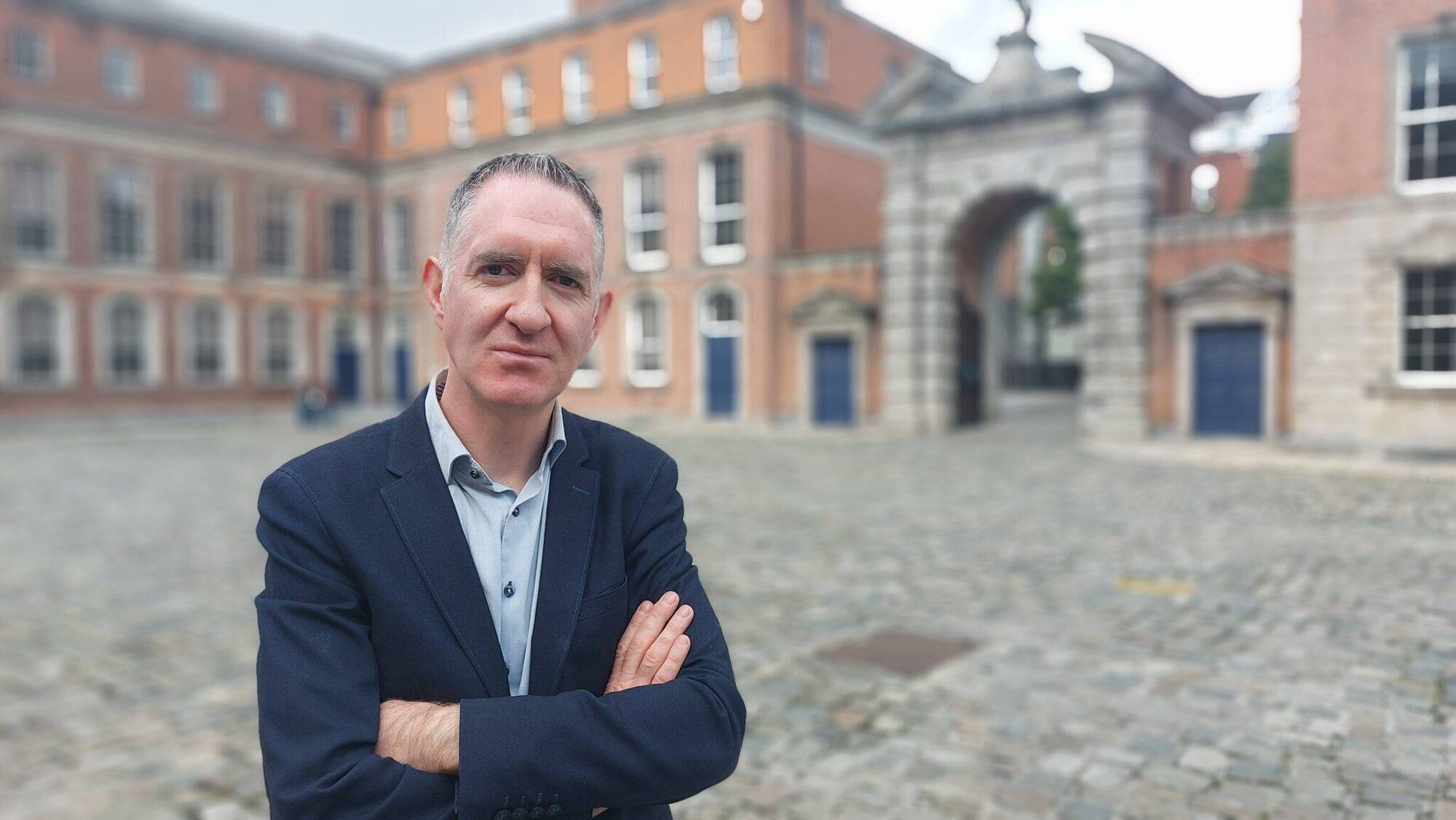
Journalist Cormac Ó hEadhra was raised in An Cheathrú Rua in the Connemara Gaeltacht
Cormac Ó hEadhra, says his mother, who passed last year, was a ‘force of nature and a real ball of energy’.

Cormac Ó hEadhra, says his mother, who passed last year, was a ‘force of nature and a real ball of energy’.

Cormac Ó hEadhra grew up in what he calls “two-channel land” and wonders if the lack of TV viewing options he had as a child had a part to play in making him the broadcaster he is today.

“We had no choice but to watch everything from Today Tonight and Out of the Blue with Derek Davis to The Pure Drop and Dallas,” he says. “I learned about and became interested in all sorts of things as a result, which I think stands to me now.”

He and his five siblings would often playact being on TV. He says one of them would be “taoiseach, and another would be Brian Farrell or John Bowman with the tough questions. The rest of the family was the audience”.

Ó hEadhra was raised in An Cheathrú Rua in the Connemara Gaeltacht. His earliest memory of life there is of his family at the table.

“The memory is vague but my parents and all six of us kids are there, and everyone is laughing and chatting,” he says.

Cormac Ó hEadhra as a three-year-old. 

He wonders if the memory has lingered because the times the family were all together became fewer as the years went by.

“I’m the fifth of five boys and one girl, and my oldest brother is 10 years older than me,” he says. “By the time I was eight, he was moving out, and one by one, the others did too. It was strange for my younger brother and me to witness the family at home growing smaller and eventually only having the two of us and our parents around the table.”

The childhood he had when they were all together was dominated by sports.

“Football is huge in our area, so we mostly played that,” says Ó hEadhra. “But when Galway won the hurling final in 1988, there was a while when we’d pretend to be the winning team. We also played rugby, soccer, boxing, snooker, anything really.”

The siblings were joined in those games by neighbouring children, as well as by three sets of cousins who lived nearby. Ó hEadhra’s older brothers would assign them all into teams and organise leagues and tournaments.

They would also commentate on the games “to ramp up the tension,” says Ó hEadhra: “They’d say things like ‘Cormac’s psychology is shaky at this point’ to try to put me off a shot, or they would pretend to be Mícheál Ó Muircheartaigh, so we could imagine we were playing in Croke Park.”

Ó hEadhra believes that growing up in such a large extended family helped shape the man he has become.

“I had to hold my own and stand my ground,” he says.

Yet he also questions whether it might have been in his nature to be shy and says: “There were times I felt self-conscious and I also blushed easily. I experienced anxiety in my 30s. I look back now and wonder whether my childhood self-consciousness might have been connected in some way.”

In the next breath, he shrugs it off and says it didn’t affect him “to any detrimental degree. My childhood growing up in a big family near my cousins and by the sea overlooking the Aran Islands was idyllic”.

Ó hEadhra is hesitant when asked, but one of his first romantic interests may have been a girl who came to his Gaeltacht village to learn Irish one summer.

Cormac Ó hEadhra on his his Confirmation day. 

Teenage crushes aside, he believes having the students in his home enhanced his childhood: “We all gained confidence from interacting with them and learned to take pride in our language. Having people come to our village from all over Ireland to learn Irish made us not take it for granted.”

Ó hEadhra’s mother Bríd, who was known as Baby, died last year, and he becomes upset when talking about the type of woman she was: “She was a force of nature and a real ball of energy. She was always positive and genuinely funny. If ever I was down about something, I’d call her for a chat, and she’d lift me back up."

His father Liam is still alive and well at the age of 85. He earned his living as a factory worker and builder, and was also a talented musician who played fiddle and flute with the Glenside Céilí Band. He is so well read that Ó hEadhra believes “there isn’t a subject when it comes to history or politics that he couldn’t give a lecture on”.

His father would often get the children involved in jobs such as gardening, and Ó hEadhra says it was while they were working side by side that he would impart any advice he had to give: “Dad was never didactic. He would teach by doing and tell us what he thought in a way that never seemed like he was telling us what to do.”

Ó hEadhra’s turn to leave home came when he was 18. He studied finance, computing, and enterprise at Dublin City University, and he recalls struggling to adjust to life in Dublin.

“I became quiet in myself for a while, and in retrospect, I think I probably found it intimidating,” he says.

“It took a few months to find my feet away from An Cheathrú Rua and my family network. Luckily, I had a few friends from home with me, which made the adjustment a little easier.”

These days, he still lives in Dublin with his wife Ruth and their two children, Eoin and Cian. He can be heard on RTÉ Radio One’s The Late Debate every Tuesday, Wednesday, and Thursday and on Saturday with Cormac Ó hEadhra

Cormac Ó hEadhra in front of the Old Sate House, Boston, filming for TG4. 
  • Ó hEadhra's  two-part documentary Réabhlóid Mheiriceá: Na Laochra Gael, about Irish people who fought in the American War of Independence, recently aired on TG4 and can be watched on the player

More in this section

Cookie Policy Privacy Policy Brand Safety FAQ Help Contact Us Terms and Conditions

© Examiner Echo Group Limited