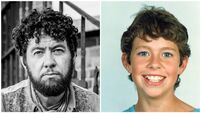
Colman Noctor: Given the choice, I would choose life without ADHD

However, I have found that surrounding myself with patient, compassionate people is crucial to my wellbeing
Colman Noctor: Given the choice, I would choose life without ADHD

Colman Noctor: ‘ADHD is not something you outgrow. It evolves with you, quietly shaping how you think, feel, relate, and struggle’ Picture: Patrick Browne

A FEW weeks ago, while speaking on a pre-recorded podcast, I mentioned — almost in passing — that I have an ADHD diagnosis. It wasn’t planned. It simply slipped out, as these things sometimes do when you are speaking candidly.

I am acutely aware that ADHD is currently being discussed almost everywhere: across social media, podcasts and the broader media landscape. Increasingly, public figures are sharing their diagnoses, often in ways that feel confessional or celebratory.

Ricky Gervais captures the moment perfectly when he jokes about people claiming to have ADHD, saying they “took the test five times and passed it on the fifth”. This is funny because it touches a nerve.

There is growing suspicion that ADHD has become fashionable, something worn as an accessory rather than a complex neurodevelopmental condition. Which is precisely why I have avoided discussing my own experience for so long.

I was diagnosed with ADHD 18 years ago, long before it became a trendy talking point. I grew up in the 1980s, a time when mental health was rarely discussed. 

My mother, however, was ahead of her time. Aware of my chronic forgetfulness, she developed small but impactful strategies to help me. One example was a list written on yellow paper and sellotaped to the bottom of my rugby bag that simply read: ‘Gumshield, 2 socks, shorts, towel and boots.’

I didn’t go looking for an ADHD diagnosis; it was suggested to me that I should. How could I have ADHD, I argued, when I already had a master’s degree? But when I rooted through my old school reports, I found numerous comments about my inattention, inability to live up to my potential, and my proclivity for being over-talkative.

I barely scraped through the Leaving Cert and chose psychiatric nursing largely because it was practical and did not require attending college.

But I did well academically when working on topics that interested me. My master’s thesis was a psychoanalytic interpretation of my favourite fictional character, Harry Potter. I was also fascinated by social media, and so my doctoral research explored the psychodynamics of why someone might take a picture of their blueberry muffin and feel compelled to share it with hundreds of people.

Even after receiving my diagnosis, I remained unconvinced. I didn’t want it to be true.

In 2008, the stigma around ADHD felt far heavier than anything we see today. It was poorly understood and frequently dismissed. 

By then, I was building a professional identity as a psychotherapist, someone assumed to embody focus, consistency, and emotional regulation. So admitting that I struggled in those very areas felt too risky.

I learned how to work around it, and, in some cases, to utilise it to my advantage. But ADHD is not something you outgrow. It evolves with you, quietly shaping how you think, feel, relate, and struggle.

Some aspects of ADHD have undoubtedly been advantageous, particularly “hyperfocus”. When I am engaged in work that stimulates me, like writing, solving a human puzzle in my clinical practice, or public speaking, I am deeply absorbed. 

Hours pass unnoticed, and my energy can feel limitless. That intensity has been an asset in my career.

Executive functioning

But let me be clear, I don’t regard ADHD as a “superpower”. 

That framing, while well-intentioned, trivialises the very real challenges of living with ADHD and suggests that those who struggle are failing at something inaccurately portrayed as a gift.

Alongside those moments of focus and energy are the quieter, more persistent difficulties, which rarely make it into public discussions.

Take filling out forms. For many, it’s a minor inconvenience. For me, it can feel insurmountable. 

The same applies to tasks like expense claims, grading forms, or the dreaded Excel sheets. These tasks require a type of organisational clarity that my ADHD fundamentally disrupts. 

I estimate I’ve lost thousands of euros over my career by procrastinating on invoices or failing to follow up on payments. That’s not a quirk or a mild inconvenience; it’s a genuine problem.

Such tasks relate to executive functioning, the cognitive processes that help us plan, organise, and initiate tasks. When this is impaired with ADHD, these simple activities can become disproportionately stressful. 

Poor executive functioning is not about laziness or a lack of intelligence. It’s about a disconnect between intention and action.

Forgetfulness

Forgetting is one of the most misunderstood aspects of ADHD. It can look like carelessness or even worse, indifference, when the opposite is true. 

My mother might ask me to bring something when I visit her. I would do anything for her, but I will forget. 

More than once, I’ve driven 45 minutes of the hour-long journey before realising the item I promised I’d bring is still sitting on my kitchen table. 

I’ve turned back, not because I had to, but because I couldn’t tolerate what my forgetting might represent. Not to my mother. But to me.

I have a constant sense of having missed something, of needing to double back, of never quite trusting that everything is where it should be.

The most relatable description of ADHD I’ve heard is: "Just because I don’t remember, doesn’t mean I don’t care." 

That resonates with me far more than any clinical definition.

Another phrase that often circulates in ADHD circles is: "People with ADHD have two chances to respond, either now or never."

That, too, feels uncomfortably accurate. 

In professional settings, colleagues often tell me how efficient I am. They ask for something, and I send it back almost immediately. 

While this looks like efficiency, what it actually reflects is the hard-earned knowledge that if I don’t do it immediately, it may never get done. Not because it’s unimportant, but because it will slip from my awareness.

Structured time

A further side of ADHD that receives far less attention is what happens when structure disappears during downtime, weekends, or holidays. 

These are periods that most others experience as rest, but for me can be really difficult. Without the scaffolding of tasks and deadlines, my mood drops. Unstructured time generates agitation rather than relaxation.

I don’t resist rest — in fact, I envy those who enjoy it, but relaxation requires an internal regulation that my ADHD complicates, and so when I am left without direction, my mind scatters and ruminates. 

So, for me, rest needs to be intentional, like watching a TV series or playing my guitar. 

Structure is not a constraint but a support. An insight that did not come from theory, but from personal discovery.

In sharing that I have ADHD, I am not trying to ‘join the conversation’. This isn’t about advocacy, branding, or becoming a public face of anything. 

If anything, once this is written, I’d like to leave it there. My experience isn’t unique, nor is it especially instructive. Many people with ADHD face far greater challenges with fewer supports than I do.

I’ve been fortunate to have resources and support. During my psychoanalytic training, I spent over seven years in personal therapy, which deepened my emotional insight.

Today I lecture, provide therapy, and do some media work because that non-scripted, varied, relational work plays to my strengths.

Given the choice, I would choose life without ADHD; the personal cost to me and my relationships has been significant.

However, I have found that surrounding myself with patient, compassionate people is crucial to my wellbeing. And for today, at least, that feels like enough to say.

  • Dr Colman Noctor is a child psychotherapist
x

More in this section

Cookie Policy Privacy Policy Brand Safety FAQ Help Contact Us Terms and Conditions

© Examiner Echo Group Limited