Colman Noctor: As technology becomes more human, we risk becoming less so
Much of the public debate about AI has focused on jobs and economics. What concerns me more are the subtle shifts in trust, connection, and the way we experience one another
Colman Noctor: As technology becomes more human, we risk becoming less so

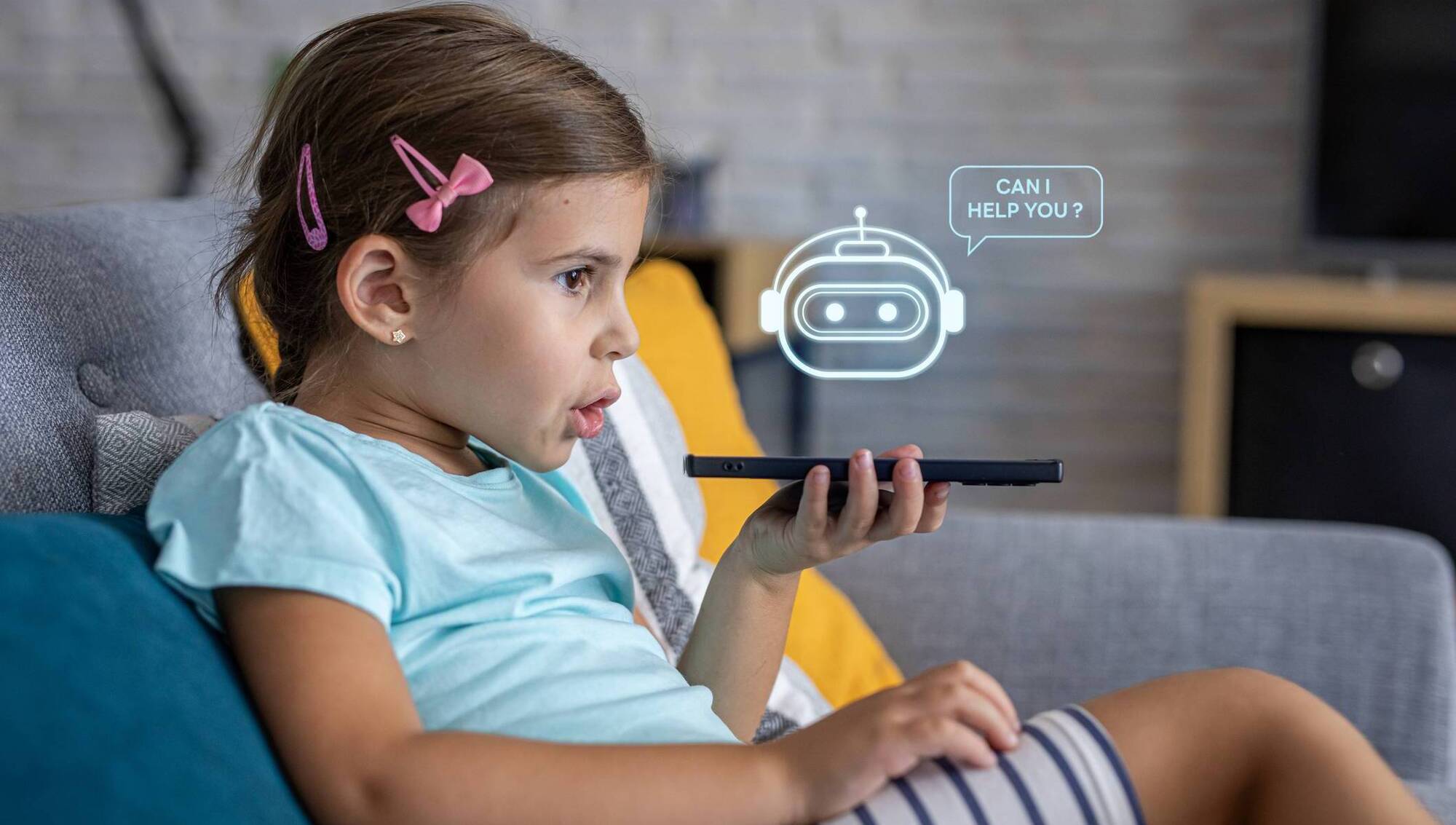
We need to preserve human experiences that support children's psychological wellbeing. This means ensuring that children continue to engage in real-world relationships, learn to tolerate boredom, and develop the ability to distinguish authentic from artificial interactions. Picture: iStock 

RECENTLY, I had the opportunity to deliver a TED Talk, in which I focused on the potential impact of AI (artificial intelligence) on our mental health and relationships. I chose this topic because I am increasingly convinced that it represents one of the most immediate and under-recognised threats to our psychological wellbeing.

So far, whenever I have raised these concerns with friends and colleagues, the response has often been courteous but dismissive. There is a sense that I am worrying prematurely, that AI remains, for now, a helpful and even exciting development. 

But psychological shifts rarely arrive with a bang; they emerge gradually, quietly altering how we think, relate, and feel. By the time they become obvious, they are often much harder to reverse.

Much of the public debate about AI has focused on jobs and economics. What concerns me more are the less obvious changes, such as subtle shifts in trust, connection, and the way we experience one another. 

For example, how we now question whether a person or an AI wrote something, our reliance on AI chatbots for advice and guidance over friends and family and our preference for speed and efficiency over depth and reflection.

AI interactions such as these have the potential to erode trust and weaken relationships.

In the early years, children develop the ability to trust through consistent, reliable interactions with real people, conveyed through eye contact, tone, and presence. These experiences shape how a child learns to interpret the world and the people in it. 

If they have less exposure to these real-life signals and more exposure to AI platforms that mimic them, confusion is inevitable. And when certainty becomes fragile, so too does trust, not only in others but in oneself.

Our children are growing up in an environment where the boundary between what is real and what is fabricated is increasingly blurred. Images can be generated, voices replicated, and interactions simulated with remarkable accuracy — blurring the line between what’s real and fake.

There is also a quieter concern, loneliness, which receives less attention but may prove just as significant.

Growing preference for AI

In my therapy room, I increasingly hear young people talk about their interactions with AI chatbots. 

These systems offer something compelling: immediate, responsive, and seemingly personalised interaction. 

They create the impression of being understood. But there is an important distinction between being responded to and being truly known.

Some young people are increasingly favouring these interactions over real relationships. It is not difficult to understand why.

Human relationships are messy. They require patience, negotiation, and, at times, discomfort. Yet these challenges are not shortcomings; they are essential to developing emotional resilience and connection.

If we begin to favour predictable, frictionless interactions, we risk diminishing our capacity to tolerate the very experiences that deepen relationships. 

The idea that advice, reassurance, and even everyday decisions might increasingly be outsourced to AI rather than shared within families or friendships is, at the very least, worth our attention.

Such a shift is unlikely to happen suddenly. It will emerge gradually, marked by a reduced tolerance for discomfort, an increased desire for control, and a subtle yet growing preference for AI-mediated interaction over human connection.

'Stranger than strangers'

Broader implications need to be considered, too. Community is built not only through structured interactions but also through small, informal moments, shared experiences, chance encounters, and a sense of belonging. 

If more of our interactions become mediated by AI, these moments will diminish. It is crucial that we ensure both co-exist side by side, where we continue to enjoy banter and connection in real life while also looking to AI for advice in moderation. 

But connections often require a degree of mutual dependence, which may erode with overreliance on AI for support.

My concerns about the negative impact of AI on relationships are predictions, not certainties. But uncertainty does not make them insignificant.

I am not alone in these concerns. American technology ethicist Tristan Harris, who formerly worked at Google’s persuasive technologies department and trained with the founders of Instagram, has consistently highlighted the psychological impact of persuasive technologies, systems designed not only to serve us but to capture and hold our attention. 

His growing worry is that technological advancement is outpacing our ability to understand its consequences fully.

He also argues that AI is being rolled out without proper testing on its psychological effects, especially on young people. He warns we are exposing children to systems that are “stranger than strangers”, intelligent but not human, without knowing the consequences.

Harris says the renowned American biologist Edward O Wilson’s comment on humanity navigating modern life with “palaeolithic brains, medieval institutions, and godlike technologies” is more relevant than ever, given the challenges of adapting to AI.

The difficulty is not merely the technology itself, but the speed at which it evolves relative to our capacity to adapt.

Saving human experience

So what can we do as parents?

Rejecting technology is not the answer. That would be neither realistic nor feasible. AI is already embedded in many aspects of children’s daily lives, including their education and social worlds. 

But we do need to be intentional about preserving the human experiences that support their psychological wellbeing. This intent means ensuring that children continue to engage in real-world relationships, learn to tolerate boredom, and develop the ability to distinguish authentic from artificial interactions. 

According to a 2026 Unesco report, some European programmes (for example, Denmark’s TVET frameworks and teacher training courses) embed AI literacy directly into education. But it’s too early to assess the effectiveness of any of these programmes.

Fast-evolving AI also requires us, as adults, to reflect on our own behaviour. If we begin to outsource thinking, decision-making, or emotional support to bots, we model a pattern that children will follow.

Perhaps most importantly, it requires a shift in how we respond to early warnings of the potential negative impacts of AI. Rather than dismissing them as speculative, we might treat them as opportunities, not to panic but to prepare.

Parenting has always meant anticipating risk and guiding children through uncertainty. What has changed is the pace of that uncertainty. We are now raising children for a future that is evolving in real time.

Our fast-changing world calls for a willingness to act before we are entirely certain of the negative impacts of AI. History suggests that waiting for certainty often comes at a cost.

Harris has warned of the possibility of an “anti-human future”, one that prioritises efficiency over empathy and prediction over presence. If that is a possibility, our response should not be withdrawal but intention. 

We need to be role models for our children by being more deliberately human. We need to demonstrate how we prioritise relationships that require effort, value presence over efficiency, depth over speed, and authenticity over simulation. 

If they don’t see us valuing those human aspects, they’re unlikely to. Relating to each other in person and in real time is central to the world we create. 

The future is not something that simply happens to us. It is something we help shape through the way we live, connect, and raise the next generation. And for now, at least, those choices remain ours to make.

x

More in this section

Cookie Policy Privacy Policy Brand Safety FAQ Help Contact Us Terms and Conditions

© Examiner Echo Group Limited