A real buzzkill: Ecological change and the potential threat from mosquitoes
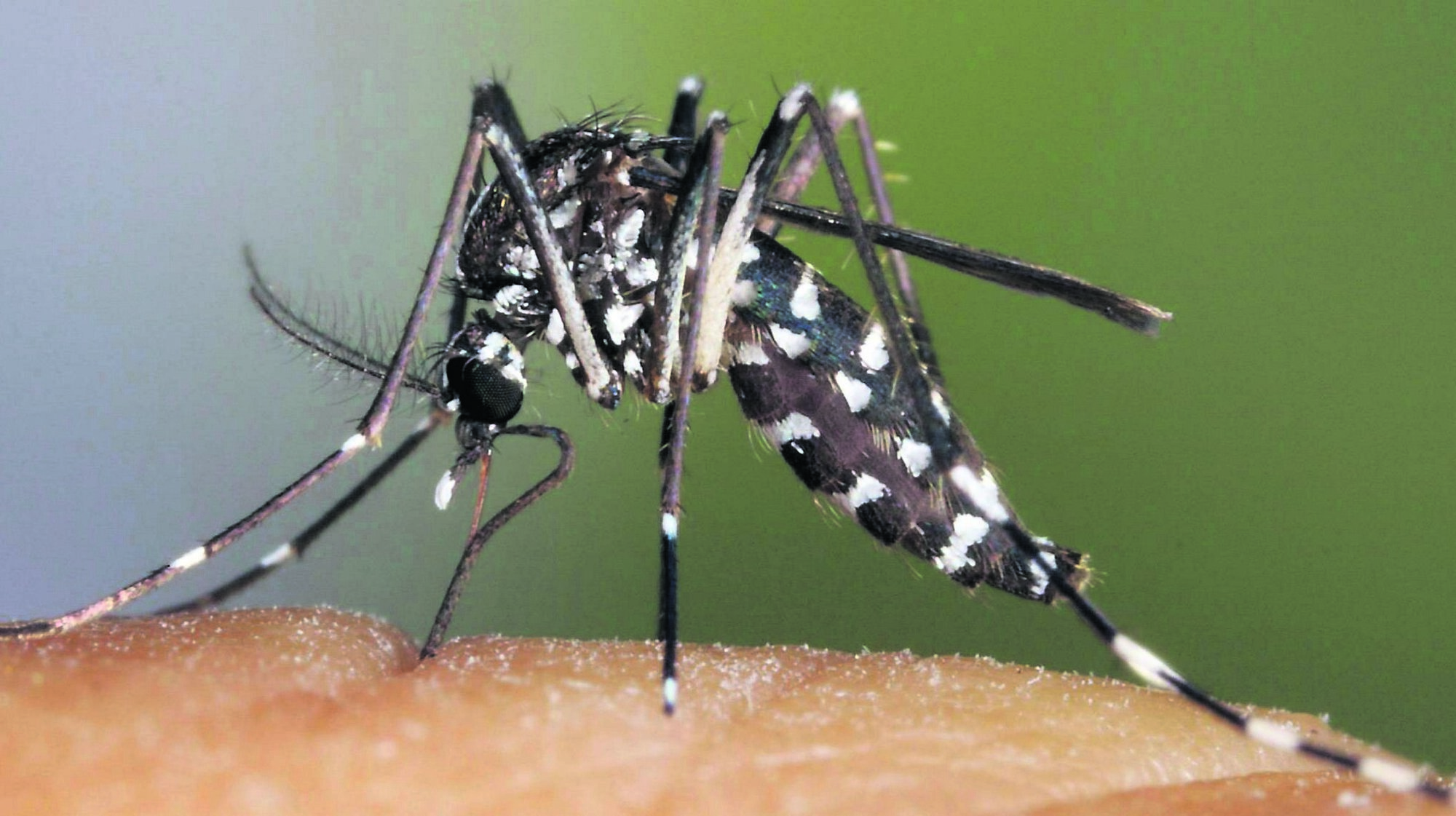
Originally from Southeast Asia, the Asian tiger mosquito is small, black, and distinctively striped, and has become one of Europe’s most successful invasive mosquitoes. They are not currently present or established here in Ireland.
Mosquitoes are one of those things we tend to associate with being on holidays somewhere hotter, sunnier and considerably less Irish. They buzz around hotel rooms, attack ankles at dinner and somehow always seem to prefer one person in the group over everyone else. So, it may come as a surprise that Ireland has at least 21 native mosquito species. Even more surprisingly, we once had malaria. While this may sound like the beginning of a particularly grim tourism campaign, it is historically true. Malaria, then often known as ague or marsh fever, occurred in Ireland, including a documented outbreak in Cork between 1854 and 1860 following the return of soldiers from the Crimean War. Today, mosquito-borne disease is not a major public-health problem here. But a new Irish review suggests we should not assume that will always remain the case. Climate change, international travel and trade are helping invasive mosquitoes and the diseases they can carry spread across Europe, while Ireland’s own mosquito fauna is far more diverse than most of us probably realised.
The reassuring part first, there are currently no known exotic mosquito species established in Ireland, and no evidence that mosquito-borne diseases are being locally transmitted here. This is according to a new study led by Dr Annetta Zintl at the School of Veterinary Medicine, University College Dublin. So, no need to start fitting mosquito nets over every window in Cork. But what is happening elsewhere in Europe is worth watching. One of the main characters in this story is the Asian tiger mosquito, Aedes albopictus. It is small, black and distinctively striped and has become one of Europe's most successful invasive mosquitoes. Originally from Southeast Asia, it is now established across much of southern and central Europe and can transmit viruses including dengue, chikungunya and Zika. Ireland, so far, has escaped it. Its spread also demonstrates that mosquitoes do not need to fly particularly impressive distances to conquer a continent. We have been transporting them ourselves.
The eggs of invasive Aedes mosquitoes can survive drying out for long periods and have travelled internationally in used tyres and even ornamental plants such as lucky bamboo. Once introduced, artificial containers around homes, such as flowerpots, water tanks, discarded cans and the like, can provide perfectly adequate breeding sites. In other words, globalisation get the mosquito to the door. Climate change can make it more likely to move in. Temperature matters enormously to mosquitoes because they are ectothermic, which means that their development and activity are influenced by the conditions around them. It also matters to the organisms they transmit. Many mosquito-borne parasites and viruses need to develop inside the mosquito before they can be passed on, and that process is temperature-sensitive.
The Irish study gives a striking example involving Dirofilaria, the parasites responsible for canine heartworm. Their development inside mosquitoes can take around 29 days at 18°C but only eight or nine days at 30°C. Warmer conditions do not automatically produce disease, but they can make transmission biologically easier within the lifespan of a mosquito. This is where the climate change story requires a little restraint. It would be tempting to say that warmer weather simply means more mosquitoes and therefore more disease. Nature, as usual, refuses to be that cooperative. Extreme heat can also kill mosquitoes. Drought can remove breeding habitat, while heavy rain can either create pools of standing water or flush larvae away. Different species respond differently. Disease also requires more than a mosquito. For example, the pathogen must be present, suitable hosts must be available and conditions must remain favourable long enough for transmission.
Climate change is therefore less a direct cause than a loaded dice. It changes some of the probabilities. And Europe is beginning to see what happens when those probabilities line up. The tiger mosquito can now survive in parts of Europe where it previously could not. Travellers can introduce viruses into those areas, allowing local mosquitoes to pick them up and transmit them onwards. Zintl and colleagues note that in 2025 there were 776 locally acquired chikungunya cases in France and 374 in Italy. These outbreaks tend to disappear again as temperatures fall, but warmer summers and milder conditions potentially provide a longer window in which transmission is possible. West Nile virus presents another example. Unlike dengue and chikungunya, it primarily circulates between birds and mosquitoes, with humans and horses sometimes becoming infected. In 2023, it was detected in mosquitoes in Britain for the first time, although researchers found no evidence that it was actively circulating there.
However, our Irish climate is still a major limiting factor, and the absence of established invasive species is important. But Ireland is not sealed off from the ecological changes occurring elsewhere in Europe. Planes, ships, freight and travellers arrive every day, while the climate they arrive into is itself changing. The answer is not to wage war on every mosquito. In fact, indiscriminate control can create environmental problems of its own. The review notes that although biological larvicides can effectively kill mosquito larvae, drastically reducing larvae can also remove food for predators such as dragonflies, spiders and insect-eating birds. Sometimes the most effective measures are much less dramatic, such as covering water containers, removing artificial breeding sites and monitoring mosquito populations so that invasive species are detected early.
And there is a broader environmental lesson. Degraded, simplified ecosystems can favour invasive species, while healthier ecosystems support predators and competitors. Zintl and colleagues argue that protecting biodiversity should form part of reducing future mosquito risk. That may be the most important message of all. Climate change is often pictured as something enormous: an ice sheet collapsing, a forest burning or a river bursting its banks. But some of its effects will arrive much more quietly. Perhaps as an insect that was once unable to survive our winters. Perhaps as a disease that previously belonged to somewhere else. For now, the greatest threat from an Irish mosquito is still likely to be an itchy ankle. It would be wise to keep it that way.
- Reference: Zintl, A., Martins Hetherington, R., Murphy, A., Isiye, E., Valcarcel Olmeda, A., Lloyd, C., Munita, M., Mooney, L. and O’Meara, D. (2026) Review of mosquitoes in Ireland and of relevant mosquito-borne pathogens, Irish Veterinary Journal, 79, 16.


CONNECT WITH US TODAY



Be the first to know the latest news and updates