Ireland’s peatland paradox: Restoring bogs while commercial extraction continues
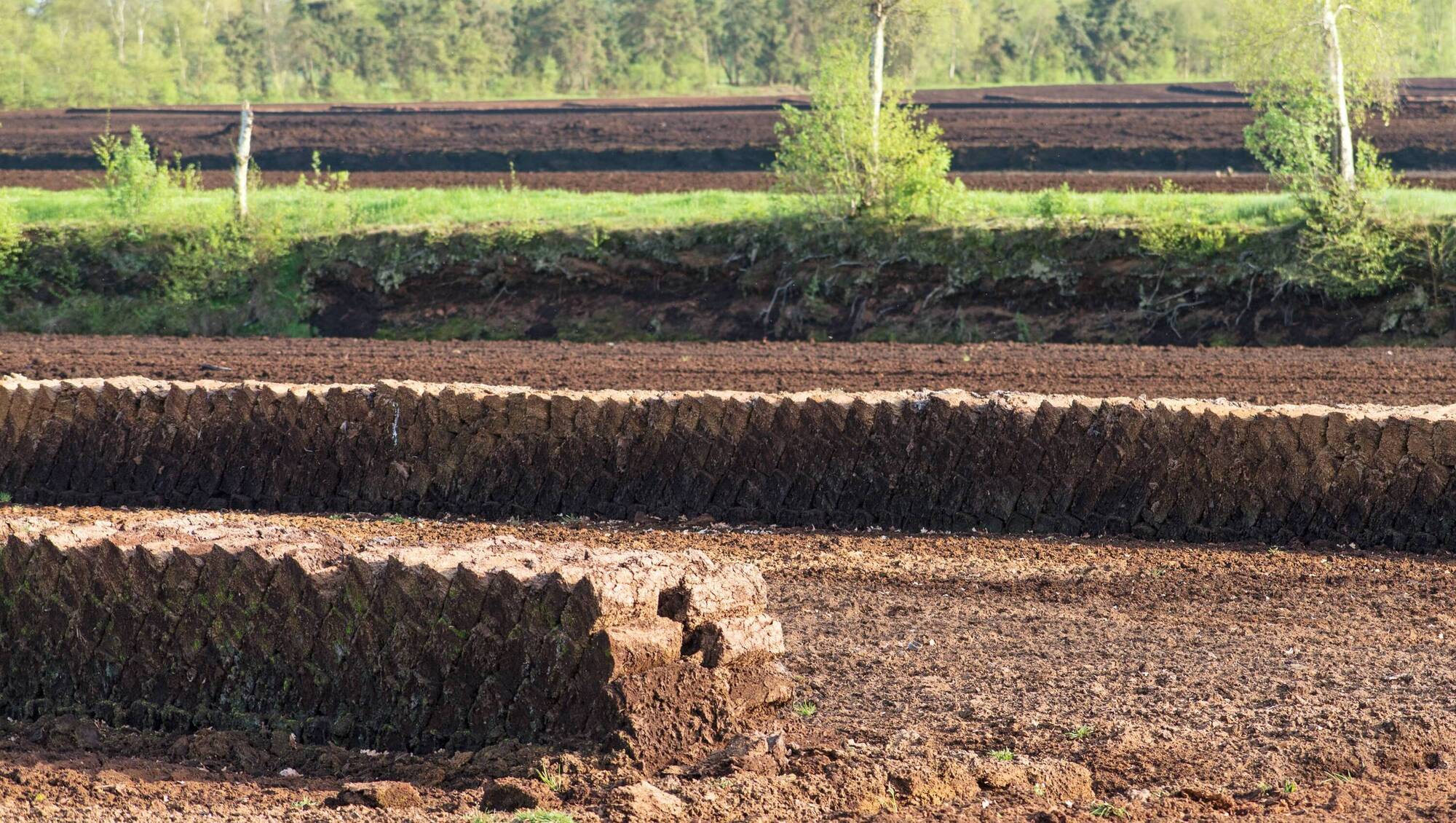
Why are we spending public money repairing the effects of peat extraction while commercial peat extraction continues elsewhere? Picture: iStock
Ireland is spending serious money putting water back into bogs we once spent decades draining. Across the midlands, drains are being blocked, water tables raised and former industrial peatlands rehabilitated. It is quite a reversal. Landscapes engineered to make peat dry enough to harvest are now being engineered to make them wet again. Bord na Móna reports that around 20,000 hectares of peatland have now been rehabilitated under its Peatlands Climate Action Scheme by late 2025, of which 7,273 hectares have been restored to peat-forming conditions. The Government has committed €108 million to a rehabilitation programme covering roughly 33,000 hectares of former peat-production lands, with further investment planned through to 2030. This is significant environmental work. But it also creates an awkward question. Why are we spending public money repairing the effects of peat extraction while commercial peat extraction continues elsewhere, sometimes outside the environmental rules designed to control it?
Before anybody reaches for the turf basket, an important distinction is needed. This is not about somebody cutting turf for their own fire. Domestic turf cutting has a different cultural and regulatory history in Ireland. The EPA's recent enforcement work is specifically concerned with large-scale commercial extraction, which is peat being extracted in the course of business. Its 2025 investigation explicitly focused on commercial operations rather than domestic fuel cutting. However, commercial peat extraction itself is not automatically illegal either. An operator extracting peat commercially over 50 hectares needs an EPA Integrated Pollution Control licence, along with planning permission and Environmental Impact Assessment (EIA). Between 30 and 50 hectares, planning permission and EIA are required. Even below 30 hectares, those requirements can still apply where significant environmental effects are likely. In other words, 50 hectares is a regulatory threshold, not an ecological invisibility cloak. The difficulty is enforcement.
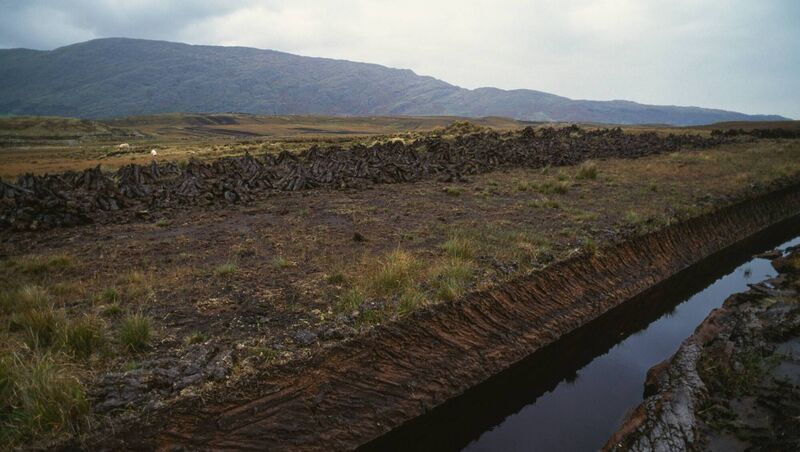
In June 2025, the EPA reported investigating 38 large-scale commercial peat-extraction sites across seven counties where extraction was taking place without the necessary local-authority authorisations. Those operations were associated with an export trade of around 300,000 tonnes of peat annually, valued at almost €40 million. A year later, the issue had not disappeared. In evidence to an Oireachtas committee in June 2026, the EPA said unauthorised large-scale extraction remained a significant environmental issue and had identified as many as 44 sites of interest across seven counties (with related assessments referring more broadly to sites of concern). That sits rather uneasily beside the enormous rehabilitation effort happening elsewhere. The reason this matter is because peat is not simply another material sitting in the ground waiting to be removed. A functioning peatland depends on water table sitting close to, ideally between 5-10 cm below the ground. In saturated conditions, decomposition is extremely slow, allowing organic matter (and its carbon) to accumulate over centuries or millennia. Drain the peat and oxygen penetrates further into it. Decomposition accelerates and stored carbon begins to be released as carbon dioxide to the atmosphere. That process is exactly why we are now blocking drains on degraded bogs. But restoration is not an ecological Ctrl+Z.
Bord na Móna itself makes the distinction between restoration and rehabilitation. Some bogs that were drained but never extensively harvested can be rewetted sufficiently to return towards peat-forming conditions. On heavily cutaway land, the chemistry and physical structure may have changed so much that recreating raised bog is no longer realistic; instead, rehabilitation may produce wetlands, woodland or other habitats. Once a peatland has been substantially altered, therefore, we cannot simply put back what was removed. And that is what makes the present situation feel so peculiar. The taxpayer is helping fund hydrological work, monitoring and long-term rehabilitation to undo decades of drainage on one set of bogs, while environmental authorities are simultaneously having to pursue unauthorised commercial extraction on others.
CLIMATE & SUSTAINABILITY HUB
The deeper question is whether continued commercial peat extraction is compatible with the direction Ireland says it wants to travel in at all. We are spending public money rewetting and rehabilitating bogs precisely because we now understand the carbon losses and ecological damage associated with drainage and extraction. Continuing to drain peatlands elsewhere risks recreating the very problem those programmes are trying to solve. Compliance with planning and environmental law should therefore be the minimum expectation, not the end of the conversation. Nor does successful restoration elsewhere somehow balance the books. Blocking drains on one bog does not cancel out draining another. Restoring one hectare does not create an environmental credit that can simply be spent somewhere else.
Ireland deserves considerable credit for its transition away from large-scale State peat harvesting. Former peat workers have become part of the rehabilitation effort, and landscapes once associated almost entirely with fuel production are being reconsidered for climate, biodiversity and community use. But perhaps the next stage of that transition is less glamorous. It is not only about becoming better at repairing damaged peatlands. It is about needing to repair fewer of them. Because however sophisticated our restoration techniques become, the cheapest and effective way to keep carbon locked away in bogs will always be the one we never unnecessarily damage in the first place.
CONNECT WITH US TODAY



Be the first to know the latest news and updates