Sky Matters: Gaining perspective by using objects visible in the October sky
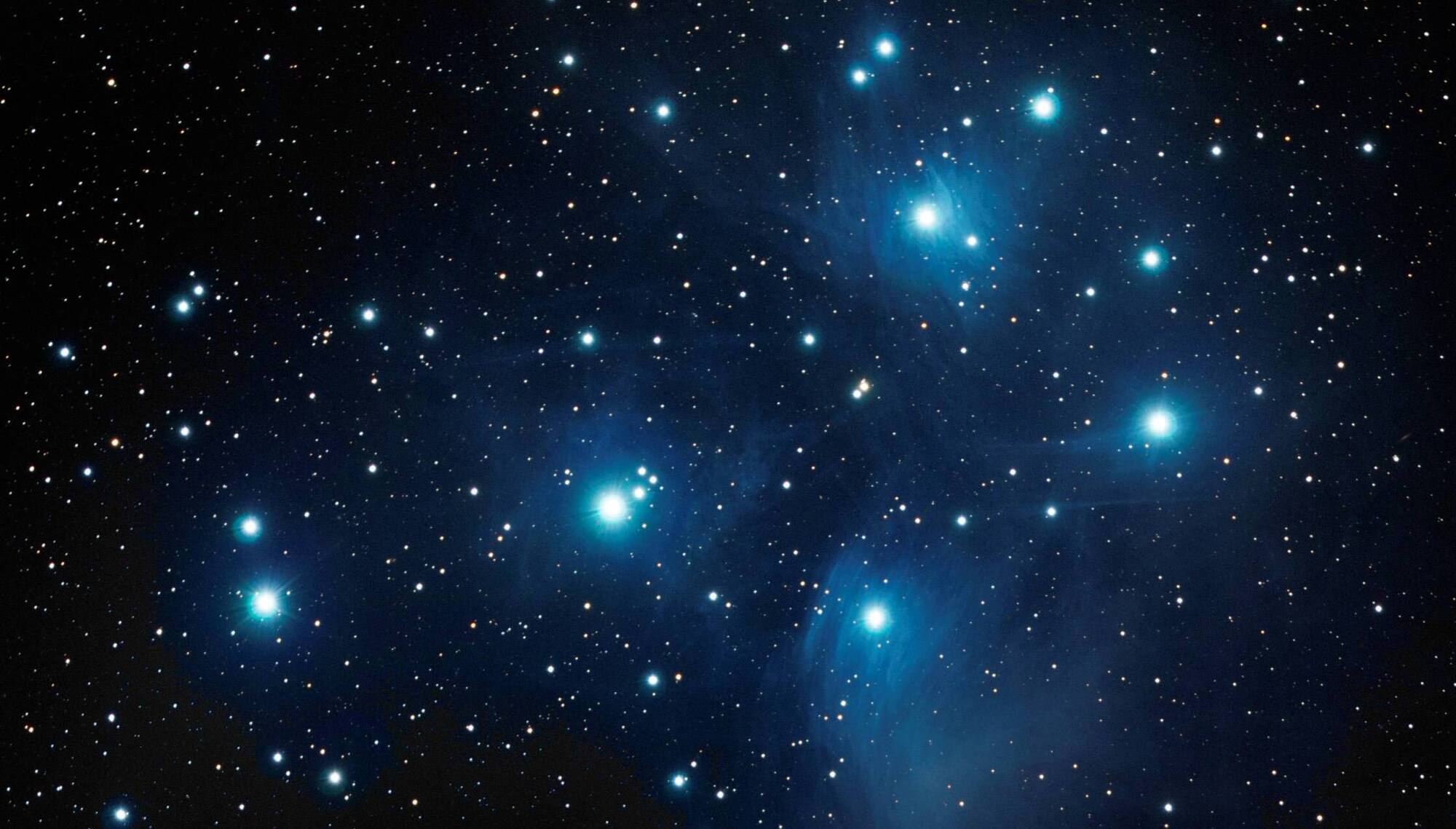
The Pleiades, or Seven Sisters, is starting to become visible in the eastern October sky shortly after sunset. Each star in the Pleiades could be mistaken for being similar to one of the planets. Yet each member of this cluster is a star larger and hotter than our sun and 52,000 times farther than Sirius.
The question “How big is Ireland” might seem obvious, but the answer is not. On 4 September 2026, the UN General Assembly backed an African-led resolution encouraging wider use of map projections that represent the relative size of continents more accurately. The familiar Mercator maps that all of us grew up with, constructed originally to assist with navigation, had always provided a false perspective of the size of Ireland – we are smaller than we commonly think – and our position on the Earth - we are farther north and more peripheral. Once we move from maps of Earth to the scale of the Solar System, and then to the Galaxy, the entire Earth becomes almost vanishingly small. Map projections lose their Universal relevance, though not their social and cultural impact.
So what if we do consider a perspective based on comparisons beyond the Earth, using objects visible in the October sky? Ireland has an area of roughly 70,000 km². Earth has a surface area of about 510 million km². This means Ireland accounts for only about 0.014% of the Earth's surface. Now put Earth beside the Sun, by cosmic standards a very ordinary star (though not to us living on the Earth). The Sun is about 109 Earths across, and a staggering 1.3 million Earths could fit inside its volume.
Saturn is visible as a fairly bright, steady, slightly golden “star” in the October eastern sky during the evening. It looks unremarkable, but it’s actually around nine times the diameter of the Earth. Mars is about half Earth’s diameter; Jupiter about 11 times. Both can easily be seen in October and appear more similar than different in the night sky. On October 5th the Moon passes close to Mars (identifiable by its reddish colour) and on 6th it’s very close to Jupiter (identifiable by its brightness).
What if we look a little deeper into the October sky? Earth is about 12,700 km across. The Solar System is billions of kilometres across. The nearest star beyond the Sun which is visible from Ireland is Sirius. It is more than 540,000 farther than the Sun. By late October it rises around 10:30pm. The familiar hazy grouping of stars known as the Pleiades, or Seven Sisters, is starting to become visible in the eastern October sky shortly after sunset. Each star in the Pleiades could be mistaken for being similar to one of the planets. Yet each member of this cluster is a star larger and hotter than our Sun and 52,000 times farther than Sirius.
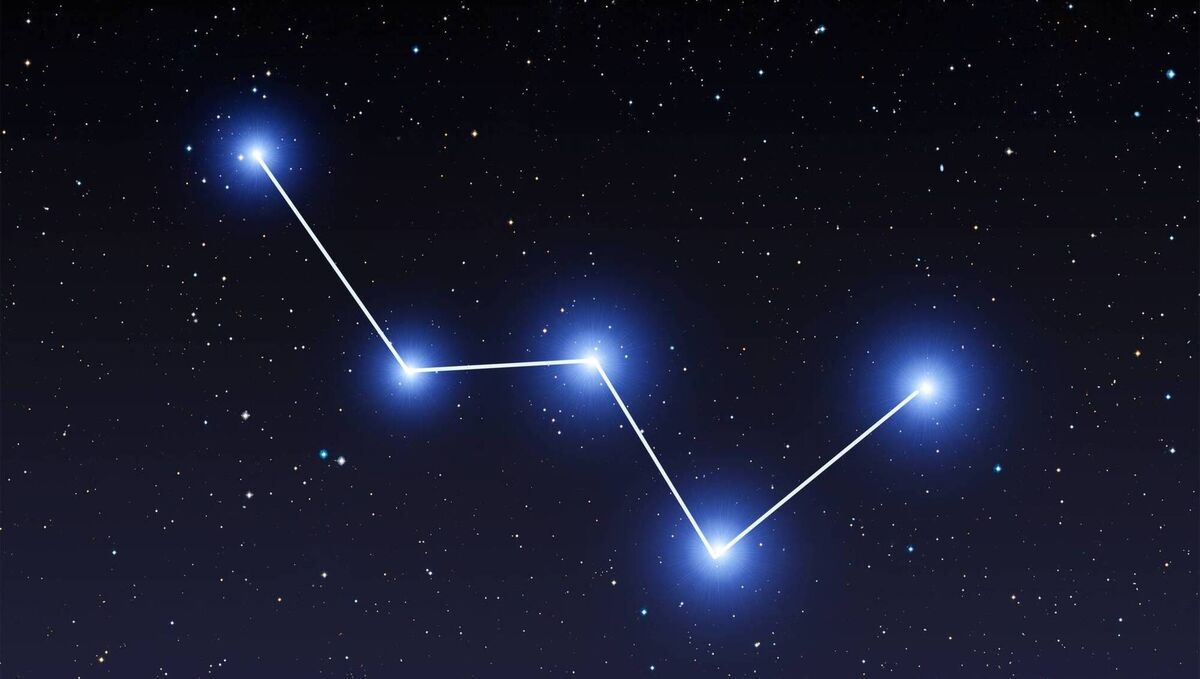
Going further, but still staying on our stellar backyard, our home galaxy the Milky Way contains hundreds of billions of stars and is roughly 11.6 million times larger than the distance to Sirius. It is visible from dark sky locations if you let your eyes adapt for at least a few minutes, appearing as a hazy band stretching from horizon to horizon and passing roughly overhead. It runs through one of October’s prominent constellations, Cassiopeia. The distinctive W-shaped Cassiopeia is high in the northern sky throughout autumn. It is an excellent constellation if you’re looking to recognise your first constellation: once you've found the W, it is hard to lose it. Cassiopeia is also known as a “circumpolar” constellation, meaning it never sets from Ireland, though sometimes it is higher than others.
Maps are created by humans for a variety of reasons. They help us to navigate. They help us to understand how things are connected by distance and direction, allowing us to construct a model of our planet and even our Universe. Maps provide perspective. But there is no “true” map, no singularly “right” way to view things.
So when asking “How big is Ireland”, the formal answer is that it occupies a tiny fraction of the globe. But the same is true for the Earth compared to the Universe. Earth is essentially invisible except to us. And yet it is still the only home of every person who has ever lived.
CONNECT WITH US TODAY



Be the first to know the latest news and updates