Moving with the times: Is there room for a greener commute?
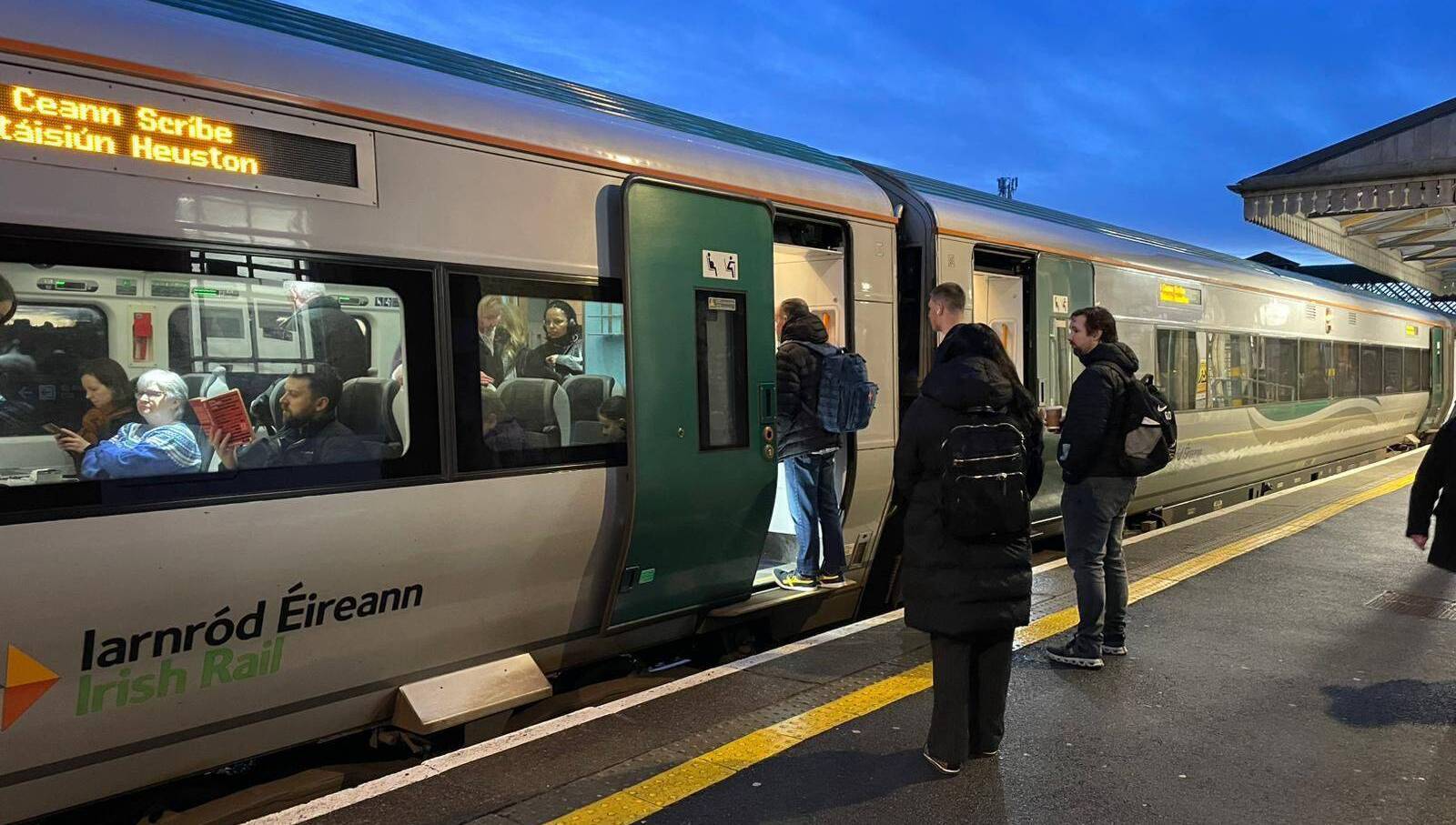
Building housing close to public transport services makes sense. But, when people turn up for the train or bus at eight in the morning, there has to be room to get on.
There is a structural problem with Ireland’s ambition to persuade more of us to leave our cars at home. We are building more housing close to public transport, reducing parking requirements in well-connected areas and investing billions in buses and rail. Environmentally, that makes sense. But there is one fairly obvious requirement if this strategy is going to work. That is, when people turn up for the train or bus at eight in the morning, there has to be room to get on.
Getting the train from Midleton into Cork city most days is a textbook example of a sustainable commute, right? You can avoid the Jack Lynch Tunnel, forget about city-centre parking and arrive at Kent Station in around 25 minutes. However, during rush hour, the service operates with just two carriages. I take this train. On several recent mornings, I have watched the carriages fill before the train has even left Midleton, with Carrigtwohill, Glounthaune and Little Island still to come. At later stops, passengers have sometimes been left standing on the platform because there is simply no room to board. Inside, you get a fairly good idea of what life as a tinned sardine might feel like. It would be easy to treat this as a complaint about crowded trains. But there is a much bigger environmental question underneath it, which is can we reduce car dependence while housing growth is moving faster than public-transport capacity?

CONNECT WITH US TODAY



Be the first to know the latest news and updates