A sustainable bloom: Meet Ireland's flower farmers
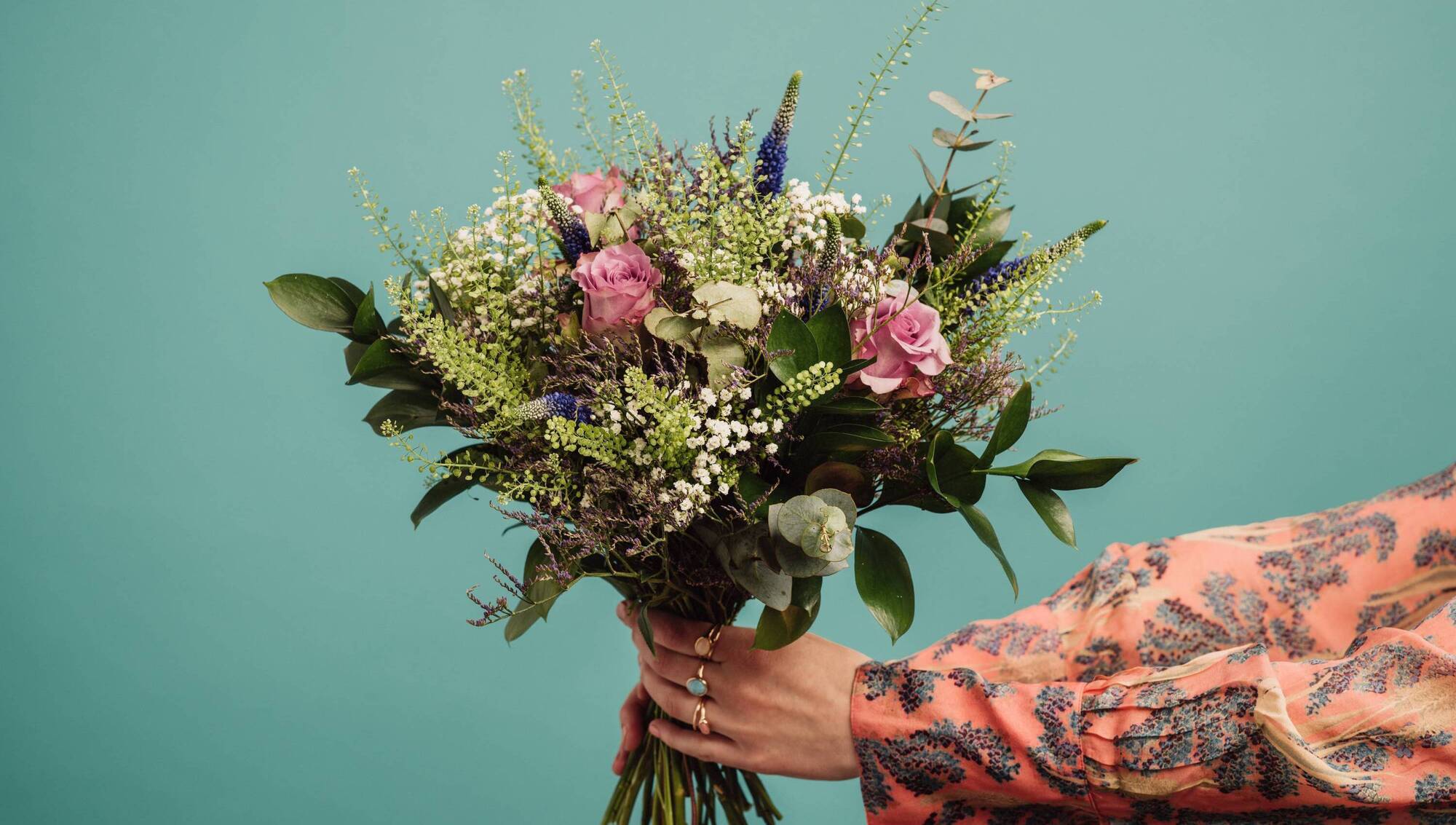
Of the €270m we spend on cut flowers in Ireland, it’s estimated less than 5% are grown here
Fields of bright yellow daffodils in spring, tunnels full of sumptuous dahlias and delicate, soft-petalled scented roses from summer to autumn, rows of vibrant sunflowers stand proud until mid-autumn. Ireland is in bloom.
And yet, of the €271m spent annually on cut flowers here, as little as 5% comes from Irish flower farms. The majority arrive via the Netherlands, Kenya, Colombia, Ecuador, and the UK. Producing a single rose can require up to 10 litres of water in countries already vulnerable to drought, and some die on the long journey here.
In Glandore, Co Cork, Ruth Fortune farms flowers on one acre of the family dairy farm she inherited. The land has a long history of flower growing: in the 1940s Fortune’s great grandfather Sonny O’Donovan grew violets for posies which were exported to England. After the Second World War, they mainly went to Dublin, and to Cork for treats for ladies at special dinners.
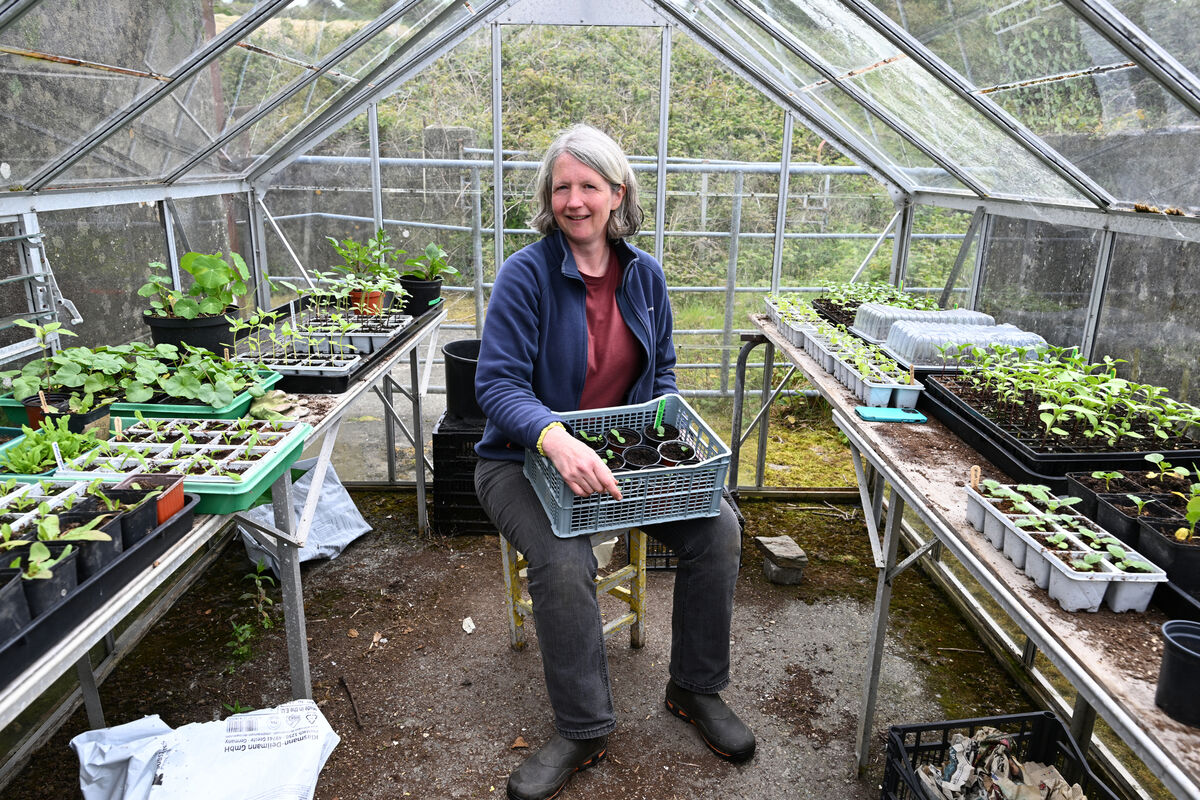
This year, Ruth grew 450 large sunflowers. They dominate one ditch, nodding to us with bright yellow halos as we pass along, while three tunnels house a variety of colourful, plush dahlias, budding roses, and curling sweet peas for bouquets and flower arrangements.
CLIMATE & SUSTAINABILITY HUB
Outside, nigella and aquilegia self-seed among herbs and foliage. Nettles, comfrey, and seaweed gathered from the shoreline are used to feed the soil, while seeds are carefully saved and swapped with other growers.
“People should ask where things come from, whether it’s flowers or food,” says the former architect.
“A lot of our purchasing is done blind, we can kind of forget that we only have one planet and we are overshooting our use of resources. A lot of our flowers come from the other side of the world, and we are unaware of how much energy and water is being used to produce them, and fuel to ship them.
“Importing has a huge effect on the environment, and the changes of seasons in Ireland can be celebrated with local flowers.”
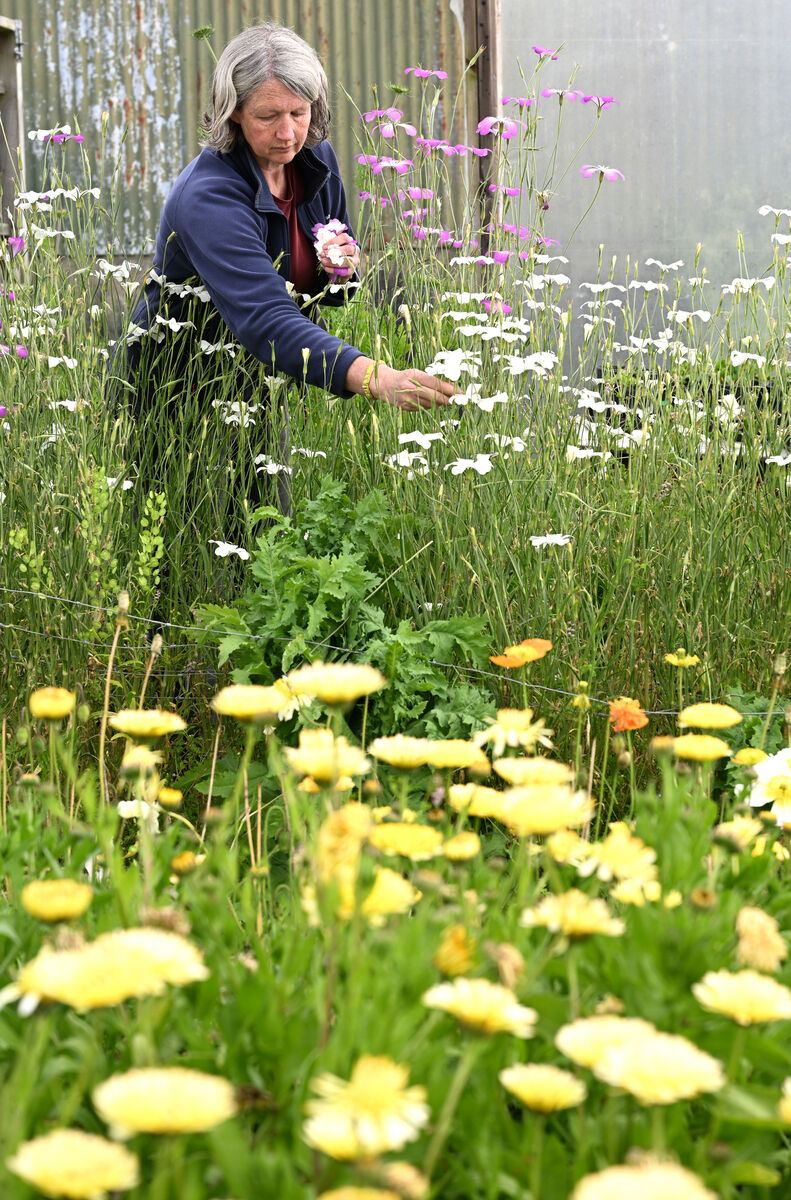
Fortune, who specialises in small weddings where flowers can be cut the same morning they are arranged, is part of the Flower Farmers of Ireland collective, which now has more than 100 members committed to sustainable growing practices.
Its chairperson, Britta Baronowski of The Flowerfield in Co Wicklow, grows flowers on one acre of a six-acre site she is gradually rewilding with trees. Across her site, there are papery textured, brightly coloured Icelandic poppies, pompom-topped drumstick alliums, pale peonies, daisy-like cosmos bell flowers, and whimsical white flowered cow parsley.
Originally from near Munich, Baronowski studied landscape architecture in Berlin before moving to Ireland in 1995 and later working with Carlow County Council. Since the covid pandemic, she has noticed an increased interest in locally grown flowers. She believes flower growing also has the potential to create employment in rural areas while reconnecting customers with seasonality. “Very often planning ends up in a drawer,” she says of her former career. “I feel so empowered to grow and sell.”
Up the road in Dublin, Geraldine Scully of Dublin City Flower Farm describes herself as a “tiny, Lilliputian flower farmer”, growing from two polytunnels spread across three allotments in Clonsilla near Luttrelstown Castle. A former solicitor, she became interested in cut flowers after visiting her brother in Long Island, where he managed an estate garden.
“On my return, I managed to get an allotment,” she says. “The first summer I gave lots away, and one day I was sitting in the hairdresser’s reading an article about a florist. I contacted her, and she bought some flowers from me.”
Now retired from law, she grows dahlias, pittosporum, and sarcococca for florists and weddings, while also co-hosting the podcast Big Garden Little Garden with florist Claire Ryan Luke. This summer, several brides created their own wedding flowers using buckets of blooms sourced directly from her allotments.
Nearby, Martina Dunne of MD Floral decided to rent a quarter-acre plot at Airfield Estate, after ten years working in the ornamental garden on the estate.
Her 80 wild cottage garden varieties include rosette-like sweet Williams in jewel colours, tall sweet scented wallflowers, and frothy grasses. Plastic-free bouquets, compostable packaging, and second-hand glassware sourced from charity shops all form part of her approach.
“I’ve become good at spotting items in skips,” she says.
She talks about her flowers, not all perfectly straight, as having “soul”. She’s not quite making a living, but is getting there.
Further south-east in Gorey, Co Wex
ford, Áine Kinsella of Tara Hill Flowers grows seasonal flowers on just under an acre. Natural arrangements are central to her work, and she often incorporates flowers gathered from customers’ own gardens into funeral pieces. “I like to see that individuality, especially when they are for funerals and the flowers come from the gardens of the deceased,” she says.
In west Cork, meanwhile, Mags Riordan of Bumblebee Farm is as devoted to her bees as to her flowers.
My first impression upon visiting her farm is of the deep, comforting drone of the bees. A former clothing designer, she is a self-taught gardener who embraced a new path after moving to Drimoleague. She cradles the orbs of exceptionally vivid purple, deep pink, orange to yellow ombre dahlia’s in her hands like jewels, as she tells me that all of a dahlia is edible — the root, leaves, and flowers. She puts the petals into white wine and eats them when the wine is finished. She also makes pesto with nasturtium leaves. “Work is good for the soil and the soul,” she says.
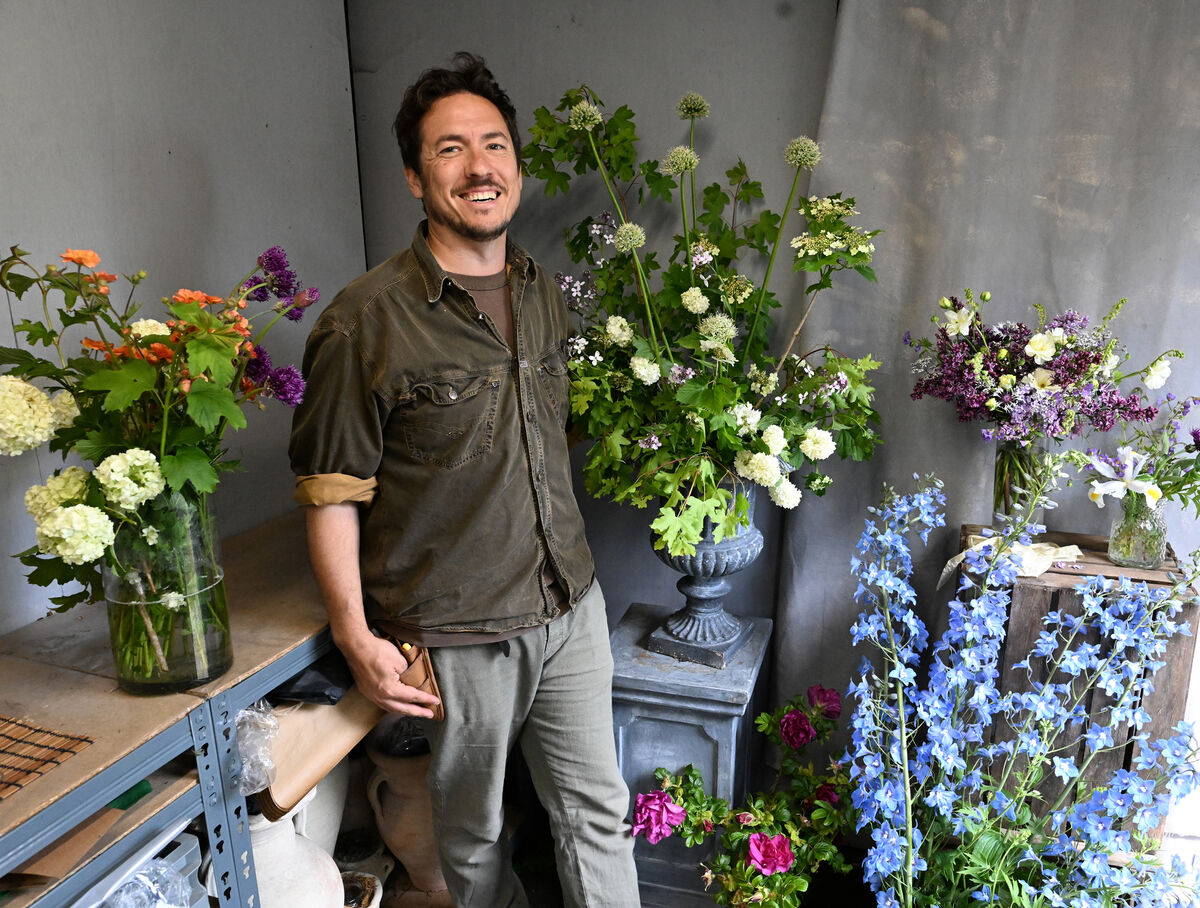
Taylor Nelsen of Between the Briars grew vegetables from a young age in Seattle where he was born. After moving to Ireland 20 years ago he started to grow flowers in the garden of his house in Cork, supplying bouquets of flowers locally, and, with his quiet dynamism, was soon catering for events.
He loves the creativity and freedom of large events where he can help to transform spaces, using blooms from fellow flower farmers. “Organic, local food took a while to take off,” he says, “now people are thinking the same about flowers.”
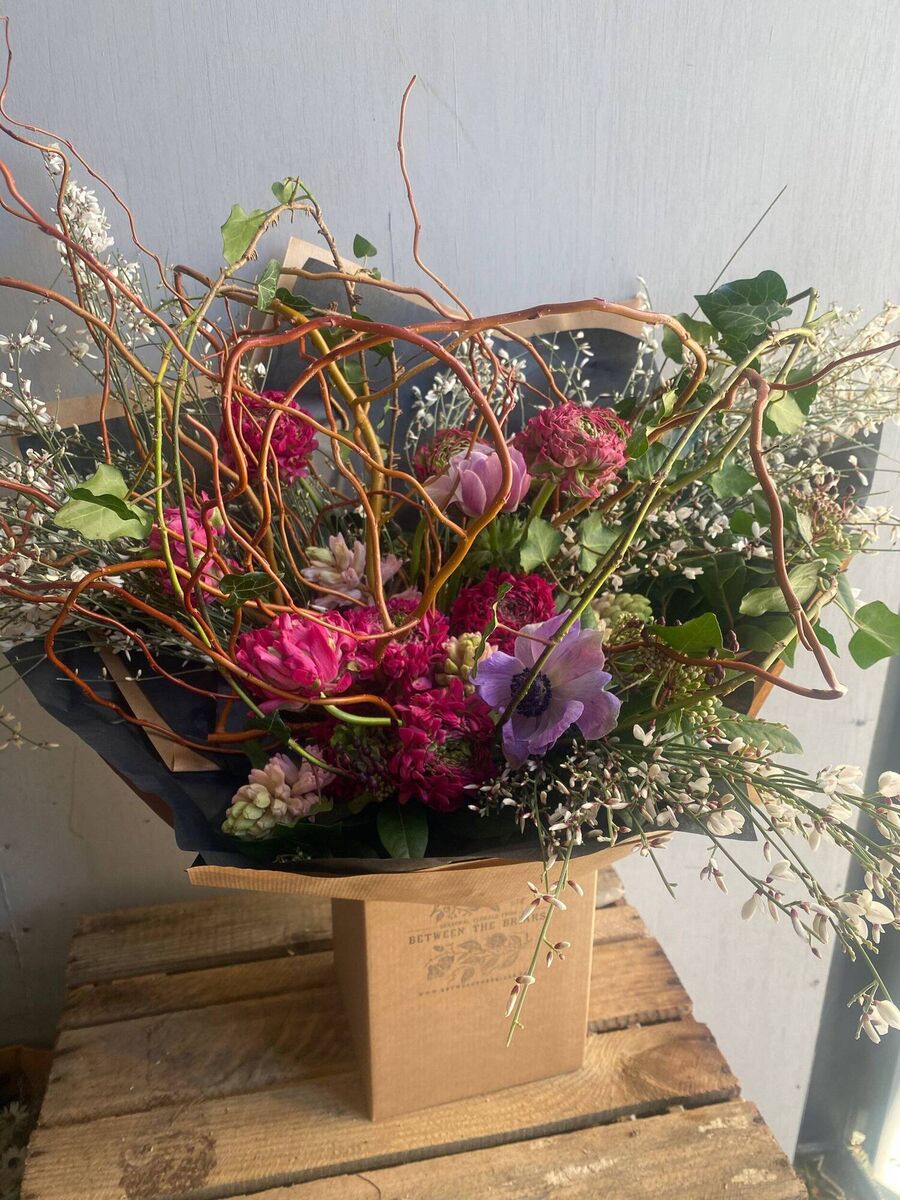
For readers wondering how to ensure their flowers are as sustainable as possible, Nelson advises: “If you’re in the supermarket, try to look for Irish-grown, that’s probably your best bet for the most sustainable option.
“If you’re at the florist, ask do they have local flowers, do they have anything seasonal, and if you want to find a local grower, visit the Flower Farmers of Ireland website.”

CONNECT WITH US TODAY



Be the first to know the latest news and updates