Renewables are a lifeline our politicians are too cowardly to grasp
Every month that passes brings us another step closer to tragedy 
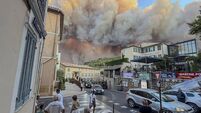
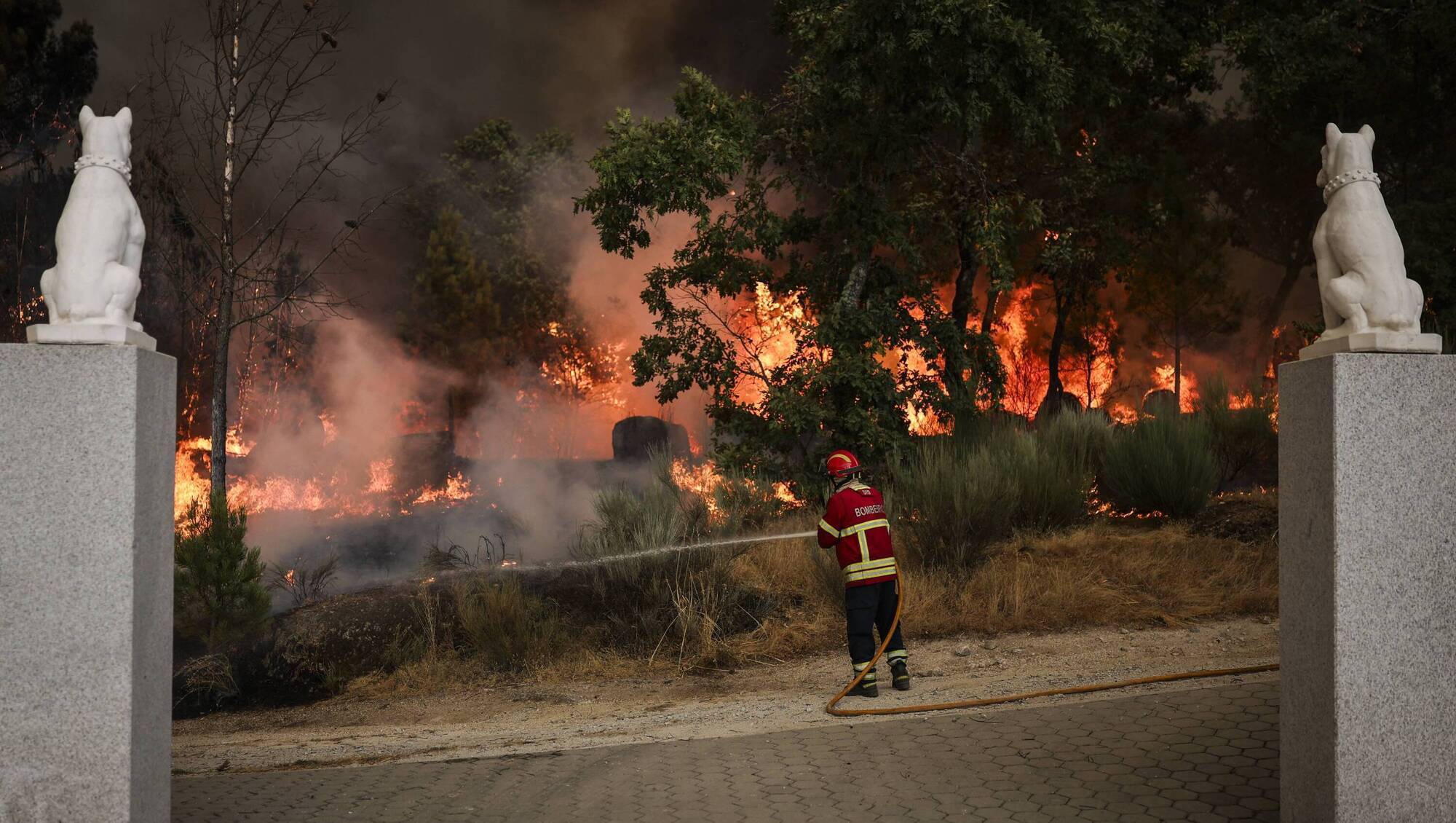
A firefighter try to extinguish a wildfire approaching Benvende village, in Trancoso, Portugal on August 14, 2025. File picture: Patricia de Melo Moreira/AFP/Getty

A firefighter try to extinguish a wildfire approaching Benvende village, in Trancoso, Portugal on August 14, 2025. File picture: Patricia de Melo Moreira/AFP/Getty

“Our massive tampering with the world’s interdependent web of life — coupled with the environmental damage inflicted by deforestation, species loss, and climate change — could trigger widespread adverse effects, including unpredictable collapses of critical biological systems whose interactions and dynamics we barely understand.”

This is an extract from an open letter titled ‘Warning to Humanity’ signed by over 1,700 elite scientists, including scores of Nobel laureates.

It went on to warn that “no more than one or a few decades remain before the chance to avert the threats we now confront will be lost and the prospects for humanity immeasurably diminished”.

This letter was published in 1992, more than a third of a century ago. We were warned, over and over again, but tragically, we chose — or were persuaded — not to listen. And now comes the reckoning.

With much of Europe on fire, France is facing what president Emmanuel Macron described as its worst mass evacuation crisis since the end of the Second World War. Hundreds of thousands of people in the heart of the EU have had to flee for their lives as unprecedented wildfires have consumed vast swathes of south western France as well as tens of thousands of hectares close to the Spanish capital, Madrid.

CLIMATE & SUSTAINABILITY HUB

We are coming to terms with new and terrifying phenomena, including what are being labelled as ‘fire clouds’. These are weather systems generated by the raging infernos, creating pyrocumulonimbus, or pyroCB clouds.

These clouds can climb 10-15km upwards, rising to the edge of the stratosphere and creating powerful winds that fan the flames below. To add further menace, these pyroCB clouds, nicknamed by Nasa as ‘the fire-breathing dragon of clouds’ are triggering widespread lightning strikes, so spreading the fires even further and making them all but impossible to contain.

Europe is heating at more than twice the global average, creating the furnace-like conditions now being witnessed. Last year’s summer heatwaves, droughts, and floods cost the EU economy an estimated €43bn, a number expected to triple to €126bn by 2029.

In Britain, three of the five worst harvests on record have occurred between 2020 and 2025, with this year looking to be equally bad.

Ominously, the June heatwave alone wiped out around €2bn in European agricultural output, including nine million tonnes of grain lost and hundreds of thousands of livestock, mainly poultry, dying in the sweltering heat.

And with August only just beginning, it is incredible to consider that Europe has already endured four heatwaves this summer alone. London has seen the number of days where temperatures breach 30C more than quadruple in recent decades, while across England and Wales, heatwave conditions have claimed the lives of around 2,700 people so far this summer.

If this extreme heat were just a European phenomenon, that would be alarming in itself, but it’s far more extensive. The continental United States is bracing for its third ‘heat dome’ in recent weeks, with 70m people facing extreme heat advisories, and temperatures due to breach 40C. The US interior is well used to scorching summer temperatures but, even here, all-time heat records are being broken on an almost weekly basis.

Kazakhstan’s capital, Astana, is the world’s second-coldest capital city. Yet, on July 14, temperatures hit 39.5C, an astonishing 4.1C hotter than the previous record.

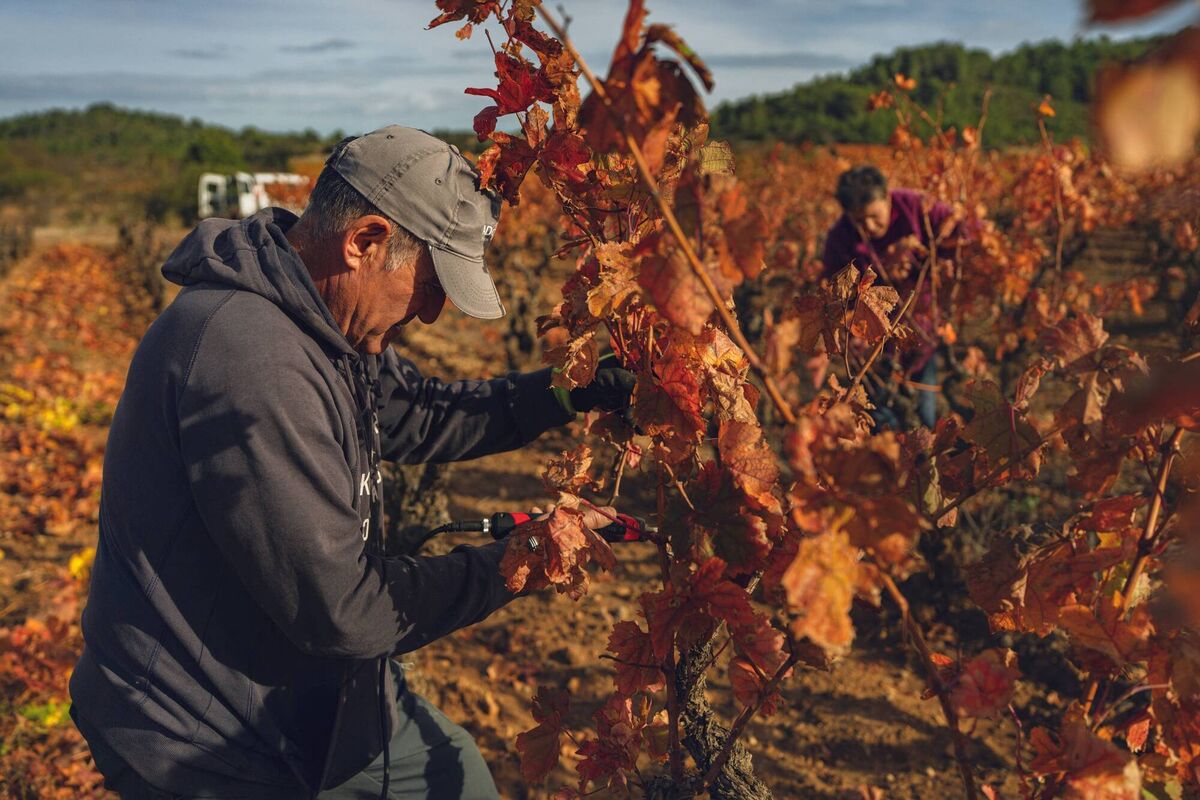
Winegrowers Frederic Eeckhout and Murielle Eeckhout trim the dried vines at the plant of the winery cooperative Le Cellier d'Orfee, in Ferrals-les-Corbieres, southwest France, on November 10, 2025. File picture: Idriss Bigou-Gilles /AFP/Getty

Japan is currently experiencing all-time record-breaking temperatures approaching 38C, while Korea is facing 40C in the coming days and temperatures have breached 43C in Mongolia.

It is of course summer across the northern hemisphere, yet at the opposite end of the world, winter temperatures in the mid to high 30s are sweeping South America, from Paraguay to Guyana and Brazil.

More than two thirds of the Earth’s surface is covered in water. June 2026 saw global sea surface temperatures hit a new all-time high, as ocean heating is now penetrating to depths of over 2,000 metres. More than 90% of the excess heat arising from global warming is being absorbed by the world’s oceans, which itself is accelerating sea level rise. Were this not happening, the average temperature of the land surface today would already be over 50C — heat that would be fatal to most forms of life, including humans.

There are now clear signs that the ability of the oceans to transfer heat downwards is diminishing, while marine life is also struggling to adapt to rising water temperatures and an increasingly acidic environment due to an overload of dissolved carbon dioxide.

As if all this weren’t enough to contend with, a powerful El Niño is building up in the tropical Pacific Ocean, which scientists say is likely to lead to a further spike in global temperatures in 2027. El Niño is part of a natural climatic cycle, but it is now turbocharged by the huge additional energy in the global climate system resulting from human activities.

While collating and reviewing this dizzying set of data from around the world, my mind drifted back to an interview with the late James Lovelock, one of the most brilliant scientists and inventors of the 20th century. Lovelock famously developed the Gaia hypothesis — the concept of Earth as a self-regulating super-organism.
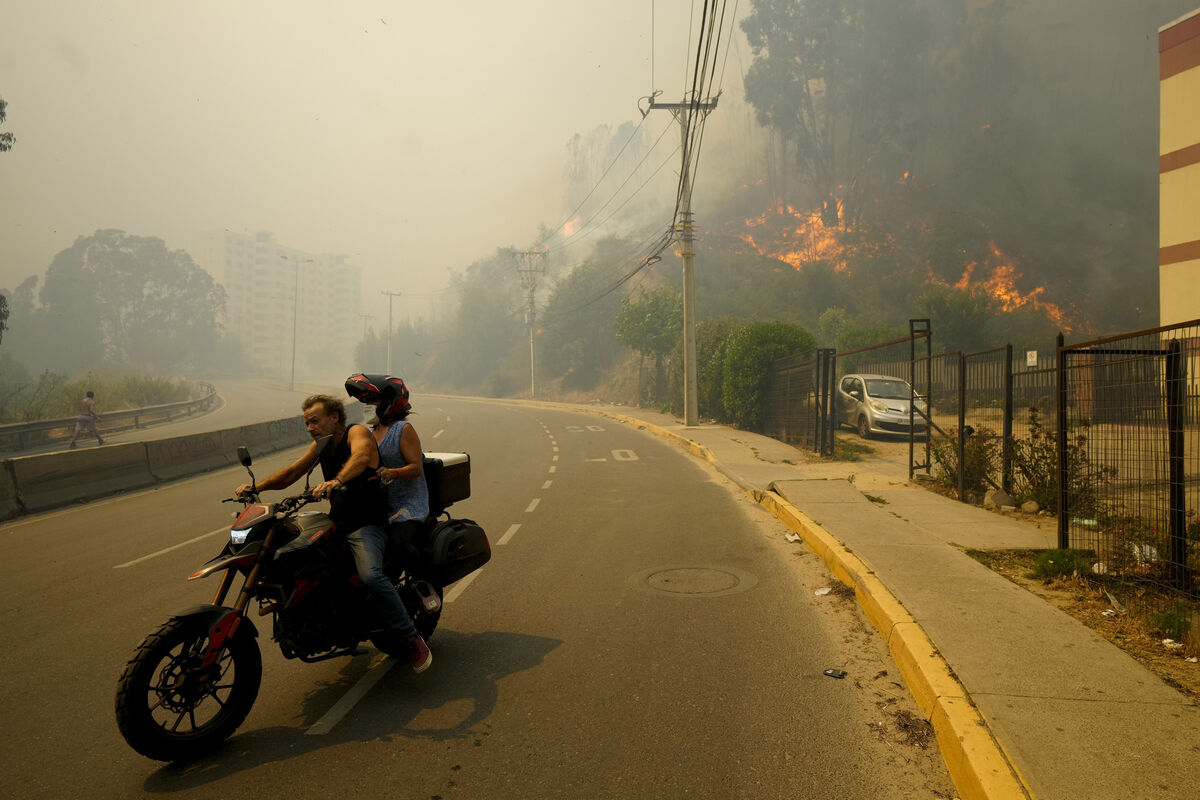
Residents evacuate on a motorcycle as smoke caused by forest fires fills the sky and flames spread into Vina del Mar, Chile, in February 2024. File picture: Esteban Felix/AP

Reflecting on the climate emergency, he offered this advice in 2008: “Enjoy life while you can, because if you’re lucky it’s going to be 20 years before it hits the fan”. It’s too soon to know whether Lovelock will be remembered as a gloomy misanthrope or simply a cold-eyed realist.

Lovelock presciently wrote to oil giant, Shell, in 1966 warning them the climate is worsening and “the combustion of fuel is responsible”.

One thing he got completely wrong was about renewable energy, which he regarded as a joke, but in the last decade, renewable technologies have matured faster than even their boosters could ever have imagined.

They now offer humanity an unlikely exit ramp off our current highway to climate hell — if only our politicians and business leaders had the wit and mettle to grasp this slenderest of lifelines.

Unlike most English-speaking countries, Ireland does not have a toxic billionaire-controlled media environment to contend with. Yet, despite this, in the 18 months since it took office, the current Government has shown little belly for the fight.

It has chosen instead to cosy up to tech giants by greenlighting unsustainable data centres, while blocking the ability of civil society to object to highly damaging projects such as the proposed new LNG facility or Dublin Airport expansion — all while dragging its feet on the green transition as our European neighbours power ahead.

Meanwhile, Ireland remains among the very worst per-capita carbon polluters in Europe, largely due to our oversized but politically untouchable livestock herd.

While we may be physically separate from the European mainland, Ireland’s carbon emissions are directly contributing to the heartbreaking wildfires in France, Spain, Greece, and Italy.

One thing is clear: The ferocious summer of 2026 will almost certainly be one of the coolest of the rest of the 21st century. Yet still we dawdle and dally, as every month that passes brings us another step closer to the greatest tragedy in the brief 300,000-year history of our species.

  • John Gibbons is an environmental journalist and author of The Lie of the Land — The Truth About Farming, Climate & Power in Ireland.
x

CLIMATE & SUSTAINABILITY HUB

More in this section

Revoiced

Newsletter

Had a busy week? Sign up for some of the best reads from the week gone by. Selected just for you.

Cookie Policy Privacy Policy Brand Safety FAQ Help Contact Us Terms and Conditions

© Examiner Echo Group Limited