Wisdom teeth: Rhino remains cast light on Neanderthals' resourcefulness
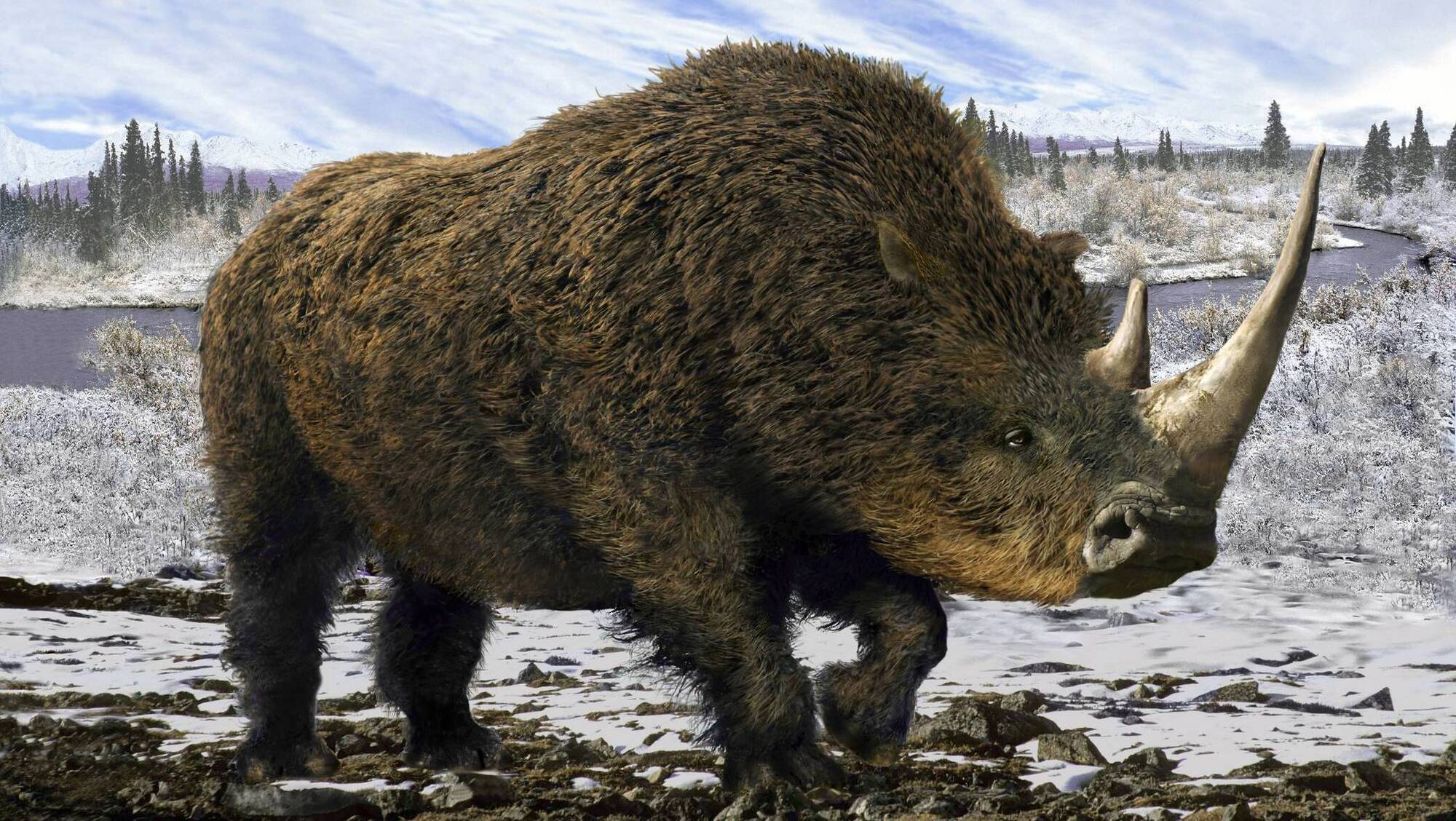
Woolly rhinos roamed Europe and Asia during the last Ice Age. All had become extinct, perhaps due to climate change, by 10,000 BC.
Todays’ rhinoceroses live in warm climates. But that wasn’t always the case. 'Woolly’ rhinos roamed Europe and Asia during the last Ice Age.

They were as big as today’s ‘white’ rhinos of Africa and clothed in fur. With the cave-lion, the mammoth and the giant deer, the ‘woolly’ rhino was depicted by cave-painters. The walls of the Chauvet Cave, in the Ardèche, have many illustrations of it. This was clearly a much-loved animal.
Alas, the woolly rhino, and the other giants of the Old Stone Age, are no longer with us. All had become extinct, perhaps due to climate change, by 10,000 BC.
An iconic creature, much closer to us, is also gone. The last of the Neanderthals, our cousins, went to the wall around 37,000 years ago. Female hominids usually live longer than males, so the last survivor was probably a woman. What anguish must she have felt at the end of her days, as the only representative of her species still living? It has been suggested that she gave up the ghost in a cave near Gibraltar.
But is ‘extinction’ the appropriate term to use when speaking of the Neanderthal demise? We citizens of northern latitudes carry some Neanderthal genes. We interbred with them; would ‘assimilation’ be more appropriate?
H G Wells described these ‘Grizzly Folk’ as brutal and sub-human. They were deemed to have been artistically challenged. However, paintings left by them on the walls of caves suggest otherwise. The depictions are abstract, non-representational apart from some hand-stencils. There are no illustrations of the animals which would feature when we ‘modern’ Jonnie-come-latelys arrived from Africa.
Decorating walls in deep dark caves was a considerable technical feat. Pigments had to be prepared and reliable sources of artificial light provided. Neanderthals could hardly have been the lumbering hairy yetis of popular caricature. Some recent research on ancient rhino teeth further redeems their reputation.
Rhino teeth are exceptionally hard. Some found in France and Spain have gouges cavities and scrape-marks on them. Had these teeth been used as tools by people?
Researchers obtained 18 modern rhino teeth from zoos. In hands-on experiments, they simulated possible uses of them in everyday tasks, such as shaping animal bones and preparing skins. The resulting marks on the modern teeth matched closely those found on the ancient specimens. Rhino teeth, the researchers conclude, ‘could have been part of the Neanderthal tool kit’.
Isotope bone analyses show that Neanderthals consumed rhino meat and used furry rhino skins for clothing. Hunting these huge beasts, when armed only with wooden and bone weapons, must have presented huge challenges. Modern rhinos, especially individuals of the black species, can be temperamental and dangerous. They have even been known to charge trains. One attacked, and killed, a zebra in Dublin Zoo. Neanderthals must have been resourceful to be capable of hunting them.
- Alicia Sanz-Royo et al. Elucidating the use of rhinoceros teeth by Neanderthals: Between experiments & the fossil record. Journal of Human Evolution.