Hikes and trails: Stroll through a piece of cinema history in Kerry
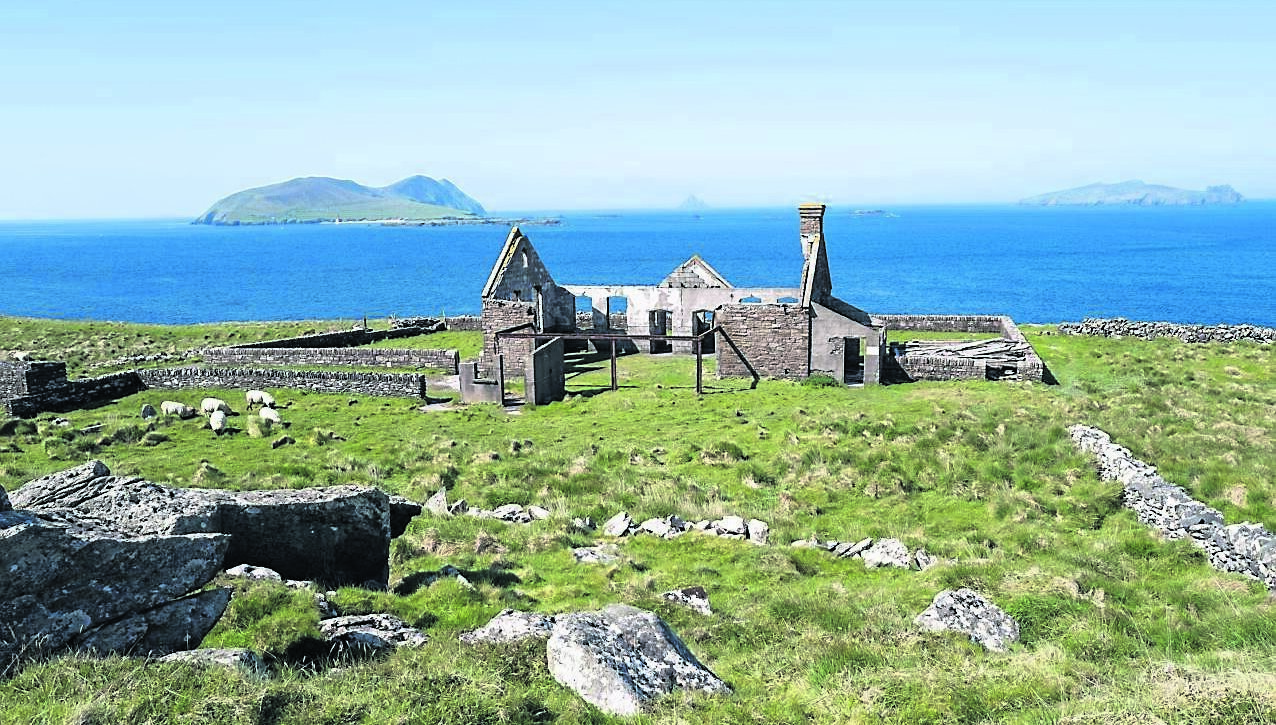
The ruins of the schoolhouse set built for ‘Ryan’s Daughter’, perched on the cliffs of Dún Chaoin, Co Kerry. Picture Dan Linehan
In 1969, the people of Kerry’s Corca Dhuibhne Gaeltacht fell on their feet. Renowned filmmaker David Lean arrived with a large cast to shoot the movie Ryan’s Daughter, and this proved transformative for the area.
Raised in a strict Quaker household outside London, where movie-going was forbidden, Lean’s first visits to the cinema were surreptitious acts of rebellion. Entranced by film making process, he soon began working in the industry and went on to become one of the greatest directors.
Now at the height of his powers, having directed some of cinema's finest epics like Lawrence of Arabia, Doctor Zhivago, and Bridge on the River Kwai, Lean checked out many locations worldwide before settling on the Dingle Peninsula as the setting for his latest movie. Here, he used the magnificent backdrop of the Blasket Islands as his canvas for a sweeping romantic drama based on a reworking of Madame Bovary - an 1857 novel by French writer Gustave Flaubert. Given an Irish context, the movie depicted heightened tensions in an isolated coastal village in the aftermath of Ireland’s 1916 Rebellion.
With great attention to detail, Lean demanded, during pre-production, the building of a very realistic mock-up village at Dunquin, which would offer spectacular views over the Blasket Islands. A welcome source of employment for local men, many worked for months building the village that would be dubbed Kirrary.
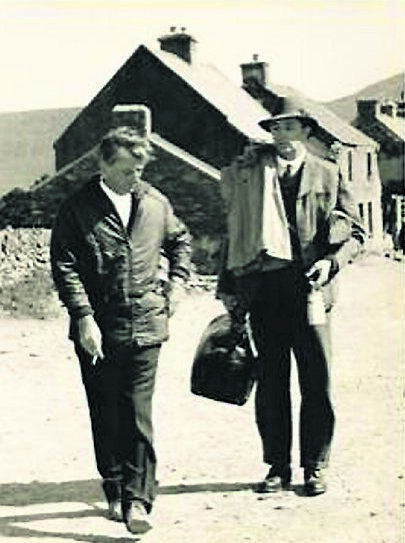
From the start, Lean encountered difficulties. Guaranteed box office stars such as Marlon Brando and Alec Guinness turned down roles with the eventual choice for the romantic male lead, Christopher Jones, proving unsuitable due to his weak voice and stilted performance. Poor weather and Lean’s almost pathological quest for perfection, requiring long waits for the “ideal light”, that much delayed the shoot. Local pubs, hotels and guesthouses enjoyed a field day as the cast just loitered around, while film executives in Hollywood were aghast at the escalating costs. Heavy drinking by some of the actors and tensions between the female lead Sarah Miles and Jones added to the problems.
When the movie was released, it was critically panned, with the magnificent Kerry landscape seen as the only positive. Lean was known for his expansive movies and Ryan’s Daughter was criticised as too provincial with a weak storyline, some rather uninspired acting and a plot that reflected poorly on Irish people. It did, however, win two Academy Awards: John Mills for Best Supporting Actor and Freddie Young for Best Cinematography. The experience had the effect of shattering Lean’s s confidence. Not making another movie for 14 years, he finally returned to direct the critically acclaimed Passage to India in 1984.
Fortunately for Dingle, Ryan’s Daughter was a commercial success and popular with cinema goers. This sparked a tourism boom for the area by showcasing the region’s stunning beauty to a worldwide audience. A golden opportunity to generate visitor spend was, however, missed. After filming concluded, the fine stone village of Kirrary built to withstand Atlantic gales, was offered to the local community as a gift. Consisting of a pub, a church and 40 houses, it would have made a compelling attraction, but due to local divisions, the offer was rejected. Subsequently pulled down, all that now remains are the cobblestones that surfaced the main street.
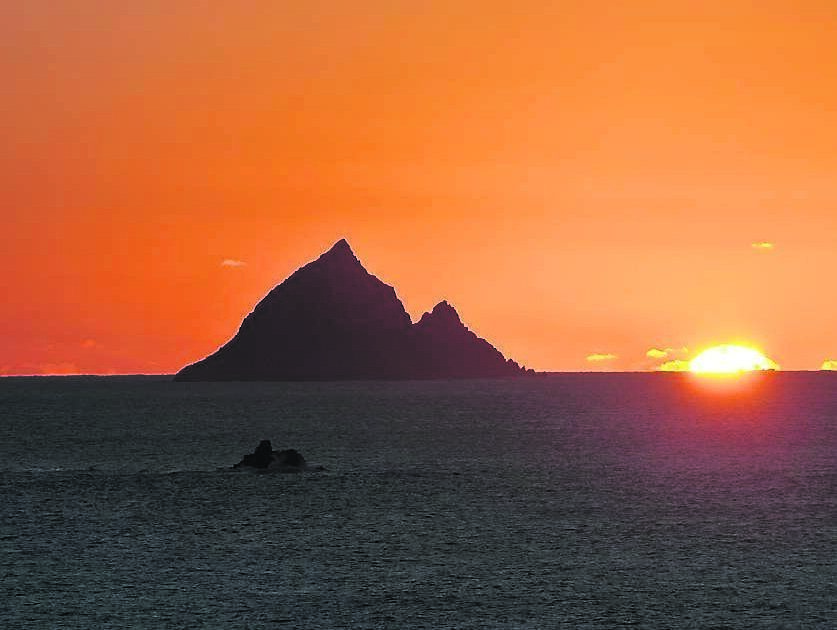
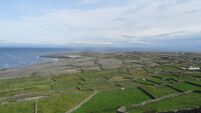
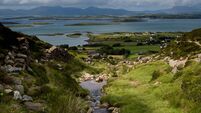
If visiting the Dingle Peninsula and looking to discover more about Ryan’s Daughter, the Lúb na Cille walk is your answer. Starting from the Ionad an Bhlascaoid, this easy, 5km ramble offers panoramic views of the Blasket Islands and traverses the area where Ryan’s Daughter was shot.
From the car park, go left and follow the green arrow denoting the Lúb to cross the R559 (Slea Head Drive) and tag a minor road leading uphill. When the road goes right, continue straight ahead along a gravel lane as the loop ascends to a junction. Here, the Dingle Way goes straight, but you turn left and descend, while enjoying magnificent views over the Blasket Islands, which were abandoned in 1953 with the residents rehoused on the mainland. The largest is An Blascoid Mór, which is famous for a remarkable body of literature produced in the early 20th century by the islanders, including The Islandman (Tomás Ó Criothain), Twenty Years a Growing (Muiris Ó Suilleabáin) and Peig (Peig Sayers).
Next, descend to reach the ocean. With cliffs on your right, follow a track left to reach a roofless building, which served as the schoolhouse in the movie. Here, you can make a short diversion to visit St Gobnait’s Holy Well, which remains a place of local pilgrimage on February 11. One of the few female Irish saints, Gobnait is the patron saint of beekeepers and is best known for founding a monastic site at Ballyvourney, Co Cork.
Return to the Lúb and continue along the fractured coastline to join a sandy roadway at a footbridge. Go left and uphill for 200m to reach the trailhead at Ionad an Bhlascaoid, having walked a memorable 5km circuit.

CONNECT WITH US TODAY



Be the first to know the latest news and updates