A bracing ramble along rugged Howth clifftops

Today, Howth is mainly a tourist area, offering a fine selection of accessible walks, beginning conveniently from Howth Railway Station. One of the best of these is the Tramline Loop
A bracing ramble along rugged Howth clifftops

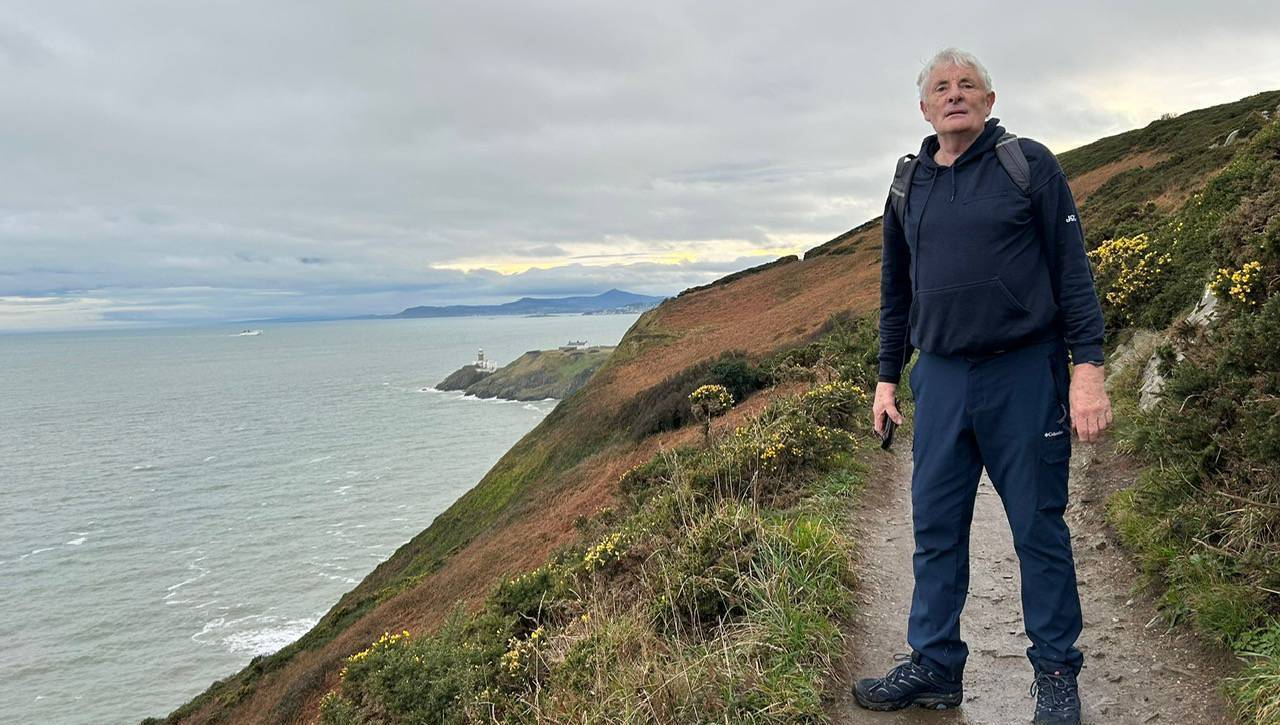
The Tramline Loop is a scenic 8km moderate walk that offers spectacular views of Dublin Bay and the Irish Sea from rugged clifftops and inland paths.

Part of Dublin, yet removed from it, Howth was originally settled by the Vikings in the 8th century. Later, the St Lawrence family arrived with the Normans and became influential feudal lords and Earls of Howth. The area became an important fishing and trading port in Medieval Times as it was the point near Dublin that was closest to the British mainland.

Subsequent to the Act of Union in 1801, construction of a modern harbour began. The aim was to improve communications between Ireland and Britain and facilitate a mail packet service with Holyhead. In the early 19th century, Howth was the main disembarkation for passengers coming to Dublin but was replaced by Kingstown (now Dún Laoghaire) in 1834, which had the advantage of being served by Ireland’s first passenger railway. At this stage, Howth reverted to being a quiet fishing village and increasingly desirable residential location after the coming in 1846 of a rail link to Dublin.

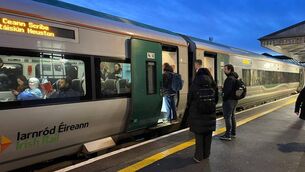
Today, it is mainly a tourist area, offering a fine selection of accessible walks, beginning conveniently from Howth Railway Station. One of the best of these is the Tramline Loop, which was mainly constructed by the Great Northern Railway Company to attract rail tourists to Howth. A scenic 8km moderate walk, it offers spectacular views of Dublin Bay and the Irish Sea from rugged clifftops and inland paths. Taking about 2 hours to complete, it comes with the huge benefit of starting from and finishing at Howth DART Station, which offers a direct 30-minute connection to Dublin City Centre.

A scenic 8km moderate walk

For a bracing ramble, begin from the DART Station and follow the blue arrows for the Tramline Loop along the Promenade. At the end of the prom, pass the entrance to Howth East Pier, which was originally constructed to protect Howth Harbour from frequent storms in Dublin Bay. It was here, in 1914, that the renowned Howth Gun Running took place with the unloading of about 1,500 rifles and ammunition that had been purchased in Germany. They had been transported to Ireland aboard the private yacht Asgard, which was owned by English-born Irish Nationalist, Erskine Childers. Met by hundreds of enthusiastic Irish Volunteers on arrival, the rifles were then, despite attempts by the British Authorities to confiscate them, dispersed around Dublin City with many later used in the 1916 Rising.

Now, veer right onto Balscadden Road and ascend to reach Kilrock Car Park. Here begins the renowned Howth Cliff Path with renowned views over Lambay Island, Ireland’s Eye and later the Baily Lighthouse, beneath which occurred one of Ireland's greatest sea tragedies.

In the 19th century, paddle steamers revolutionised travel by offering more reliable and faster ocean voyages. Steam-powered boats, which were propelled by large paddle wheels, enabling them to operate independently of the wind. One such was the Queen Victoria, which was built in Glasgow for the Dublin Steam Packet Company. She departed Liverpool for a routine voyage to Dublin on February 14, 1853 with cargo and approximately 100 passengers.

Approaching the Irish coast during a heavy snowstorm and thick fog, the ship ran aground at Howth Head. The captain backed the ship off the rocks but was unable to regain control. The Queen Victoria hit rocks for a second time, below the Baily Lighthouse and sank within 15 minutes with the loss of 83 lives. The captain, who went down with his ship, was subsequently blamed as the main cause of the disaster by a Board of Trade inquiry. He had failed to reduce speed in poor visibility, while a contributory factor was the lack of a fog bell at the Baily Lighthouse. The wreck was rediscovered by divers in 1983 and had the distinction, the following year, of being the first shipwreck in Irish waters to be protected under the National Monuments Act.

After 3km, the blue arrows point right and uphill towards the Summit Carpark and Bailey Green Road. You have the option here of continuing ahead on the 12km Bog of Frogs Loop, by following purple arrows. It also leads back to Howth DART Station, but is a more challenging loop, involving about 300m of ascent.

Beyond Bailey Green Road, the route enters the track bed of the Howth Tramway opposite the Summit Inn. This was an electric tram service that operated from 1901, offering a highly scenic 8.7 km loop, from Sutton, around Howth Head, to the Railway Station. It was mainly aimed at recreation seekers by allowing passengers savour the expansive views over Dublin Bay. Better roads in the 1950s and the coming of bus services made the tramway uneconomic. It was closed in 1959, with the last tram running on May 31.

Now follow the disused track bed, with a couple of short excursions through housing estates, to exit opposite the Dart station, having enjoyed an invigorating 7.5 km outing.

x

More in this section

Revoiced

Newsletter

Sign up to the best reads of the week from irishexaminer.com selected just for you.

Cookie Policy Privacy Policy Brand Safety FAQ Help Contact Us Terms and Conditions

© Examiner Echo Group Limited