Same species, different city: Is nature losing its local accent?
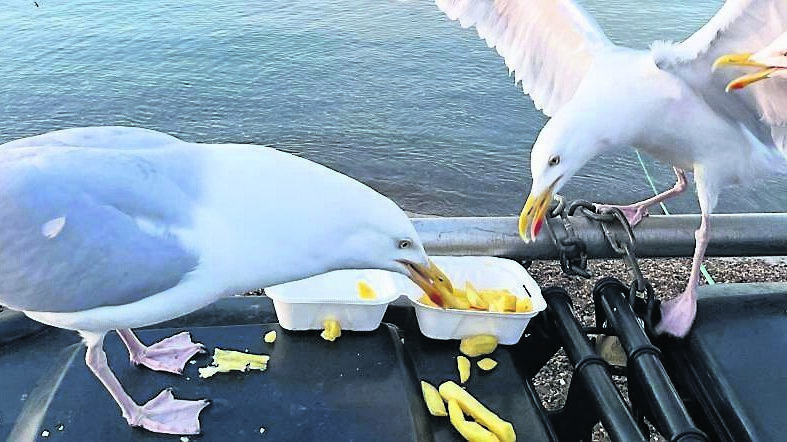
Gulls have become commonplace in cities across the world and have adapted their diets to include chips and bread and other human foods.Picture: iStock
YOU fly halfway across the world, wander into a city square, look around, and there they are again: Pigeons, marching about like they own the place; gulls plotting the theft of someone’s chips; and somewhere nearby, very likely, a rat conducting quiet, but determined, business. You could be in Dublin, New York, Singapore, or Sydney. The architecture changes, the language changes, the coffee certainly changes, but the wildlife stays the same.
Ecologists have started noticing this, too. Increasingly, ecosystems around the world are beginning to resemble one another. The same adaptable species appear again and again, while many of the more specialised ones quietly disappear. Some scientists have begun referring to this emerging ecological pattern as the ‘Homogenocene’, a world where biodiversity is becoming increasingly uniform. It’s not an official term, but the idea reflects a well-documented phenomenon known as biotic homogenisation.
The concept was first described by ecologists in the early 2000s and has since been observed across many ecosystems and species groups. One of the most influential studies, led by ecologist Michael McKinney, showed that human activity is reshuffling biodiversity globally, allowing a relatively small group of adaptable species to spread widely, while more specialised species decline. In a landmark synthesis published in , McKinney and colleagues argued that the spread of common species, combined with the loss of rare species, is making ecological communities increasingly similar worldwide.
Subsequent research has reinforced this pattern. A large global analysis, published in , examined biodiversity change across hundreds of ecological assemblages and found that although local species numbers sometimes remain stable, community composition is shifting dramatically, with widespread species expanding and unique local species declining. In simple terms, ecosystems may still contain many species, but increasingly they are the same species everywhere.
Differences in geography, climate, and geological settings produced unique combinations of species. Australia developed marsupials, Madagascar evolved its remarkable lemurs, and Ireland acquired its distinctive flora and fauna after the last ice age. But globalisation has dramatically reshuffled the ecological deck. Ships, planes, and international trade now move species around the planet at unprecedented speed. Seeds travel in cargo. Insects hitchhike in wooden pallets. Marine organisms attach themselves to ship hulls or travel within ballast water.
According to a widely cited global synthesis in , the number of species introduced outside their native ranges has increased dramatically over the past century, closely tracking the growth of international trade. At the same time, the landscapes humans create — such as cities, farmland, and even infrastructure — are surprisingly similar worldwide. These environments favour species that can tolerate disturbance, eat a wide range of foods, and adapt quickly to change. These are called generalist species.
Pigeons nest happily on buildings instead of cliffs. Gulls have expanded their diets from fish to chips and sandwich crusts. Foxes move comfortably into suburbs. Rats, meanwhile, have turned adaptability into an evolutionary art form. In the ecological lottery of the modern world, these species are the clear winners.
Unfortunately, not all species are so adaptable. Many plants and animals are specialists, meaning they depend on specific habitats or ecological conditions. Some insects rely on a single host plant. Certain birds require particular nesting structures. Rare plants may grow only in very precise soil or hydrological conditions. When habitats change or disappear, these specialists often struggle to survive. Over time, the ecological balance shifts. Adaptable species expand their ranges, while specialised species decline or vanish locally. This process, known as taxonomic homogenisation, has now been documented across birds, fish, plants, and insects worldwide.
Ireland offers its own examples of these trends. Urban bird communities are increasingly dominated by adaptable species, such as pigeons, gulls, crows, and magpies. Meanwhile, many birds have declined across Europe as agriculture has intensified and landscapes have become more uniform. Marine ecosystems are experiencing similar changes. Non-native species transported through shipping can alter coastal communities, sometimes allowing widespread species to dominate rocky shores and estuaries.
This might not seem like a major problem. After all, wildlife is still present in many places. But from an ecological perspective, diversity matters. Research consistently shows that ecosystems with higher biodiversity tend to be more stable and resilient. Diverse ecological communities are better able to withstand environmental disturbance, such as disease outbreaks, invasive species, or climate extremes. When ecosystems become more uniform, they may also become more vulnerable.
There is also something less scientific, but equally important, at stake. Part of the wonder of nature lies in its variety. Each landscape tells a story through the plants and animals that live there. The species you encounter reflect the climate, geology, and evolutionary history of that place. A world where ecosystems increasingly resemble one another would not just be biologically poorer. It would also be far less interesting.
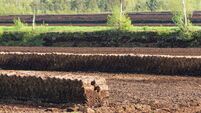
The good news is that this trajectory is not inevitable. Protecting habitats, restoring ecosystems, and managing invasive species can help preserve ecological distinctiveness. Even relatively small actions, such as maintaining hedgerows, and restoring bogs and native plant communities can provide refuge for specialised species.
Nature has always changed over time. Species have moved and ecosystems have shifted throughout Earth’s history. But the speed and scale of change today are largely driven by us. And unless we pay attention, future generations may discover something rather disappointing: That no matter how far they roam, the wildlife looks strangely familiar and the gulls are waiting to steal your chips.

CONNECT WITH US TODAY



Be the first to know the latest news and updates