'I’m so sorry, there’s no heartbeat' — Fathers’ grief after baby loss needs to be acknowledged
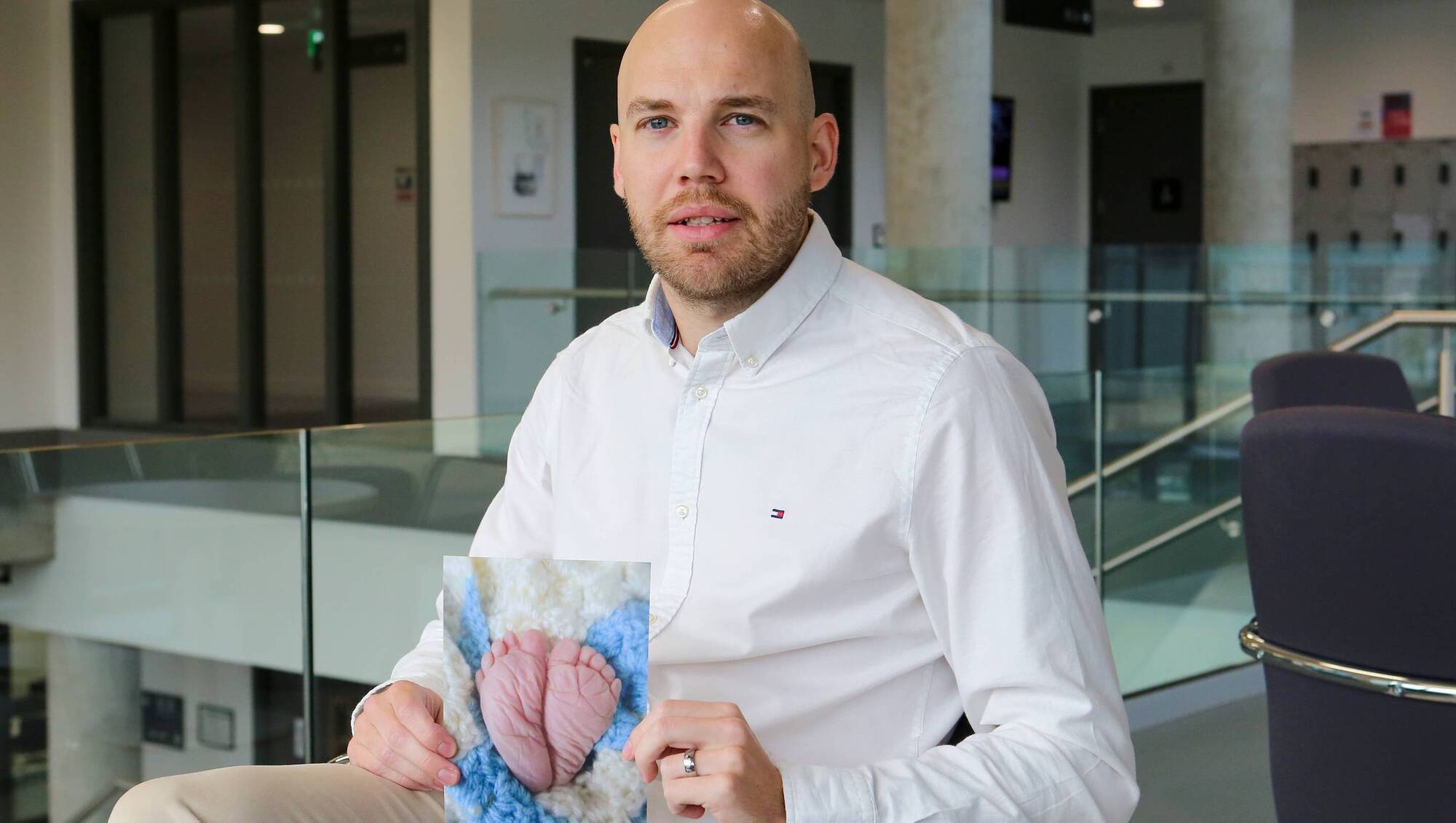
After his son Freddie was stillborn in 2023, university lecturer Lewis King found himself trying to understand not only his own heartache, but also the experiences of other dads facing similar grief. At the start of Baby Loss Awareness Week, he writes about why men can be the forgotten mourners
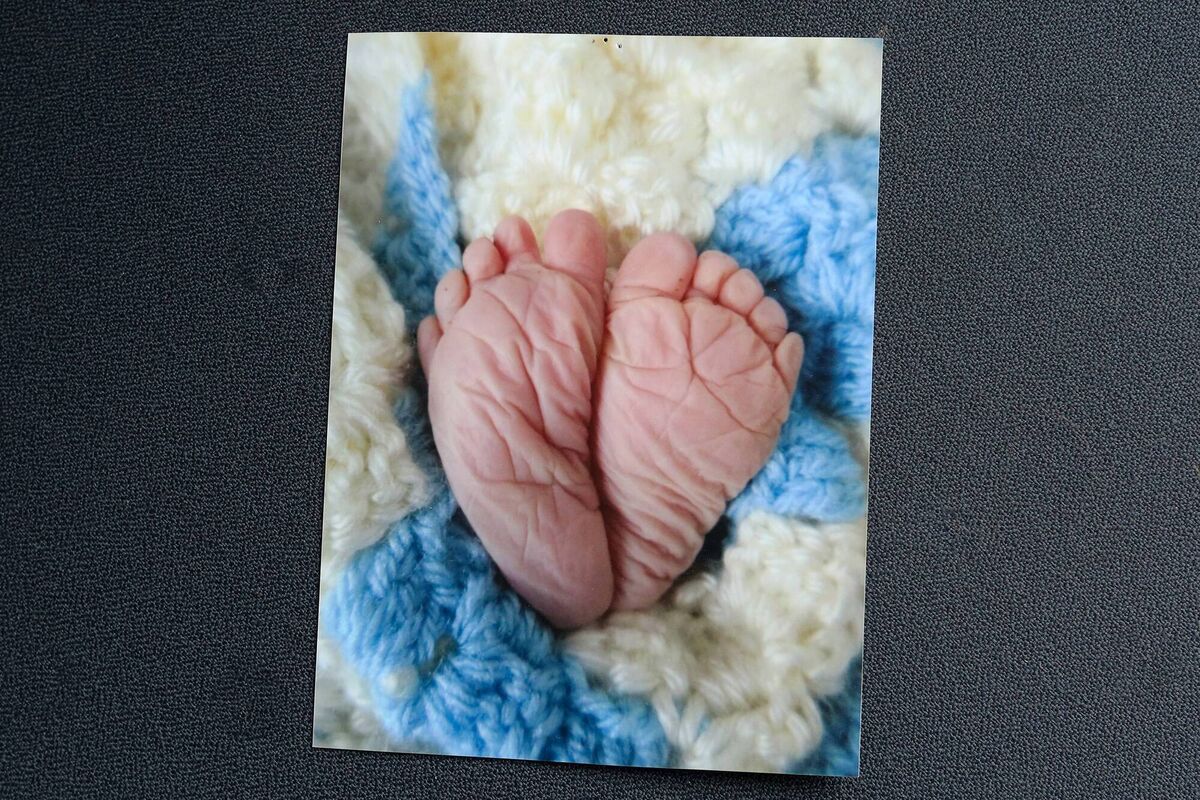
Lewis King, whose son Freddie died at 31 weeks’ gestation, pictured with a photograph of Freddie’s feet. Picture: Paul Molloy

Lewis King, whose son Freddie died at 31 weeks’ gestation, pictured with a photograph of Freddie’s feet. Picture: Paul Molloy

On November 11, 2023, at 5am, my wife, Jodie, and I sat hand in hand in a hospital room. She was in her 31st week of pregnancy and our baby had not moved for a while. A consultant began the ultrasound. Nothing. There was no familiar flicker of a heartbeat.
“Let me get another person in here,” the consultant said, seeking a second opinion. I knew. Jodie knew. Then came the words that changed our lives: “I’m so sorry, there’s no heartbeat.”

Four days later, Freddie Paul King was born at 7.52pm. He was the little man who made us parents.

Freddie died because of an ‘extended, hypercoiled umbilical cord’. In the months afterwards, I searched for ways to connect to him. Mostly, I ran. I feel at peace when I run.

I also started reading, and then talking to other fathers. Through my work as a lecturer and researcher at the Technological University of the Shannon (TUS), in Athlone, I began looking more closely at men’s experiences of pregnancy and baby loss.

Alongside Dr Marita Hennessy, of the Pregnancy Loss Research Group, and Dr Kieran Dowd, from the Department of Sport and Health at TUS, I am now the lead supervisor on a four-year PhD exploring that subject.

Much of my previous work focused on the mental health of jockeys. Jockeys are tough. They have to be.

But our research found that stigma, masculinity, and self-reliance can become barriers to men seeking help.

After Freddie died, the parallels felt much closer than I ever expected.

What began as an attempt to understand my own grief became something broader.

After pregnancy and baby loss, men can feel overlooked by systems that understandably centre the physical and psychological care of the mother.

Fathers are positioned primarily as supporters.

The HSE estimates that between 20% and 25% of pregnancies end in miscarriage, although miscarriage is not recorded nationally in Ireland. In 2023, 158 stillbirths and 77 neonatal deaths were reported by the National Perinatal Epidemiology Centre.

Behind these statistics are families whose lives have changed forever, yet the grief experienced by fathers is often overlooked. More than two decades ago, Swedish researchers described fathers after stillbirth as “forgotten mourners”.

In 2022, Irish research found that men are expected to be the protector and supporter, sometimes at the expense of their own emotional needs. In 2025, a study of recurrent miscarriage services found that the needs of fathers were often under-recognised and unmet, and called for better information and support for them.

During consultations with doctors, and later at our autopsy review, I sometimes felt invisible. I remember thinking he was my son, too: ‘Why are you not directing some of this information at me?’

Jodie went through something that I will never fully understand: She carried our child while he was alive and healthy, carried death, and birthed a baby who had died. Caring for Jodie had to be central. But we are a team. We are both Freddie’s parents.

There is no single way for fathers to grieve. A recent review of 46 studies found wide variation in men’s experiences after pregnancy and neonatal loss, but recurring themes included the expectation to support a partner and a lack of recognition of their own grief.

Being useful can help. When your world is spinning, making the phonecalls, driving the car, answering messages, and looking after everyone else gives you something to hold. But usefulness can also become a hiding place. Some men talk. Others do not. Emotional expression should not become another standard that men feel they are failing to meet.

The question is not whether men are grieving in the ‘right’ way. It is whether we recognise grief when it looks different. That recognition can start in the hospital, which should not treat the father or partner as a spare part. Doctors should speak to him directly, include him in explanations, ask him if he understands what is happening, and give him information about support.

Small acts of inclusion can matter enormously.

Workplaces matter, too. The Government has approved plans for five days’ statutory, paid pregnancy-loss leave where the pregnancy ends before 23 weeks. But the proposal applies to the mother. Fathers are not included. I believe they should be.

A father does not need to have physically experienced the pregnancy to have lost a child, and compassionate leave should recognise that.

Friends and family also have a role. Along with supporting the bereaved mother, they should ask the father how he is.

Acknowledge the baby and, if the parents are comfortable with it, say their name. Check in again weeks and months later, when everybody else has returned to their normal lives. Make the call, rather than say, ‘Call me if you need anything.’

Support exists through organisations such as Féileacáin, First Light, the Miscarriage Association of Ireland, and A Little Lifetime (among others), as well as peer communities, such as Féileacáin Fathers, Sad Dads Club, and Love From Dad.

Not everybody will need formal support. Men do not have to talk before they are ready. But we should make sure support reaches men in ways that recognise how they may experience and express grief.

Baby Freddie's feet. Photo Paul Molloy

When I think back to that hospital room, I barely recognise the man I was. My life is now divided into two: Before Freddie and after Freddie. I struggle with all the ordinary things I will never get to experience with him, such as hearing his giggle, watching Liverpool together, and dancing to heavy metal in the kitchen.

Recognising the grief of fathers and partners does not diminish the grief of mothers.

There is a broader need to improve how people are supported following pregnancy and baby loss, and to address the real inequities that remain in access to care, information, and support.

Hospitals should involve fathers and partners, not simply have them in the room. Health professionals should understand that grief does not always look the same.

Work leave should acknowledge that fathers have also lost a baby. Friends and families should keep asking how they are. And men need to know there is a space for an honest answer.

  • If you would like more information on support groups, hospitals, information booklets, or guidelines related to pregnancy and baby loss, please visit the Pregnancy Loss Research Group (pregnancylossresearchgroup.ie) or pregnancyandinfancyloss.ie.
  • Baby Loss Awareness Week takes place from October 9 to 15.

More in this section

Lifestyle

Newsletter

Eat better, live well and stay inspired with the Irish Examiner’s food, health, entertainment, travel and lifestyle coverage. Delivered to your inbox every Friday morning.

Cookie Policy Privacy Policy Brand Safety FAQ Help Contact Us Terms and Conditions

© Examiner Echo Group Limited