‘People are getting sick from the worry of it’: Cape Clear residents frustrated by lack of local healthcare
The island was without a single nurse on 51% of days between January last year and August this year
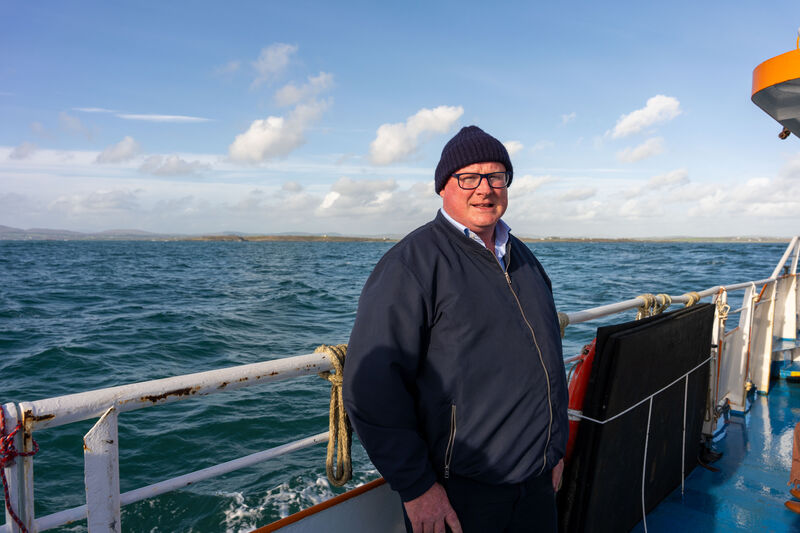
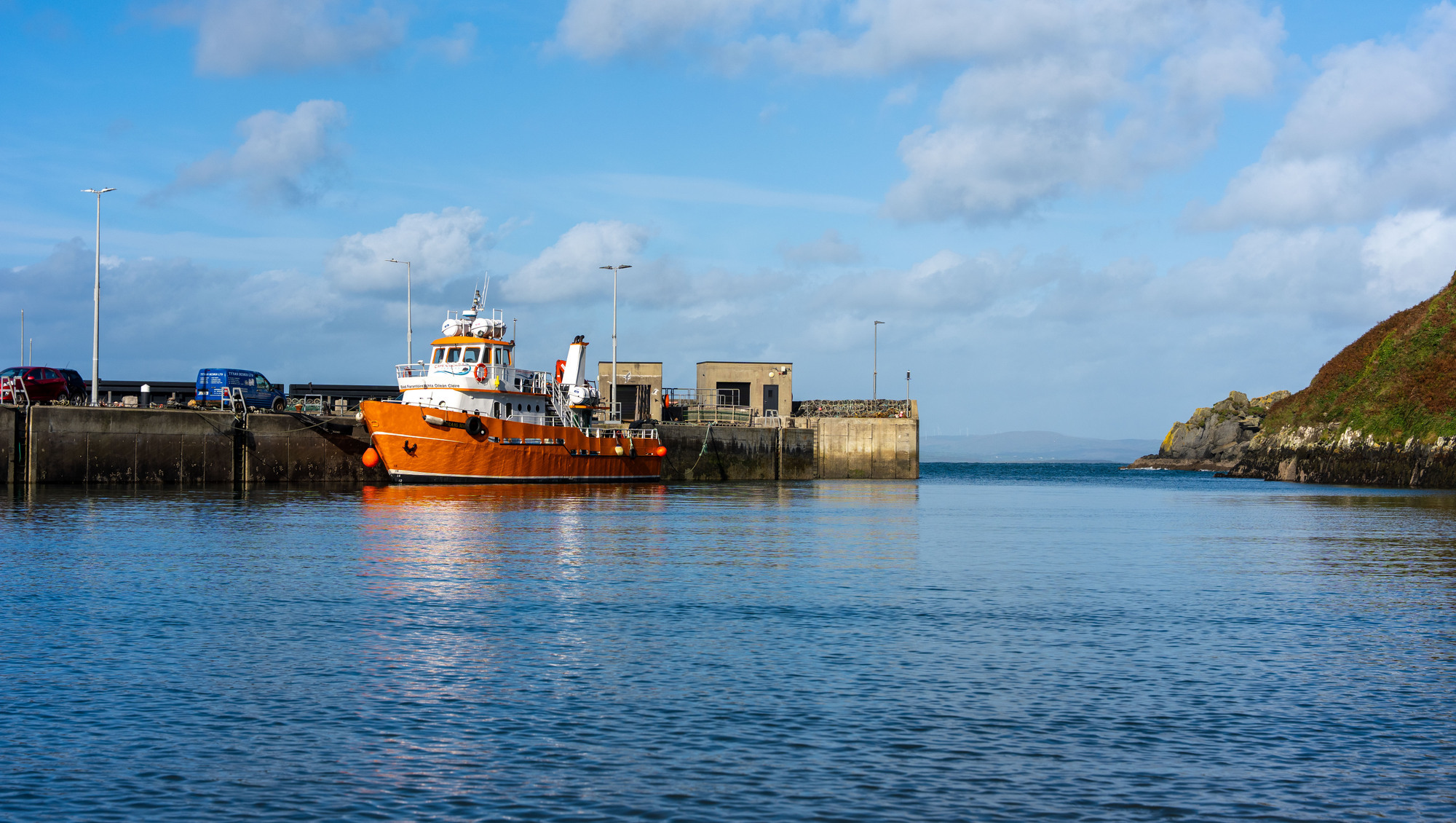
The Cape Clear Island Ferry service docked during a calm tide. With just one registered general nurse and no cover when she is ill or on leave, people often have little choice but to travel to the mainland for help. Picture: Noel Sweeney

The Cape Clear Island Ferry service docked during a calm tide. With just one registered general nurse and no cover when she is ill or on leave, people often have little choice but to travel to the mainland for help. Picture: Noel Sweeney

“You dread something will happen.”

A woman with spinal injuries living on Cape Clear summed up growing fear about gaps in nursing cover on the Gaeltacht island.

The lack of healthcare options for inhabitants has become a burning issue on the picturesque island, located 13km off the Cork coastline.

On a shop counter near the welcoming pier, an orange folder is stuffed with petitions for the HSE and the health minister, demanding increased nursing cover.

The shop is where the 50-minute ferry ride from Baltimore ends, and on a gusty October day, it is hard to imagine a sick person on board the boat.

But with just one registered general nurse and no cover when she is ill or on leave, people often have little choice but to travel to the mainland for help.

The island was without a nurse on 51% of days between January last year and August this year, according to data collected by the islanders.

In July, there was no cover whatsoever, while only five days were covered in August.

It has been approximately a year since a GP last came out to the island.

Living with injuries

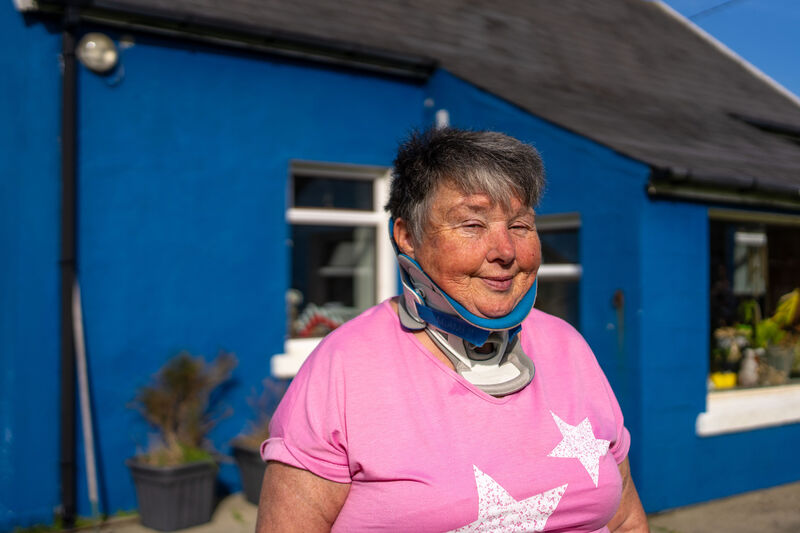
Rita O’Donoghue opened the door of her blue cottage with a neck brace on.

Her life changed in late 2022 when she was hit by a car on a visit to Bantry.

“I was thrown about 40 feet in the air. When I hit the ground, it broke the neck, but then my shoulder dislocated, which saved the right-hand side of the neck,” she said over tea.

“I was crossing the road to get the early bus at 8.15am.

“Joanna had tickets bought for Westlife in Aberdeen, so at age 62, I broke my neck going to see Westlife. There’s a song in there somewhere.”

The driver was charged with dangerous driving, but Ms O’ Donoghue was left with life-changing injuries.

Rita O’Donoghue is a full time resident of Cape Clear, and is recovering from a long-term injury. Picture: Noel Sweeney

“I’ll be dealing with it forever. There is no ‘get better’.”

She attends Cork University Hospital for treatment, but also needs help closer to home.

“I need the nurse, even to check my blood pressure, and she can then tell the doctor. They would tell her what tablets to give,” she said.

Her biggest fear is not recognising when something is seriously wrong.

“One time I waited three weeks for a GP appointment, the same as anybody here would,” she said.

When she was seen, the doctor spotted a serious issue.

“The GP was in a flap. I didn’t know it was urgent.”

Rita no longer has a home help service either.

“I can manage as I am. It’s as urgent for everybody else as it is for me because if there’s nobody on the island who can cater for you, you have this worry in your head all the time,” she said.

Ageing fears grow

Across the island, Patrick O’Drisceoil, a fifth-generation islander, farms and works on the ferry but now worries about the risk of a fall, especially as winter storms worsen.

Access to nurses has never been as limited in his lifetime, he explained, saying he raised a family here with the help of a public health nurse.

“That nurse could not leave until another nurse was in (for cover),” he said.

Sometimes they crossed at the pier, but there was always a handover.

Cape Clear is the only Gaeltacht island in Munster, and Patrick dips lyrically in and out of Irish and English.

“There was no banaltra (nurse) this summer, and there were 14,000 visitors on the ferry alone, never mind day-trippers on ribs and the rest,” he said.

“This kind of stress is in the island now. It is making people think, ‘should we move to the mainland?’ It’s making them nervous. People are getting sick from the worry of it.”

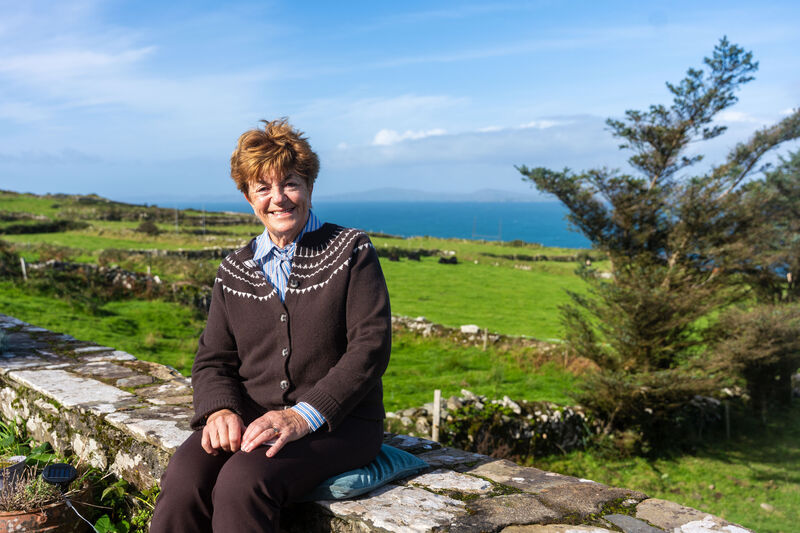
Full-time Cape Clear resident Cecilia O’Drisceoil said her approaching senior years would be less anxious with the return of a permanent resident nurse. Picture: Noel Sweeney

His wife, Cecilia, arrived on the island as a young teacher in her 20s.

Now retired, she praised the primary care service in Skibbereen but echoed her husband’s concerns.

“We can be cut off,” she said bluntly.

In very bad weather, neither the RNLI Lifeboat nor the Coastguard helicopter can help.

An electricity outage also means the storm-gates in the harbour cannot be opened, she added.

“It was much better in the early days. We had a permanent resident nurse, that’s the big difference,” she said.

“As you approach your senior years, there are other anxieties that come into play then because none of us know what’s ahead of us.

“The presence of a nurse on the island would be so reassuring. Now, don’t get me wrong, we have an excellent nurse, but there’s been a lot of gaps in the service, and nobody replaces her.”

The youngest islander

Further along the road, a young family shares similar fears.

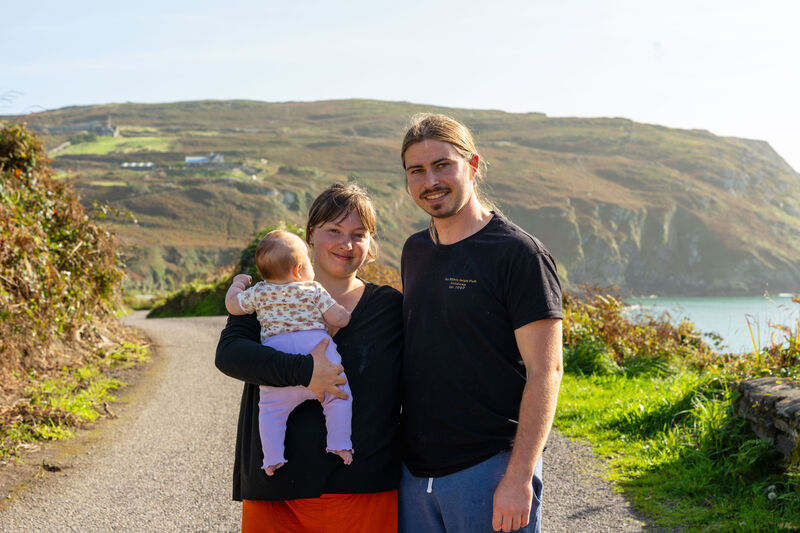
Daithí Collis grew up in Bandon and visited the island often as a boy. He now lives here with Amelia DeCarteret, from Clare, and their 3-month old daughter.

“It’s a secure place to live. It’s a Gaeltacht, and it’s a safe place to raise a child,” Ms DeCarteret said.

But she admitted that healthcare is “quite tricky” now.

“There are not many families on the island with young children,” she said.

“Even the doctor appointments we had already are a bit awkward to get in and out.”

Post-natal care in Skibbereen means taking the ferry to Baltimore and driving around 15km.

Islanders Amelia DeCarteret and Daithí Collis with their three-month-old baby. Picture: Noel Sweeney

Mr Collis agreed: “If (our daughter) gets sick, that’s the worry. You’d think we would try to preserve our culture and keep unique places alive.

“Surely, by not having a full-time health person here, that is not doing that in the slightest. It’s a deterrent.”

The nurse “needs her time off too”, he added, questioning why the HSE does not provide cover.

Ms DeCarteret said: “If our daughter took a fall and needed a few stitches and the nurse is on holiday, there is nobody here.

“And what if we missed the first ferry? That means we are waiting all day to go to the mainland at 4pm. We might not make the doctors and then we have to go to Southdoc instead in Skibbereen.”

Community first responders

None of this is news to Marie Sheehan, who grew up on the island.

She was living with her partner and their two children on the mainland when her mother became ill, too ill for her father to manage alone.

“There is no home help available on the island,” she said.

“I’ve had to step away from my teaching job and become her carer.”

She now lives part-time on Cape Clear.

“We’re making it work, but you’re weather-dependent, you’re ferry-dependent, so it can be a juggling act, especially in the winter.”

She is one of 11 first responders on the island, trained to assist people in a crisis while emergency services are on the way.

It is a heavy responsibility. There were three sudden deaths on the island in the last 18 months.

Jude Gilbert coordinates the first responder group and works with Comhar na nOileán, a local development organisation for inhabited offshore islands.

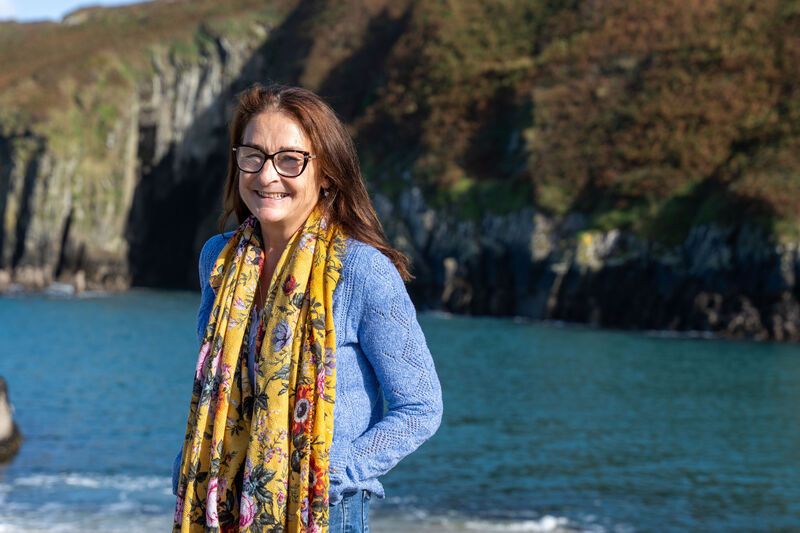
Jude Gilbert is the coordinator of the First Responders on the island. Picture: Noel Sweeney

The emergency first responders are “not to replace the nurse”, she said.

“We’d get a 999 call, it’s mostly around cardiac response or trauma, or if somebody was hit in an accident.

“We would be the backup for the nurse. Nursing cover is vital for an offshore island.”

The RNLI Lifeboat and Coastguard helicopters are “absolutely wonderful” in emergencies, she stressed, but added: “Our traditional contract with the HSE for nursing cover is 52 weeks a year, seven days a week.

“And we’re not getting that at the moment. There isn’t a replacement for our wonderful nurse when she’s gone.”

Other islands

The Irish Examiner met Páraic Ó Coincheannain on the ferry. He is on the Comhlacht Forbartha Inis Meáin, the development committee for the island of Inis Meáin in Galway.

That island has a population of around 180, slightly more than Cape Clear’s 130.

He said a GP comes out three times a week. They have a permanent nurse living there and cover for when she is away.

He was shocked at the lack of support on Cape Clear, especially as it is such a busy tourist island.

Niamh Ni Dhrisceoil — Cecilia and Patrick’s daughter — was frustrated to learn recently about broader services on Tory Island in Donegal.

“Tory would say they don’t have a perfect system, but they have three nurses servicing them and a doctor flown out twice a month on a helicopter,” she said.

Páraic Ó Concheannáin, who works with Comhlacht Forbartha Inis Meáin. Picture: Noel Sweeney

She has raised this with politicians, saying: “Why should residents of one offshore Gaeltacht island have access to a level of healthcare provision that is so fundamentally different from that available to residents of another?”

As campaign spokeswoman, she said they have been “really disappointed” with the HSE and health minister Jennifer Carroll MacNeill’s responses.

“We’re being gaslit by the HSE,” she said.

“It is very clear that they are not actively looking into what’s happening here, and they’re totally ignoring the documentation we’ve sent them.”

They have called for a full-time public health nurse with reliable cover and regular GP visits, possibly supported by financial incentives or able to work on short-term contracts.

Tourism concerns

At the pier, An Siopa Beag is attached to a cafe where up to 500 meals are needed daily during the summer, according to owner Neil Ó Riogáin.

“Tourism is about 80% of my business, and having facilities here, services here for people who visit is important. The range is from babies to elderly people,” he said.

“When (the nurse) is not on the island, there’s zero healthcare here for them.”

He worries about seasonal workers too, saying: “To get them services, to get them seen to is a nightmare.

“I do believe the HSE most definitely took their eye off the ball on Cape, with the lack of service we have here now.”

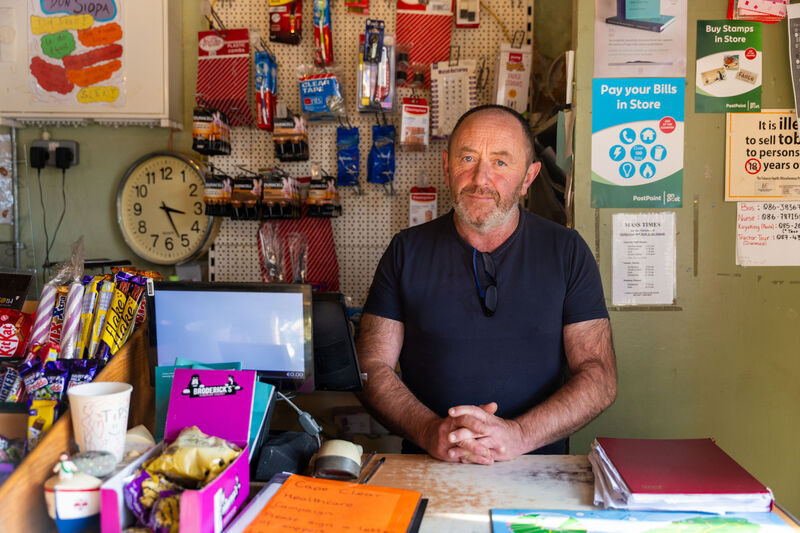
Neil Ó Riogáin, owner of An Siopa Beag, has tourism concerns. Picture: Noel Sweeney

Another islander, Ed Harper, has been hospitalised in Bantry for about a month after a fall.

A well-known goat-keeper, despite being blind, he shares her concerns.

Still in recovery, he said by phone: “I would be reluctant to go back (to the island) with no nurse cover”.

When he moved to the island over 30 years ago there was permanent cover and a monthly GP visit.

“A doctor would be nice because going to Skibbereen is a total drag, but the essential thing is the nurse,” he said.

He also worries about the influx of tourists, saying a nurse would be kept “very busy” because “you get all sorts of people, of all ages, and doing all kinds of things”.

Political support

The concerns have been raised politically, including by minister for the Gaeltacht Dara Calleary, independent TD Micheal Collins, and Social Democrats leader Holly Cairns.

Ms Cairns said: “The dangerous absence of full-time nursing cover on Cape Clear is putting residents at risk and threatening the sustainability of the community.”

She has seen the campaign’s data, but said: “The HSE, however, seems to be experiencing an entirely different reality than those on the ground.”

“A nursing resource allocation is meaningless unless it actually delivers services on the island.

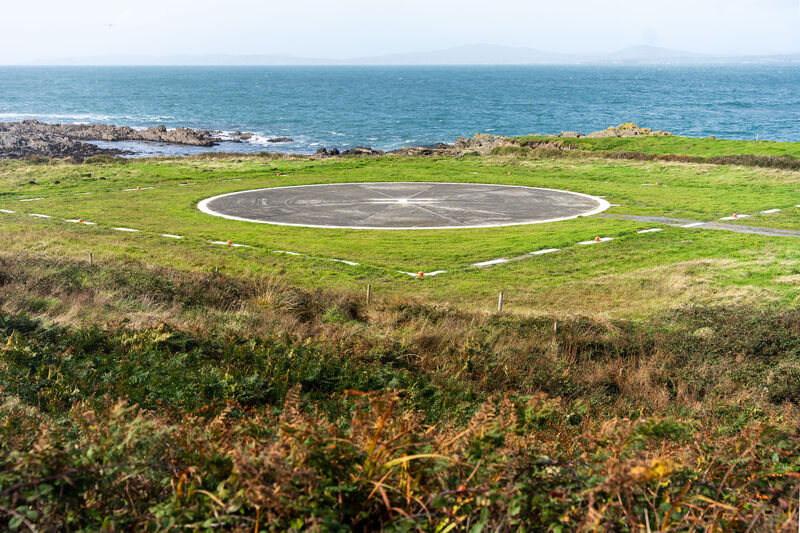
The Helipad landing spot on Cape Clear. The RNLI Lifeboat and Coastguard helicopters are “absolutely wonderful” in emergencies, says Jude Gilbert, but adding that the island needs localised carePicture by Noel Sweeneyz

“We cannot talk seriously about sustaining our island communities, encouraging young families to settle there, or enabling older people to remain living independently, while failing to provide the most basic healthcare services.”

She intends to raise the issue again with the health minister and called for “immediate measures”.

Support has also come from EU MEPs Billy Kelleher and Cynthia Ni Mhurichu.

Department of Health and HSE position

The Department of Health said it recognises the islanders’ concerns.

“Geography should not be an unreasonable barrier to essential care,” a spokesman said.

“The Government’s Our Living Islands policy commits to improving healthcare access on offshore islands.”

The department and the HSE are bringing in an allowance for nurses or midwives working on off-shore islands of €2,550 under the public service agreement 2024–2026.

A virtual care programme is being rolled out across 12 offshore islands, including Cape Clear, with GP-led care and other services.

He also said HSE Southwest provides a “dedicated nursing service currently” on the island.

This is supported by arrangements with Skibbereen services, he said.

“The HSE will keep service provision on Cape Clear under ongoing review to ensure it continues to meet the assessed needs of the population,” he said.

A HSE Southwest spokeswoman said on Friday its data indicates “62% nursing cover for Cape Clear, Jan 2025 – Sep 2026”.

She said a nurse from Skibbereen goes to the island for critical or palliative care if the island nurse is on leave. Other requests are assessed on the basis of need. Funding was recently announced for a new emergency response vehicle for the island.

More in this section

Lunchtime News

Newsletter

Get a lunch briefing straight to your inbox at noon daily. Also be the first to know with our occasional Breaking News emails.

Cookie Policy Privacy Policy Brand Safety FAQ Help Contact Us Terms and Conditions

© Examiner Echo Group Limited