Shed life: Helping men build connections

By working shoulder to shoulder on projects, men who join a local shed get to know and support each other. The tea and chat that follows is often when strong friendships are formed  
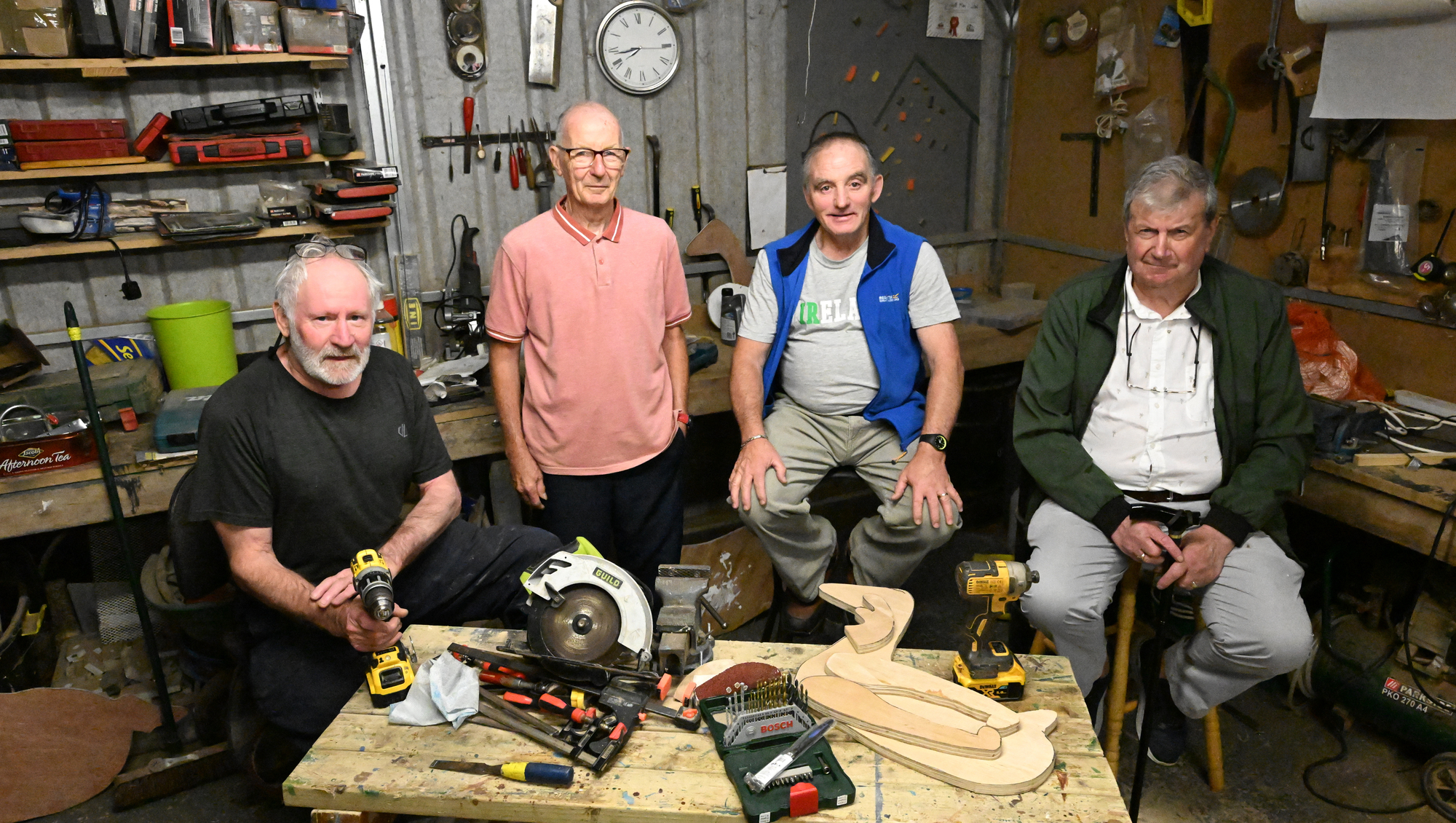
Shed buddies Ger Murphy, Dave Cashman, Kevin Guilley, and Henry Lee in the workshop at Carrigtwohill, Co Cork. Picture: Larry Cummins

Shed buddies Ger Murphy, Dave Cashman, Kevin Guilley, and Henry Lee in the workshop at Carrigtwohill, Co Cork. Picture: Larry Cummins

The most important tool in any shed is the kettle. The real work of the shed happens around tea and chat

The Men’s Shed movement, which started in Australia in the 1970s, arrived in Ireland in 2009. There are now 484 sheds across the country.


“There is one shed for every four parishes in Ireland now — we expect to have 500 active sheds by the end of the year,” says Enda Egan, CEO of Irish Men’s Sheds Association. “Globally, there are more sheds in Ireland per head of population than in any other country in the world.”

In East Cork, Ger Murphy is the longest-serving member of the Carrigtwohill Men’s Shed. He joined 15 years ago: “I was new to the area, and I thought it would be a good way to become involved with the locals.”

He has since become an active member and is joined by four other regulars, and several other men who pop in and out.

I meet the core group on a Tuesday evening, and straight away I feel welcome. The shed is as you’d imagine: A large space with tools hanging on the wall, planks of wood here and there, work benches, and an assortment of chairs and stools.

Carpentry is the main discipline in Carrigtwohill Men’s Shed, with their resident carpenter, Kevin Guilley, 72, in charge of “quality control”.

“I’m here three years now and I love it. Before I came along, the quality of the carpentry wasn’t great,” jokes Guilley.

“I don’t know how we managed to build anything before Kevin came along, but somehow we did,” laughs Murphy in response.

Ger Murphy working on a wooden reindeer in the workshop at Carrigtwohill, Co Cork. Picture: Larry Cummins

The shed is an important source of support for Guilley, who says he was prompted to join by his wife. “I had cancer, and I was recovering at home, and I needed something to lift me, something to occupy me.

“My wife had seen a notice about the shed and suggested I pop down. I’ve been here ever since.”

The men’s shed has helped Guilley through difficult times.

“I’ve been battling cancer for 22 years, and I’ve had four heart attacks too in that time,” he says. “Coming along to the men’s shed helps me to step away from that for a few hours. I enjoy the social part of it, and I know if I have any problems and need advice or a different perspective, I can get that too.”

Kevin Guilly cutting wood in the workshop at Carrigtwohill, Co Cork. Picture: Larry Cummins

Joking aside

Dave Cashman, 66 from Carrigtwohill, is the joker of the group — “we leave our feelings at the door” — but among the banter and the ribbing, there’s real affection between the men.

When Guilley goes to put on the kettle, the other men talk about the “rough time” he’s had with his health, with concern in their voices.

All acknowledge that if it weren’t for the shed, none of them would have crossed paths in their daily lives. And now they are friends, meeting up twice a week.

Dave Cashman in the workshop at Carrigtwohill, Co Cork. Picture: Larry Cummins

“There’s a huge sense of camaraderie within sheds. The challenge can be getting a man to go into the shed, but if they go into the shed once, they always come back,” says Egan.

“You can throw the engine of a broken lawnmower up on a bench, and three or four men get around it and start to fix the lawnmower. But what they don’t necessarily realise is that while they’re doing that, they start to open up and talk about things that they wouldn’t necessarily talk about to anybody else.”

Men might not necessarily talk face to face, but they “talk shoulder to shoulder”, says Egan.

It’s that communication the sheds association wants to harness and promote. A 2025 report commissioned by men’s charity Movember found that, in Ireland, two in five men die before the age of 75, and men’s premature death rates are 40% higher than women’s. Isolation, poor lifestyle, and under-engagement with health services were seen as major contributors.

While Egan doesn’t suggest that talking and communication will reduce the number of deaths, 2025 research from the World Health Organization points to social connection as a key component in tackling chronic loneliness and isolation. The report links loneliness to an estimated 100 deaths globally every hour, more than 871,000 deaths annually.

Sense of belonging

Many men lose their social network during key phases of their lives: Retirement, after a bereavement, or during illness. Based on the feedback he gets from the sheds around Ireland, Egan knows the sheds give men a network where they can create new social connections.

A sense of belonging also comes into it. The men in the Carrigtwohill shed are firmly entrenched within the East Cork community. They put up the annual Christmas decorations, including lights, a crib, and reindeer, as well as taking care of wooden planters as part of community plans to spruce up the main street. They also helped to re-paint and re-decorate the main street recently and regularly help anyone who asks.

That’s how the “elder lemon” of the group Henry Lee came to be a member. “I was walking my dog, and I passed by the shed. I saw the lights on and the men working away. My own shed door was falling apart, so I wandered over and asked them if they’d be able to fix it for me. Three years later, I’m still here.”

Henry Lee in the workshop at Carrigtwohill, Co Cork. Picture: Larry Cummins

Here purely in a “supervisory role”, Lee, aged 84, enjoys the back and forth between the group. “I come along for the chat and the company,” he says.

Sharing a cuppa is a critical part of the shed experience, says Egan.

“You walk into any men’s shed, and there’ll be lads talking about DeWalts and Milwaukees and other power tools, but what they also realise is the most important tool in any shed is the kettle. The real work of the shed happens around tea and chat.”

As well as providing the space to build social connections, IMSA, which receives funding from the Department of Health, the HSE and the Department of Rural and Community Development, runs Sheds for Life, a 10-week health programme.

The initiative combines health checks and education, explains Egan.

“It includes a health check, which will look at your blood pressure, BMI, and other factors, and then there are talks on cancer, on dementia, on cardiovascular health from experts,” he explains.

A central part of the programme is titled ‘Healthy food made easy’, which is aimed at “helping men to cook for themselves and make better food choices”, says Egan.

“We would have a lot of
widowers in sheds who need to cook for themselves and might not be making the healthiest choices. The programme gives them that education, and we find that the information really sticks.

“We put it down to the programme taking place in the sheds.”

Around 10,000 men use Ireland’s almost 500 sheds weekly. This free resource (some sheds may have a nominal weekly contribution of a couple of euro) offers connection, a sense of purpose, health education, and peer support. Egan says there is the potential for that 10,000 figure to “be five times that number”, something the association will be working on over the coming years because they believe it’s making a difference. “There’s a kind of magical dust in a shed. It’s difficult to identify exactly what it is, but we know that it’s there. We know that it works.”


x

More in this section

Lifestyle

Newsletter

Eat better, live well and stay inspired with the Irish Examiner’s food, health, entertainment, travel and lifestyle coverage. Delivered to your inbox every Friday morning.

Cookie Policy Privacy Policy Brand Safety FAQ Help Contact Us Terms and Conditions

© Examiner Echo Group Limited