World Cup stars prove slowing down can yield better results
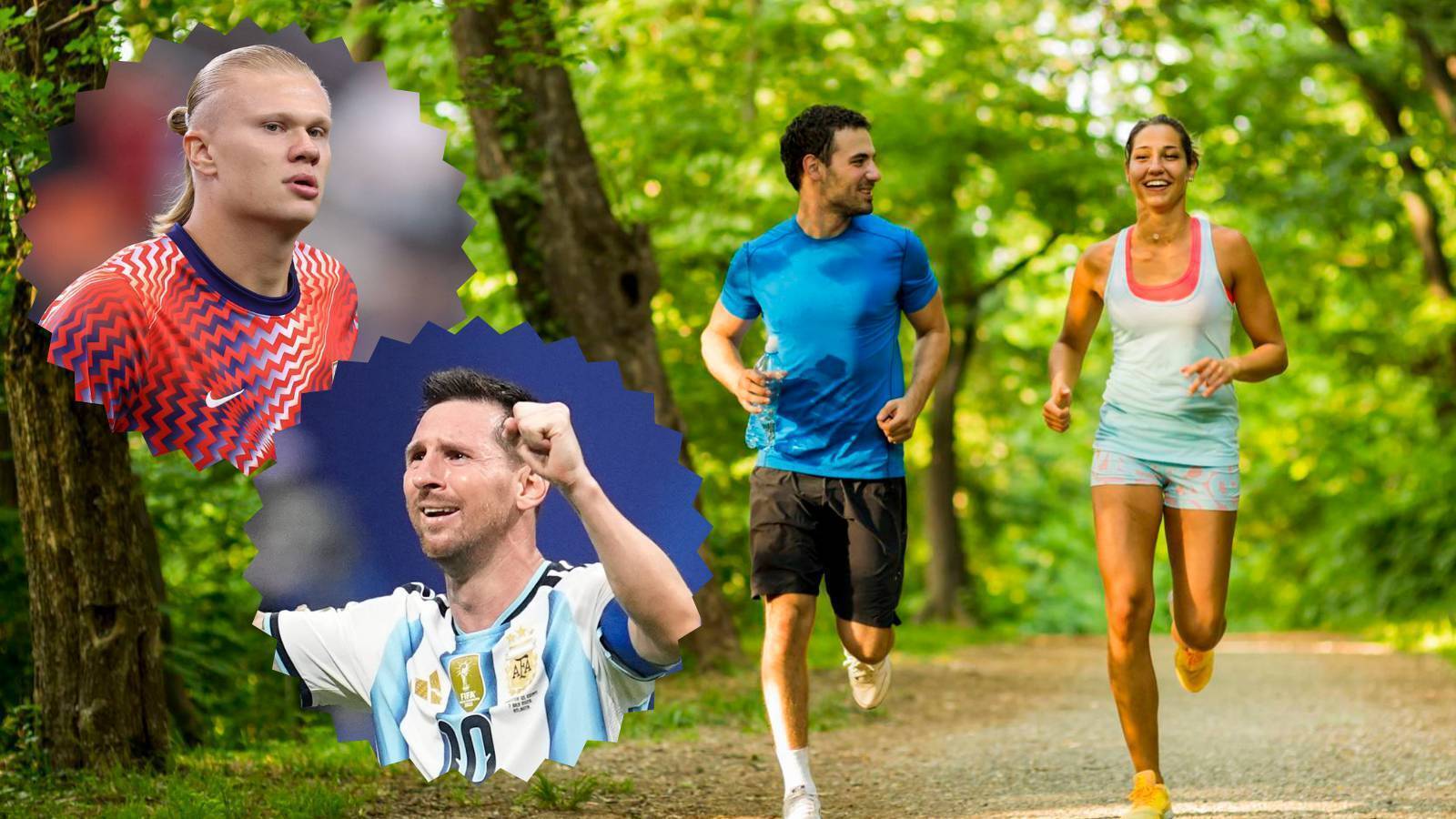
For Erling Haaland, slow walking and recovery jogs, rather than fast sprinting, often preceded a goal.
Argentina’s Lionel Messi is another impressive example of the power of taking it slow on the pitch. According to Fifa, the striker has so far spent 63% of his World Cup walking.
Most of us live by the mantra that we need to go harder and faster to get fitter at the gym. Progress is judged on sweat levels, improved metrics on a fitness tracker, and the number of reps we manage to clock up in an hour. But what’s the hurry? Scientists are encouraging us to take a leaf out of Haaland and Messi’s books and perform at least some weekly exercise at a snail’s pace.

Ken Nosaka, professor of exercise and sports science at Edith Cowan University in Australia, is one of a growing number of academics on a mission to get us to slow down. He says that when it comes to resistance training, slowing down is better for us.
“There is a misconception that all exercise must be exhausting or painful and that slower exercise is not good for us,” Nosaka says. “It is holding people back as they think it [exercise] is pointless unless you are going full throttle.”
He has amassed plenty of evidence to prove that slow exercise works. When it comes to resistance training, for example, he says that a focus on lowering weights slowly, rather than lifting them with ferocious speed, enables people to work for longer.
“Muscles don’t fatigue as quickly when you focus on prolonging the lowering part of a weights exercise,” he explains. “This means that ultimately you can perform more repetitions than if you put all of your efforts into the lifting phase.”
Doing plenty of aerobic exercise — swimming, cycling and running— at a slower pace is also important for building a strong cardiovascular system. Niall Moyna, professor in the School of Health & Human Performance at Dublin City University, says that low-intensity cardio exercise is one of the best approaches to improving your health.
“You do not need to be going flat out all the time,” he says. “Try to make at least some of your weekly exercise at a moderate pace that raises your breathing rate but not so much that you cannot hold a conversation, and over time, your fitness will improve.”
Here’s the low — or slow — down:
The findings, published in the Scandinavian Journal of Medicine and Science in Sports, showed that all participants had stronger biceps after four weeks, but those lowering the weight slowly had the biggest gains.
Their upper arm muscles were an average 11.5% stronger compared to a 6-7% improvement among other participants.
“If you lower a weight slower than a count of five, or three seconds, that is too slow for benefits,” says Nosaka. “You need to slow down that phase, but not by too much.”
Nosaka and his team asked a group of overweight women to take part in a study that involved them walking up or down six flights of stairs twice a week for 12 weeks. “They were instructed to go down each stair slowly, at a rate of no faster than one step per second,” Nosaka says. Results showed that walking downstairs led to the greatest improvements in measures of health and functional movement, including improved balance.
Swimming is renowned for being among the best whole-body workouts, but you don’t have to hammer out lengths of a pool to reap all of the benefits. Last year, a study, showed that gentle outdoor swimming in cold water induces what researcher Tatsiana Padhaiskaya of Aalto University in Espoo, Finland, describes as “a temporal slow-down effect” that reduces stress and boosts mental clarity, effects that linger long after people get out of the water.
A recent study in the showed that a super-slow ancient Chinese exercise routine called baduanjin can be as effective as a brisk daily walk — and almost as good as medication — for lowering blood pressure. Similar to Tai Chi, baduanjin requires no equipment and involves a series of slow, structured movements that take 10-15 minutes to complete.
CONNECT WITH US TODAY



Be the first to know the latest news and updates