How to recognise symptoms of stress — and how to reduce them

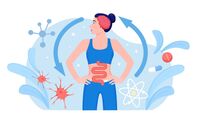
Not all stress is bad, but when it happens regularly it can have negative effects Picture: iStock
Do you ever find yourself clenching your jaw so tightly it hurts? Or notice that your breathing has become faster and your heart is racing? Have there been times when your stomach was constantly upset, either from nausea, heartburn, diarrhoea, or constipation?
Chartered counselling psychologist Margaret Forde (positivepsychology.ie) says these are all symptoms of stress.

Dr Natalia Putrino, a psychologist and chartered member of the Psychological Society of Ireland, explains that short irregular bursts of stress can be beneficial.

A 2021 US study concluded that high levels of the stress hormone cortisol caused inflammation, which increased the risk of inflammatory conditions like arthritis and diabetes.
People all over the world are suffering this negative impact. So much so that the World Health Organization declared stress “a health epidemic” in 2019.
The problem appears to be particularly acute in Ireland, with a 2025 report declaring us as some of the most stressed-out people in the world. Based on a survey of 35,515 individuals, across 40 countries, it found that 93% of us struggle with stress.
Putrino recommends starting with an easy-to-use online screening test to determine our levels of perceived stress — the PSS-10 test [exa.mn/stress-test].
Another option is to track our emotions at set points of the day every day for a week. “This makes us more aware of the situations that cause us stress and how we tend to respond to those situations,” she says.
Forde believes that taking time to consider our responses can prompt us to modify them. “We don’t have to continue responding to stress in the same ways we’ve always done, especially if those ways aren’t healthy. I think of stress as a noise in your head you can’t get rid of, and I know some people try to silence that noise with alcohol, drugs, food, or risky behaviour, but there are more constructive responses.”
Many of those responses such as grounding ourselves in our physical senses, distract us from stress by bringing us out of our heads and into our bodies.
“Grounding involves naming five things you can see, four things you can hear, three things you can smell, two things you can touch, and one thing you can taste,” says Forde.
Plunging into the sea or even holding an ice cube to your face can also serve as what Forde calls “a circuit breaker because the cold is momentarily all you can think about”.
Another tactic is five minutes of intense exercise. Forde says squats, skipping, jumping jacks, and dancing are all great at “jolting us out of a state of stress”.
Putrino suggests breathing exercises, which are useful because they can be practised anywhere. “All you have to do is focus on breathing deeply and lengthening your exhalation,” she says. “Your slowing breath will slow your heart rate and calm your nervous system.”
Reframing your thoughts can help too. Putrino gives the example of missing a bus to remind us that we can all control how we react to stressful events in our lives.
“Missing the bus could ruin our day by making us fixate on the negative,” she says. “But I would always try to find the silver lining. Maybe I’d walk to the next bus stop and tell myself it’s an opportunity to get extra steps in.”
A 2025 US study shows that having strong social connections can be a powerful tool in countering stress.
“Lonely people tend to struggle with stress more than others,” says Forde. “So try to nurture your relationships.”
Putrino suggests allowing for recovery after stressful situations because “we all need time to recharge so we can better respond to stress going forward”.
Her tips for recharging include switching off from devices and enjoying activities where the focus isn’t on being productive. “It could be listening to music, doing a jigsaw or going for a walk in nature,” she says. “A 2010 study from Japan demonstrated that when people spent time in the forest, they had lower levels of cortisol, lower pulse rates, and lower blood pressure than when they spent time in urban settings. And you don’t have to go to the forest to get these benefits. You get the same impact in your local park.”

1. Identify when you are stressed;
2. Experiment to discover which techniques help you overcome your emotions in the moment;
3. Stop to consider whether it would help to make a plan to reduce your stress in the long term.

CONNECT WITH US TODAY



Be the first to know the latest news and updates