Chew on this: Healthy eating starts with good chewing
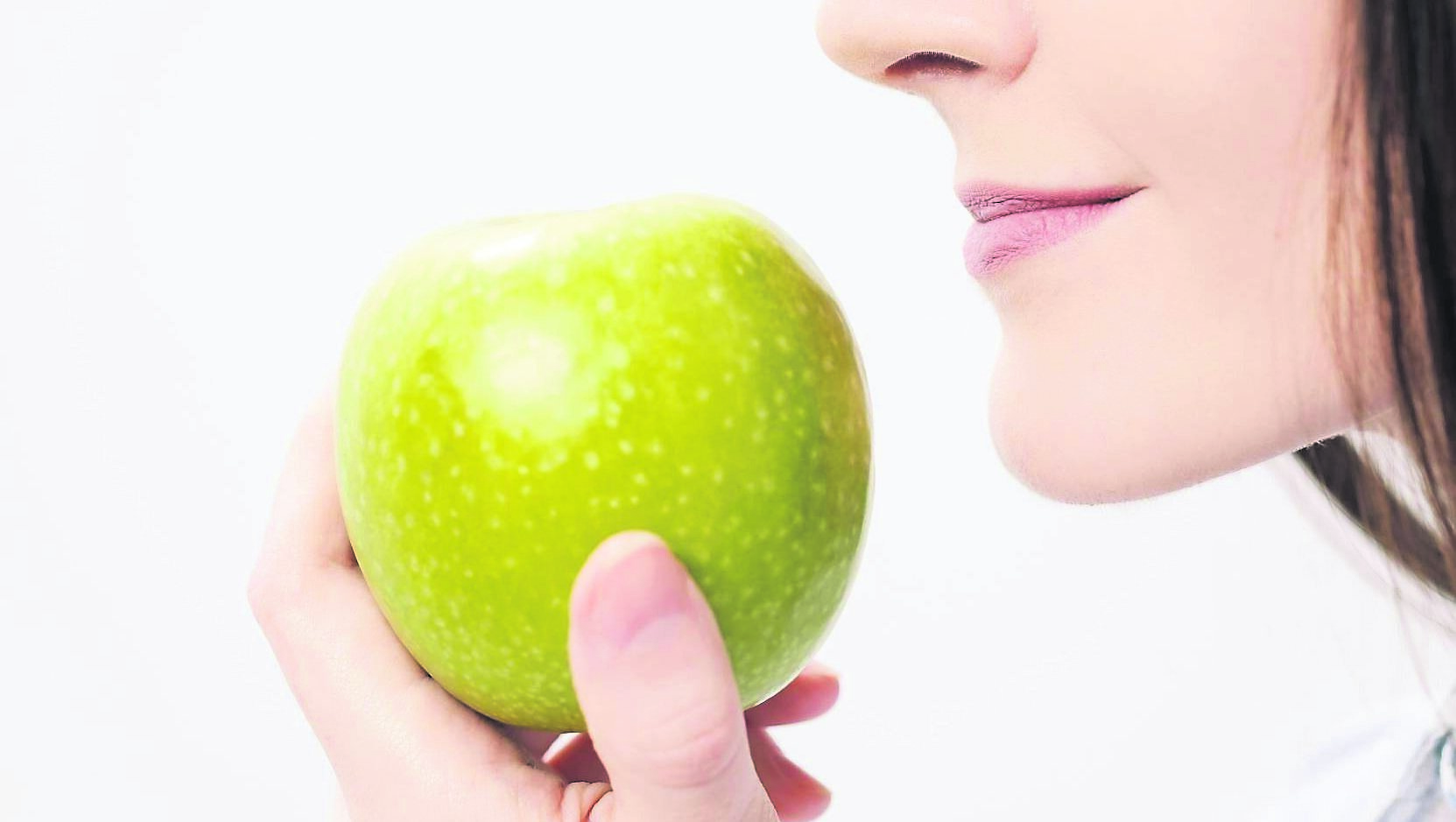
Jonathan deBurca Butler: With belly that’s been prone to bloating for the past decade, I’ve realised I may need to slow down even more. Picture: iStock.
As a child, I remember food was always something of a hassle. Eating at home was a hindrance, getting in the way of building forts or playing football in the field behind my house. Food appeared, and I made it disappear as quickly as I could. It was functional, and I knew that, in there somewhere, it was keeping me alive, but beyond that, I could take it or leave it, and as for chewing, well, that just slowed things down.
Since then, I’ve become a little more refined. I now savour my food (perhaps a little too much), but, with a hiatus hernia that sometimes causes reflux and a belly that’s been prone to bloating for the past decade, I’ve realised I may need to slow down even more.
“One of the first questions I ask people when they come through my door is, ‘Are you eating quickly?’,” says Kathryn Stewart, registered dietitian at the Dublin Nutrition Centre.
“People always reach for what they can cut out of their diet, but one of the first things you should do is eat more slowly. From a digestive point of view, the more you chew, the less bloating and the less reflux you’re likely to have. How you eat is as important as what you eat.”
Stewart describes chewing as the mechanical breakdown of food into small particles, which are then moistened with saliva, so that they can be easily swallowed. As the mouth breaks food down and makes it soft and moist, the amount of digestive enzymes increases, while lower down the digestive tract, the action triggers the gut and pancreas to secrete juices that help further process food.
“I always think of the mouth as the first step of digestion,” says Stewart. “It’s like the chopping board and knife, and the stomach is the blender. So, if you put a full, raw carrot into a blender and you haven’t chopped it up, it’s going to struggle, and it’s going to take longer for it to be blended. So the more we chew, the easier it is for the stomach to break it down. It just requires less work from the stomach and potentially improves the nutrients available.”
In the 19th century, so-called food faddist Horace Fletcher, aka The Great Masticator, popularised the theory that somewhere between 32 and 100 chews were optimum. His mastication system became known as ‘Fletcherism’. While he might have been on to something, there is no ideal number of chews per swallow. Instead, what masticators should really aim for, according to Stewart, is a porridge-like consistency to the food in your mouth before swallowing.
Doing this also increases feelings of fullness, because it gives the stomach time to release appetite-regulating hormones to the brain, effectively telling it that it will not be hungry for a while.

Chewing triggers the release of digestive and satiety hormones, such as cholecystokinin (CCK), a hormone released in the small intestine that signals the brain to stop eating, and glucagon-like peptide-1 (GLP-1), a gut hormone that slows digestion and promotes a feeling of fullness. Ghrelin, also known as the hunger hormone, actually decreases when you chew longer. In other words, slowing your chewing can help manage your appetite over time.
“If you have a small meal that’s already broken down or heavily processed, your mouth doesn’t have to work hard, so the food is digested more quickly and therefore you might feel hungry sooner,” says Stewart. “So by adding salads or fruit to or after meals, you add more bulk and volume that takes longer to chew and break down. Bulkier meals might help in terms of appetite regulation and have a knock-on impact on weight management and healthier eating patterns.”
Slowing down while eating could also benefit your mental health. A 2026 study published in suggests that mindful eating — taking time to savour what’s on your plate, along with the aromas and flavours — can help reduce emotional eating, improve self-regulation, and lower stress levels.
“When I worked in the NHS, we had what we called protected mealtimes,” says Stewart, who lives in Dublin, but hails from Antrim. “You had to turn off your emails, turn off your computer, and focus on the food. They have the same practice in hospitals, where doctors or consultants don’t [do their rounds] during meal times.”
In the Republic, this is also now part of HSE policy. Protected mealtimes ensure hospital inpatients have dedicated, uninterrupted time to eat. During these periods, non-urgent ward activities stop so that staff can focus on serving food, monitoring intake, and assisting patients with feeding.
In a recent publication on mindful eating, the heart and stroke charity, Croí, encourages diners to “remove any distractions, such as your phone, television, or newspapers” to focus fully on what you’re eating and how you’re eating. According to the publication, it can sometimes take 20 minutes for our stomach to signal to our brain that it is full, and so the slower you eat, the more time you give yourself to recognise this feeling.
Not only can chewing and taking your time to eat be good for the gut and our sense of satiety, but it might well keep you cognitively functional for longer.
A study, entitled ‘Oral Health Conditions and Cognitive Functioning in Middle and Later Adulthood’, involved 28,500 people aged 50 across 14 European countries. It found an association between good chewing ability and better performance on tests of word recall, verbal fluency and numeracy.
Other research suggests there might be a link between multiple neural circuits connecting our chewing apparatus to the hippocampus region of the brain. This is the part of the brain responsible for spatial learning and the formation of new memories and is the area first affected by Alzheimer’s disease.
Another study, involving experiments with gum-chewers, found that chewing increased blood flow to the brain, thereby improving its ability to function.
All this research makes for interesting reading, and while younger me might have sat at the dinner table, shrugged at it, and asked to go outside and kick the ball with my pals, older me is compelled, after writing this article, to walk to the shops and get some sugar-free gum.
It seems there is plenty to chew on when it comes to mastication.
CONNECT WITH US TODAY



Be the first to know the latest news and updates