Take a look — Could it be skin cancer?
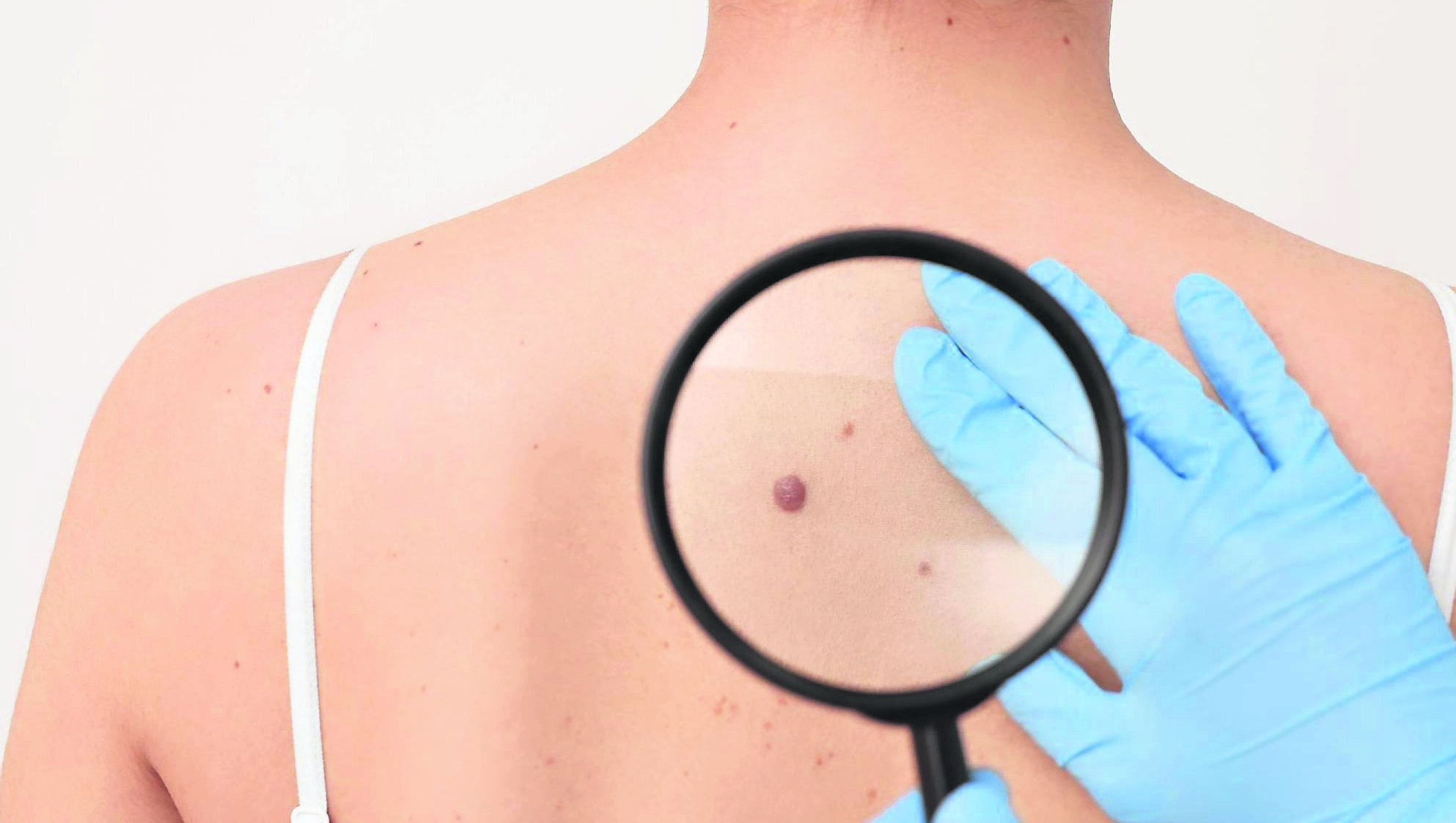
Every year, 1,200 people in Ireland are diagnosed with melanoma. Picture: iStock
While the country basks in glorious summer weather and the seaside calls, spare a thought for your skin — your body’s largest organ. Sunburn is one of the leading causes of skin cancer.
Every year, 1,200 people in Ireland are diagnosed with melanoma, a type of skin cancer that often occurs in young and middle-aged adults.
Melanoma rates in Ireland have surged over the last three decades, with the number of new cases each year increasing by 81% between 1994 and the early 2020s. Rates are predicted to double again by 2050.
This alarming rise has left dermatologists searching for answers. Studies have shown that the native Irish population has the most lightly pigmented skin in the world, meaning that they lack melanin, a natural pigment which serves as the skin’s biological shield against damaging ultraviolet radiation from the sun.
Generated by specialised skin cells called melanocytes, melanin is capable of absorbing and redistributing UV rays, preventing the kind of DNA damage that can lead to skin cancer. But without sufficient quantities of melanin, sun-loving Irish people often unknowingly place themselves at a heightened risk.
“Having severe sunburn where you develop blisters, even in childhood, almost doubles your risk of getting melanoma later on,” says Prof Anne Marie Tobin, consultant dermatologist at Tallaght Hospital, Dublin, who sits on the board of the Irish Skin Foundation.

Research has also suggested that use of indoor sunbeds in Ireland, which use concentrated, high-intensity UV rays to quickly tan the skin, could also be contributing to melanoma risk. As a result, a new alliance of doctors and cancer patients, known as the Coalition Against Sunbeds are calling for the Government to ban them, citing findings which show that people who begin using indoor sunbeds before the age of 35 have a 75% increased risk of melanoma.
Around 270 people in Ireland die every year from a form of skin cancer, but while melanoma is becoming more common, five-year survival rates have improved to 92%. Tobin says that melanoma can be highly curable, particularly if caught early, as the tumours can be completely removed through surgery.
“Early detection is key,” she says. “The cure rates depend on whether the cancer has already spread to your lymph nodes, or beyond to involve other organs.”
The question is, how to spot a melanoma and, most importantly, distinguish it from an ordinary freckle or mole.
These melanomas tend to appear as a new mole, but Tobin says that there are some instances where it can be an existing mole which gets bigger or darker.
To spot one of these melanomas, she recommends following the so-called ABCDE guidelines, which advise people to seek medical advice if they notice a mole that appears asymmetric, has irregularly bordered edges, shows colour variation, is larger than 6mm in diameter, or is evolving (changing over time).
“If there’s more than two colours in it, and if it’s growing, then it’s worth getting it checked,” she says.
- Anyone concerned about their skin and whether they have melanoma can receive free, specialist guidance via the Irish Skin Foundation’s Ask-A-Nurse helpline