I was diagnosed with MS at 18 — I’m glad we had children while I’m still able to walk and run
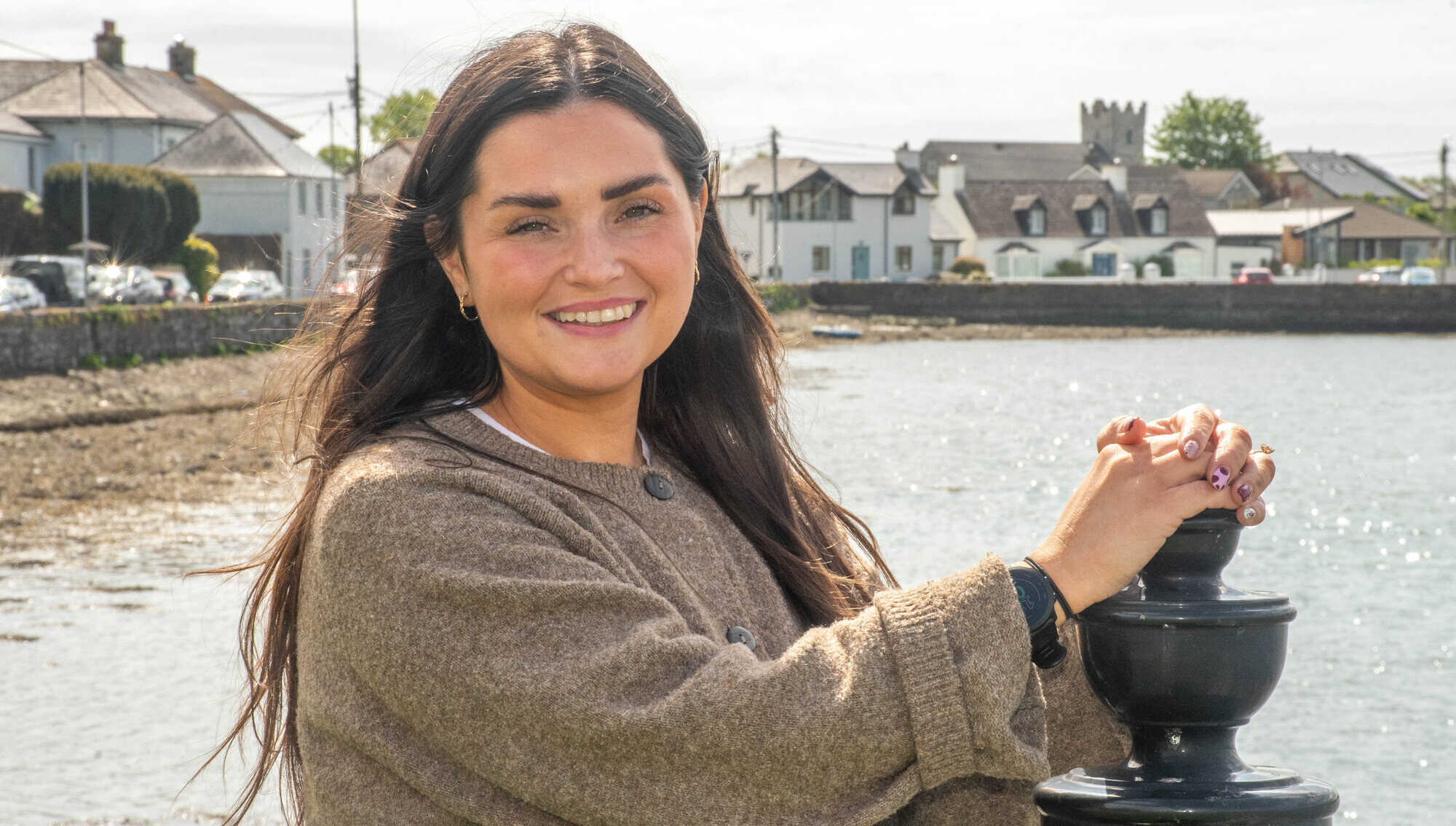
Waterford woman Laura Barry was diagnosed with MS at 18 and says joining the local running club has been a lifesaver. Picture: Howard Crowdy
As the mother of two young children, Laura Barry is used to feeling tired. “My first was a bad sleeper, but then when my second came along, he was even worse,” she says. “My husband and I had to take it night on, night off…because I would just be absolutely drained.”
While sleepless nights are a given for many mums of young children, Barry, from Co Waterford, has the additional challenge of living with multiple sclerosis (MS).
She first experienced symptoms at 17, when the right side of her face went numb. “It was just the right side…my right eye and I couldn’t feel the right side of my tongue.”
Doctors at University Hospital Waterford carried out tests to determine the cause of her symptoms. Several months later, she experienced another attack when she bent her neck and felt a shock down her spine. “They did an MRI, and that’s when the lesions showed up in my brain.”
At 18, she was diagnosed with MS and began treatment.
She knew little about the condition, and when she looked it up online was frightened at the possibility that she might need a wheelchair. “All these things pop up, and that scared the living daylights out of me,” she recalls.
MS is a neurological disease that affects the brain and spinal cord. “It’s caused by the immune system attacking the coating of the nerves, which leads to damage to the nerves themselves,” explains Dr Hugh Kearney, a consultant neurologist who leads the multiple sclerosis unit at St James’s Hospital, Dublin.
“There are 2.3m people in the world living with MS. Its prevalence is increasing by six per cent per year. In Ireland, the current estimate is 12,000, but it may well be higher than that.”
Women are three times more likely than men to have MS, and one of the strongest risk factors is infection with the Epstein-Barr virus, which causes glandular fever, says Kearney.
“You can’t get MS if you never got this virus, and that’s what makes MS stand apart from other immune diseases.”
While the condition is commonly associated with women aged between 20 and 40, medics are increasingly diagnosing it among older and younger people.
“People in their 50s and 60s are presenting with MS for the very first time…and we are now seeing children and teenagers develop MS,” says Kearney.
Before her diagnosis, Barry was a typical teenager, attending school and playing GAA. Initially, she struggled to come to terms with the news and gave up playing sport.
“At the time, it was scary,” she says. “You’re just sad and feeling sorry for yourself, but then I quickly thought, ‘I need to get on with this now. What can I do to keep going?’”
The support from her parents, sisters, and her then-boyfriend, now husband, Eoin, helped her stay positive. “I was spiralling but they were all great.”
She discovered running and joined a local running club. “It’s been a lifesaver. It’s been brilliant to get out with people and just exercise. That’s literally what keeps me going — exercise classes, and that running group.”
Because of her diagnosis, Barry and her partner decided to start a family sooner than planned, and are parents to Jack (five) and Cody (two).
Although MS cannot be cured, it can be managed with medication. “30 years ago, there were no treatments available for MS, and nowadays there are 20 licensed treatments,” says Kearney.
Barry has relapsing-remitting MS, which accounts for around 85% of all cases. She tried different medications, but had to stop treatment while pregnant. After her children were born, she switched to a medication called Mavenclad, given over two years in short treatment courses spaced about a month apart.
“My last MRI looked like my lesions were stable, no new ones, and none getting bigger.”
According to the MS Trust, clinical trial data suggest that Mavenclad reduces the number of relapses by around 58%.
Early diagnosis and treatment reduce the risk of disease progression, and strong medicines used early to suppress the disease can allow the person to continue living a normal life.
“It’s more shifting it towards the realms of chronic disease management, so we would often draw analogies with asthma, type two diabetes, hypertension,” explains Kearney.
“For the majority of people…it’s not resulting in the physical disability that many of us would associate with this disease.”
New medicines are emerging, such as B cell depletion therapies, which target a specific type of white blood cell and stop them from attacking healthy tissue.
“They’re used nowadays at the point of diagnosis, and we know from studies that that really reduces the risk of a relapse, and it reduces the risk of disability at 10 and 15 years,” says Kearney.
St James’s Hospital is currently conducting two clinical trials in MS, offering patients the opportunity to access these treatments.
Since her initial two attacks, Barry has been in overall good health. She prioritises nutrition, hydration and rest, as fatigue is her main ongoing symptom. “It’s extreme tiredness, like you’re coming down with something. I just do what I have to, then go to bed early and get a good night’s sleep. It’s an invisible illness — no one knows what you’re going through,” she says.
“The nights where you’re absolutely thrown on the couch with fatigue, or I have a bit of vertigo or dizziness, nobody sees that.”
Barry works part-time as a receptionist in a beauty salon. “It’s actually great for my head, to get out,” she says. She occasionally has migraines related to her MS, but says her employer is understanding.
She has found support within the MS community, and recently started attending gatherings organised by MS Ireland in Dungarvan. “They do tea, coffee and scones, and it’s lovely. We all chat about our symptoms, as well as anything new happening.”
Barry is staying positive about the future and prioritising her health and her family. “It’s such an unknown disease, so the hope is a happy, healthy, long life.”
- World MS Day is on Saturday, May 30,
- ms-society.ie
CONNECT WITH US TODAY



Be the first to know the latest news and updates