Getting to the root of thinning hair: “If our hair’s off, we don’t feel right.”

A good hair day can set us up for whatever challenges lie ahead, but just as our hormones affect the quality of our skin, so too do they affect our hair. Sarah Finnan speaks to the experts about how to age-proof your tresses and keep them in tip-top shape
Getting to the root of thinning hair: “If our hair’s off, we don’t feel right.”

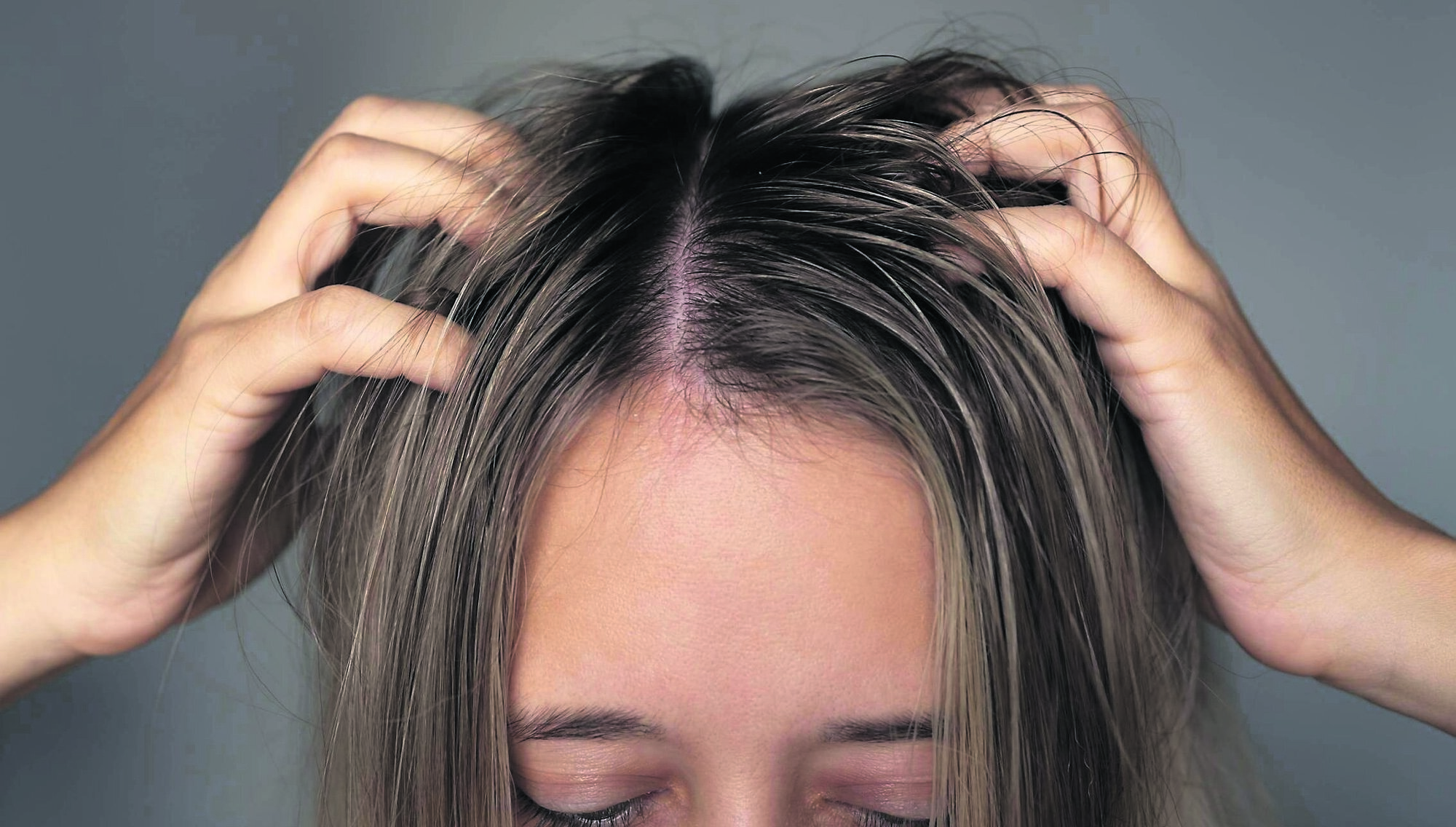
Hair loss is more common in women who are under-eating Picture: iStock 

For many women, hair is armour. It’s confidence, creativity, and identity wrapped into one. A good hair day can be transformative, washing your hair cathartic — and don’t get me started on the mood-lifting magic of a curly blow-dry.

Unfortunately, thinning hair and hair loss are often unwelcome side effects of getting older. Research suggests that around 40% of women will show signs of hair loss by age 50, and fewer than 45% will reach 80 with a full head of hair.


Sarah Cummins is among that number. She noticed her hair was declining as she neared her 40th birthday. “It was getting finer, and my parting was getting wider,” she says, describing the top area as “a bit see-through”.

“My hormones were changing. I started going into perimenopause.”

A trip to the dermatologist confirmed her fears: androgenetic alopecia, or female pattern baldness. According to the American Academy of Dermatology, female pattern hair loss is the most common cause of alopecia in women, with symptoms often beginning in midlife, somewhere between the ages of 40 and 60.

“Hair thinning in women is extremely common,” agrees Carol Johnson, a consultant trichologist at Universal Hair and Scalp, Dublin.

Genetics plays a part, as does stress, prescription medication, smoking, alcohol, and yes, ageing too. Blood tests to identify the root cause are usually her first suggestion.

Alongside blood tests, dietitian Orla Walsh advocates for taking a close look at our nutrition and how we’re fuelling our bodies.

“Hair loss is more common in women who are under-eating, she says, noting that it can happen at any size, but has become more widespread given the prevalence of GLP-1s, medications that help control appetite and regulate blood sugar,” she says.

“[When] there’s too much of a calorie deficit and too much of a nutrient deficit, hair loss can result. ”

Walsh recommends looking at hair loss holistically. “It’s one of the most common symptoms to bring women through my door.”

Cummins, who went on to train as a trichologist, says she inherited alopecia from her father’s side, but mainly puts it down to dihydrotestosterone, or DHT, a hormone that contributes to male development and characteristics.

While DHT is primarily associated with male development, it is present in women too, though at much lower levels. Sensitivity to androgens such as DHT may contribute to issues for some women during perimenopause and menopause. As women experience a decline in oestrogen, some may notice androgen-related effects, says Cummins. “It might be slight, but some are more sensitive to androgens than others.”

High levels of DHT activity can shrink your hair follicles and shorten the hair growth cycle, resulting in hair loss.

Hormonal changes

“During perimenopause and menopause, there is a progressive decline in oestrogen and progesterone, with a relative increase in androgen influence,” says Caitriona Ryan, consultant dermatologist at the Institute of Dermatologists and clinical professor at University College Dublin.

“This results in gradual follicular miniaturisation, where terminal hairs become finer, shorter, and less pigmented. Clinically, this presents as diffuse thinning, often most noticeable over the crown and parting, rather than complete hair loss.

“There is also a reduction in scalp sebum production and changes in the hair fibre itself, leading to increased dryness, fragility, and loss of shine.”

Dr Caitriona Ryan: Menopause causes terminal hairs become finer, shorter, and less pigmented

In other words, the changes women often notice in their hair are a combination of reduced hair quantity and quality.

“Preventative measures focus on optimising overall hair health,” says Ryan. “This includes maintaining adequate iron stores, ensuring sufficient protein intake, avoiding rapid weight loss, and addressing hormonal changes where appropriate.”

Knowing how to distinguish hormonally driven hair loss from other causes, such as thyroid dysfunction, nutritional deficiencies, or stress, is important, too, as female pattern hair loss and telogen effluvium (stress-induced hair loss) can coexist.

“A history and clinical examination are essential,” says Ryan, adding that hormonally driven hair loss, or female pattern hair loss, typically presents as “gradual thinning over the central scalp with preservation of the frontal hairline and no increase in hair shedding”.

“In contrast, telogen effluvium is often triggered by stress, rapid weight loss, which we are seeing much more commonly in the context of GLP-1 drugs, such as Ozempic and Mounjaro, illness, surgery, medications or nutritional deficiency. It’s very common in women post-pregnancy, and presents with more sudden, diffuse shedding, usually approximately three months after the trigger.”

Baseline investigations typically include looking at ferritin/iron stores, vitamin D, vitamin B12, thyroid function, and sometimes zinc levels.

Ryan says women should seek medical advice if hair loss persists beyond three to six months, continues to worsen, or causes distress. “It should never simply be dismissed as ageing, as in many cases, there are modifiable or treatable contributors.”

‘It’s not just hair’

Cummins works in Trua Clinic, Dublin. Her interest was piqued by her mother’s hair loss 15 years ago, at a time when, she says, “there was nowhere to get help, doctors were kind of dismissive”.

“At the start of my own hair loss journey, I was so embarrassed because I thought, ‘How can I be a trichologist if I have no hair myself?’ I was panicking a little bit.”

Sarah Cummins: Felt ‘panicked’ when her hair loss first began.

Losing her hair and going through that experience has helped her understand her patients, though.

“I know what works, and I have proof.”

Our hair is our crowning glory, she says, “If our hair’s off, we don’t feel right.”

There’s no age limit to taking your hair seriously. “A lot of my elderly women come in, and they nearly apologise,” says Cummins. “We’re so Irish like that. But it’s not just your hair. It needs to be taken more seriously. And I wish there were more help out there for women.”

The good news is that, in most cases, hair thinning or loss can be stopped, or even reversed, but treatment is something that must be continued for life.

According to Ryan, minoxidil remains the most evidence-based topical treatment—but as Cummins points out, it “might only work for about 30% of people”.

Search for solutions

Do viral favourites like silk pillowcases actually work? “I’m a lover of them,” says Johnson. “Silk is very similar in composition to hair; they’re both proteins. Silk will smooth the outer cuticle, so your hair is less prone to mid-shaft breakage, and you’ll wake up with less frizzy-looking hair. She advises pillowcases over bonnets, though, as they allow the scalp to breathe.

“The microbiome of the scalp is essential to the health of the hair,” she says.

Cummins mentions Celicum, a non-invasive treatment that can be done in a clinic, salon, or at home. It uses stem cell technology to treat hair loss. She also champions water filters —“everybody should have one”— regular scalp exfoliation (once a week), and red light therapy, noting that the scalp ages just like the skin on our face and deserves equal attention.

Irish products she stands behind include Remi and Act + Acre for scalp care, and Annutri for supplements to aid hair health and growth.

For colouring your hair, she recommends Aveda because it contains low peroxide levels and “causes zero irritation”.

Heat styling, chemical dyes, and ammonia-based products primarily damage the hair shaft rather than the follicle itself, says Ryan, so while they don’t cause hair loss, they can contribute significantly to thinning because of breakage and reduced hair quality. Her practical advice includes reducing the frequency of heat styling, using lower temperatures, and always applying a heat protectant.

Ultimately, optimising sleep and nutrition, and lowering stress will have the most impact. Once you find the cause, new baby hairs can begin to appear from around three months, says Walsh, adding, “You have to be patient.”

The Cleveland Clinic notes that full regrowth from stress-induced hair loss takes between three and six months.

Walsh also flags iron deficiency, saying it’s an underdiagnosed culprit of hair loss. “In my personal and professional opinion, it isn’t picked up on enough—it’s certainly not aggressively monitored or aggressively treated,” she says, noting that for some women, that can lead to hair loss.

Her overarching advice is to treat hair loss as a signal rather than a problem to be solved. “Instead of saying, ‘I have hair loss, I need to solve my hair loss', ask yourself, ‘Why do I have hair loss?’ It’s a symptom, and your body is trying to tell you that something’s wrong. You need to find the underlying cause.”

This much is true: our hair tells a story—about our hormones, stress levels, nutrition, and our overall health.

With the right diagnosis, a little patience, and possibly a silk pillowcase, most women can expect a happy final chapter. “It needs to be taken more seriously,” says Cummins.

And she’s right, because it’s much more than just hair.

More in this section

Lifestyle

Newsletter

Eat better, live well and stay inspired with the Irish Examiner’s food, health, entertainment, travel and lifestyle coverage. Delivered to your inbox every Friday morning.

Cookie Policy Privacy Policy Brand Safety FAQ Help Contact Us Terms and Conditions

© Examiner Echo Group Limited