Book review: Nauseating but fun royal yarn

'1936' is a good, twisty yarn, told with gusto and laced with fascinating social history: A case study in a life coming to blows with expectations, pomp, and circumstance
Siân Evan’s retelling of the story groans under the weight of far too many emphatic repetitions of points the reader has already grasped. Picture: northbanktalent.com

Siân Evan’s retelling of the story groans under the weight of far too many emphatic repetitions of points the reader has already grasped. Picture: northbanktalent.com

  • 1936: The Year of Three Kings
  • Siân Evans
  • Hodder & Stoughton, £28.00

1936: One year, three Kings of England. George V died in January. 

His eldest son succeeded him, becoming Edward VIII, only to abdicate in December, unwilling to forego, for the sake of propriety and the constitution, his desire to marry the already twice-married Wallis Simpson. 

He was replaced by his younger brother, George VI, grandfather of the current king. Siân Evans’s new book walks us through the whole saga.

The report card on Edward is mixed. At times, he seems to be made of the right stuff: For example, his cool, courageous reaction to an assassination attempt. 

However, his attachment to Wallis Simpson has an air of neurotic, out-of-control neediness: Stanley Baldwin, the prime minister, thought that there were “patches” in the king’s brain that belonged to a child of 13. 
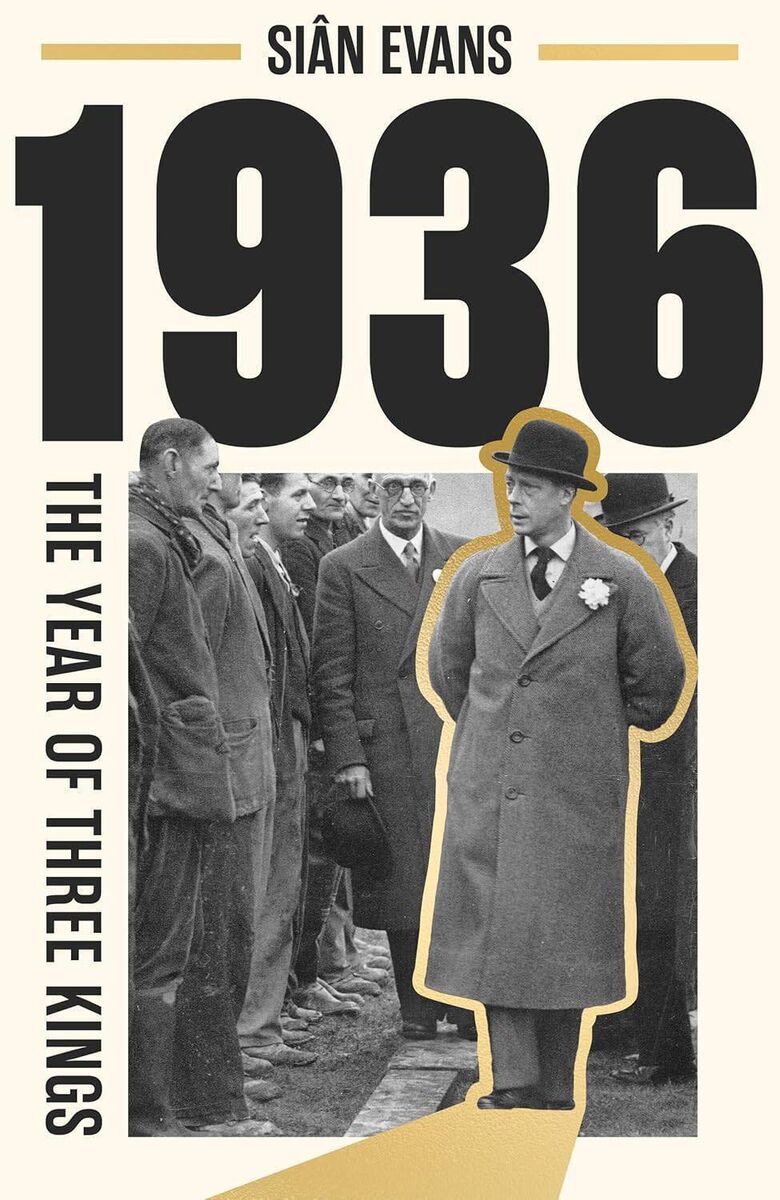
Edward’s concern for the poor and unemployed in places like South Wales is notable, and Evans portrays Baldwin, unhappy with the king sniffing around political questions, as the prime conspirator in getting him to jump. 

Yet Edward was an enthusiastic wage- and job-cutter when it came to his own staff.

The Nazi connections and his deceitful financial wranglings after his abdication further cloud his reputation. 

And while it may be easy to deride the fuddy-duddies who looked askance at the new king’s modernising instincts, their feelings were not unfounded. 

Edward had enjoyed 41 years of well-funded freedom. Why shouldn’t he now buckle down to what he derisively called “kinging”? 

As Queen Mary once told Edward’s sister when she complained during an official visit that she was tired and that she hated hospitals: “You are a member of the British royal family. We are never tired and we all love hospitals.”

1936 also plunges us into that upper-class world of carefully stage-managed infidelities with marriages arising from moves on a highly conventional, society chessboard, while sex and love were sought elsewhere on a separate board (where the game was played just as ruthlessly). 

This second board was tolerated (within limits) and hidden from public sight. It all feels a bit nauseating, perhaps because of a reliance on deep wells of cynicism and moral apathy.

The upshot for Wallis Simpson was, according to Constance Coolidge, the terrible fate of having to “live up publicly to the legend of a love you don’t feel”, of having to face “morning, noon, and night a middle-aged boy with no other purpose in life than a possessive passion for you”.

At the end of his life, Edward spent two weeks crying out for Wallis, but she did not come.

At other times, 1936 can read like a parody of the between-the-wars English upper classes. 

In one story, Edward is persuaded not to depart early from a society party only once Arthur Rubenstein is booted off the piano stool and replaced by Noël Coward playing Don’t Put Your Daughter on the Stage, Mrs Worthington

His favourite equerry, meanwhile, went by the name of Fruity Metcalfe. PG Wodehouse could not have topped this stuff.

There are some tremendous anecdotes, too: Edward buttonholing the Soviet ambassador and asking him: “Why did you kill my cousins?” (meaning Tsar Nicholas II, his wife Alexandra, and their five children); an appalled footman resigning at the sight of the king abasing himself, painting his mistress’s toenails by a swimming pool; Edward’s mother, so distressed by events, praying before a statue of the Virgin in a Catholic church in Soho (“unorthodox behaviour for a Protestant queen”).

Almost inevitably, social heights are “dizzying”, gossip is “scintillating”, womanisers are “accomplished”, and so on, but the book is at its best when it reins in royal correspondent-style tea-leaf-reading and froth. 

And Siân Evan’s retelling of the story groans under the weight of far too many emphatic repetitions of points the reader has already grasped.

In the end, though, 1936 is a good, twisty yarn, told with gusto and laced with fascinating social history: A case study in a life coming to blows with expectations, pomp, and circumstance.

BOOKS & MORE

Check out our Books Hub where you will find the latest news, reviews, features, opinions and analysis on all things books from the Irish Examiner's team of specialist writers, columnists and contributors.


More in this section

Scene & Heard

Newsletter

From music and film to books and visual art, explore the best of culture in Munster and beyond. Selected by our Arts Editor and delivered weekly.

Cookie Policy Privacy Policy Brand Safety FAQ Help Contact Us Terms and Conditions

© Examiner Echo Group Limited