Life Hack: What you need to know about car safety when driving with children
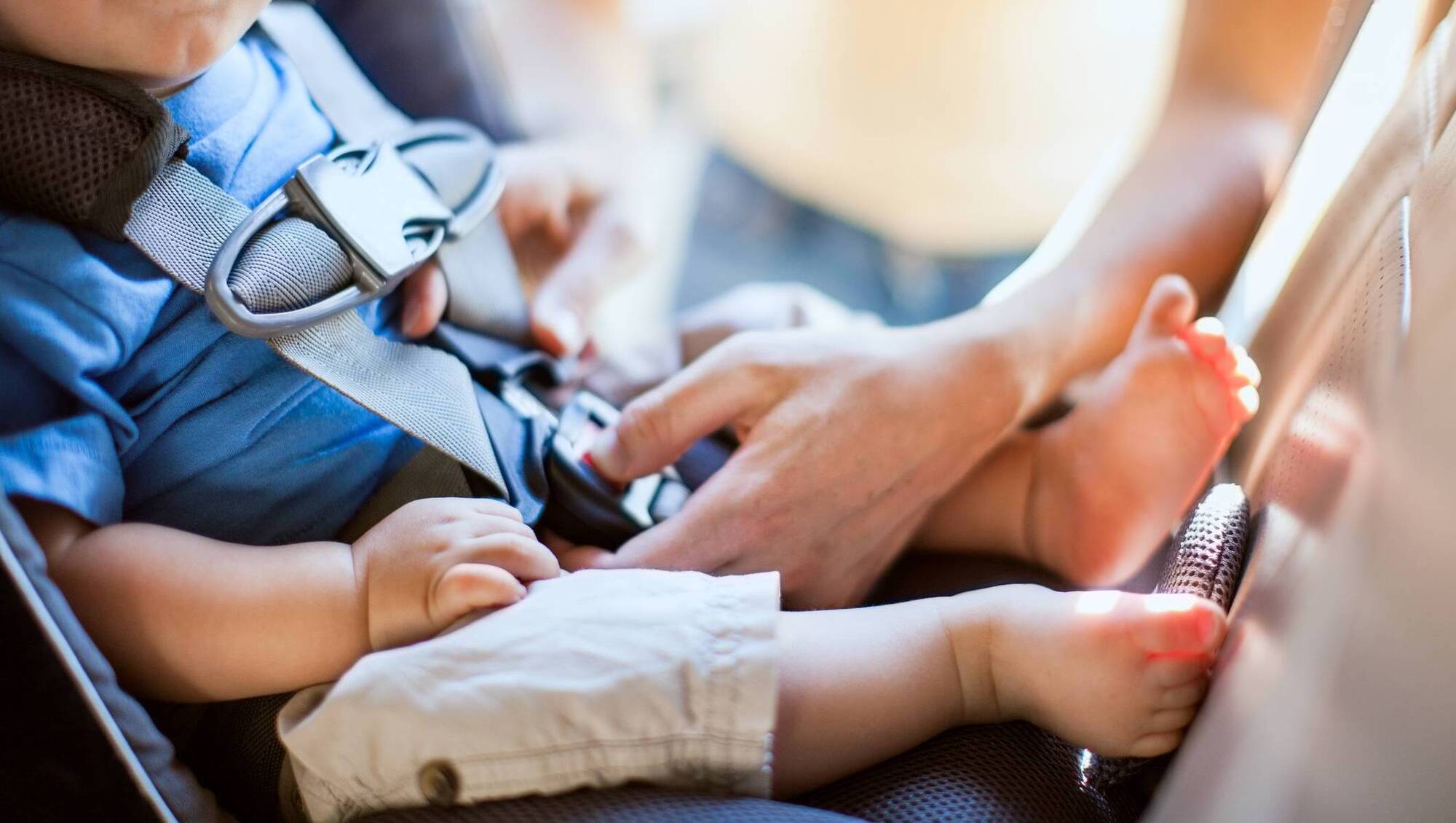
What are the rules around child seats?
If you travel with a child in your car, you’re aware of the importance of using the correct car seat to protect them in the event of an accident. However, keeping children from harm goes beyond what they’re sitting in.
Families should be aware that protecting children from preventable harm is a whole-vehicle task, and tyres are often overlooked.
In the moment of a crash, child car seats provide protection during a collision, but well-maintained tyres play a crucial role in braking, grip and vehicle control.
If tyres are worn, damaged or incorrectly inflated, stopping distances can increase significantly, and a vehicle’s ability to respond in an emergency can be compromised.
Across community child seat checking programmes delivered by Good Egg Safety CIC, about two-thirds of child restraints inspected were found to be incorrectly fitted or unsuitable, potentially reducing the protection available to children in a collision.
Common issues include slack seat belts, loose seat bases, incorrectly adjusted support legs, incorrect belt routing, and carry handles positioned incorrectly.
TyreSafe says these findings reinforce an important message for families: child safety starts before the journey begins.
“A correctly fitted child seat offers vital protection, but it is only one part of the safety picture,” said Stuart Lovatt, chair of TyreSafe.
“Keeping children safe means looking at the whole journey and the whole vehicle. Simple checks can make a significant difference.”
- A – Air pressure: Check tyres are inflated to the vehicle manufacturer’s recommended pressure;
- C – Condition: Inspect for cuts, bulges, cracks or embedded objects that could compromise safety;
- T – Tread: Ensure tyres meet the legal minimum tread depth of 1.6mm and are free from uneven wear.
By law, all children under 150cm (4’ 11”) in height or 36kg (79 lbs) in weight must use a child restraint system suitable for their height and weight while travelling in a car or goods vehicle (other than a taxi).
There’s a wide range of child car seats available for children of all ages and sizes. Child restraints are categorised according to the weight of the children they are suitable for — it is the weight of the child that is most important when deciding what type of child restraint to use, according to the Road Safety Authority.
A properly fitted child restraint system keeps the child in their seat, preventing them from being thrown about inside or being thrown from the vehicle. It also absorbs some of the impact force, so a child is much less likely to be killed or injured in a crash.
An appropriate child restraint is one which conforms to i-Size. Since September 1, 2023, R129 has replaced R44 entirely as the only approved EU car seat testing standard. The RSA recommends looking for the E mark to ensure your child’s car seat meets these standards.
The seat must be suitable for your child’s weight and height, and it should be correctly fitted according to the manufacturer’s instructions.
It is illegal to place a rearward-facing child car seat in the front of the car where there is an active airbag. An airbag which deploys (opens up) in front of a rearward-facing child car seat can cause serious injury or even death if there is a collision.
There is no law against children sitting in the front seat, as long as they are using the right child restraint for their height and weight.

CONNECT WITH US TODAY



Be the first to know the latest news and updates