Richard Hogan: We must face down AI — our children's future is in our hands
The question we must consider is: will the application of AI in our children’s lives significantly diminish their independence, critical thinking, and connection to other people?

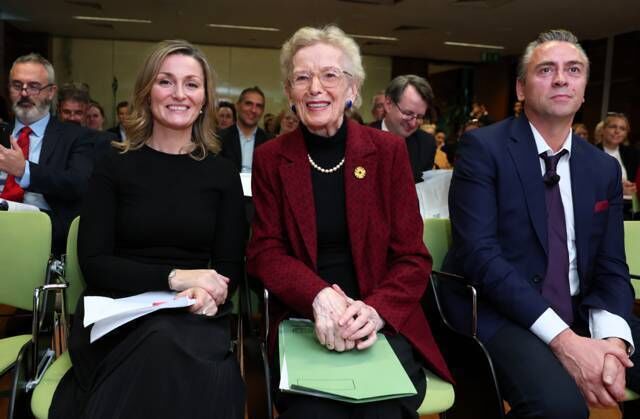
It was hosted by the Centre for Digital Ethics at Trinity College Dublin. Former president Mary Robinson delivered the keynote address.
She is a remarkable woman, we all know that. But what immediately struck me about the former president was her sense of humour and fun. She kind of waltzed her way to the podium and spoke with such precision and passion about the human race.
It was Friday evening, she could be anywhere relaxing and enjoying the weekend unfold, but instead she was in the Long Room Hub in Trinity speaking to the audience about the need for regulation to protect the uniqueness of human consciousness.
How lucky have we been to have a woman of her calibre as our first female president, fighting for human rights and being a voice for the voiceless?
We have lived through a very dark period of political upheaval, but a change is coming, there will be an unparalleled time of restoration; a post-Trump era of rebuilding confidence in our political systems. Regulation must be a part of this new era.
Mary Robinson spoke about the need to pause advancements in AI, so we can better understand what regulation is needed to protect humanity.
The image I always have of AI is that of the scientists out in the Nevada desert marvelling at the magnificence of the mushroom cloud, not realising they are already dead. Humanity is facing its greatest existential threat, but the American president’s interest is elsewhere, a ballroom or splashing his name on some building.
Advances and innovation in technology must not come at the expense of the psychological development of our children. I see it every week in my clinic — lonely teenagers, silenced and siloed because of technology. And now AI is posing a serious risk for all of us.
The question we must consider is: will the application of AI in our children’s lives significantly diminish their independence, critical thinking, and connection to other people?
We are mammals and we crave connection to others. We develop our identity, not in isolation, but through our connection with our community. That is why, during the teenage years, children rely on their peers more than their parents. It is through those important friendships that they learn about who they are.
Mary Robinson spoke to this phenomenon and referenced former archbishop Demond Tutu’s word, ‘Ubuntu’, which translates as, ‘I am because we are’.
It is only through the interactions and connections with other people that we become aware of our own being. We cannot become fully human in isolation.
I sit with teenagers and hear how isolated their lives have become. They are frightened of small talk, frightened of failure, frightened of rejection and terrified of the future. Avoidance is their strategy for psychological upset.
Normal ups and downs of teenage life have become profound and impact on their psychology more than previous generations. Levels of anxiety have increased dramatically over the last number of years. The antidote to anxiety is a little exposure to what is causing you stress.
The more you connect with friends, feel a part of your community, get feedback from your peers and coaches, the more you develop your concept of yourself and your ability to meet the future, the less anxious you will be.
I spoke with Niamh Lenihan, a human rights lawyer and founding director of the Centre for Digital Ethics, and she explained she organised the event to counter the formal summit held by the Government the previous Wednesday, which only focused on competitiveness rather than people.
We need more advocates voicing the concerns of civil society. We need to hear parents and their lived experience with their children and the impact these technologies are having on their friendships.
Every day, we protect children in the real world, but disregard their rights online: the right to privacy is ignored; the right to true and accurate information doesn’t happen; the right not to be profiled and exploited for profit, that is denied every second they are online; the right to be safe from harms.
In the talk last Friday, we heard from the courageous Maria Raine, who recounted how she lost her son, Adam, to suicide following months of conversations with ChatGPT. She is in an ongoing battle against that platform in the US.
We must all wake up to this fight — our children are being sold for profit. They are losing what makes them human, being together.