Letters to the Editor: We need to wake up to the realities of AI
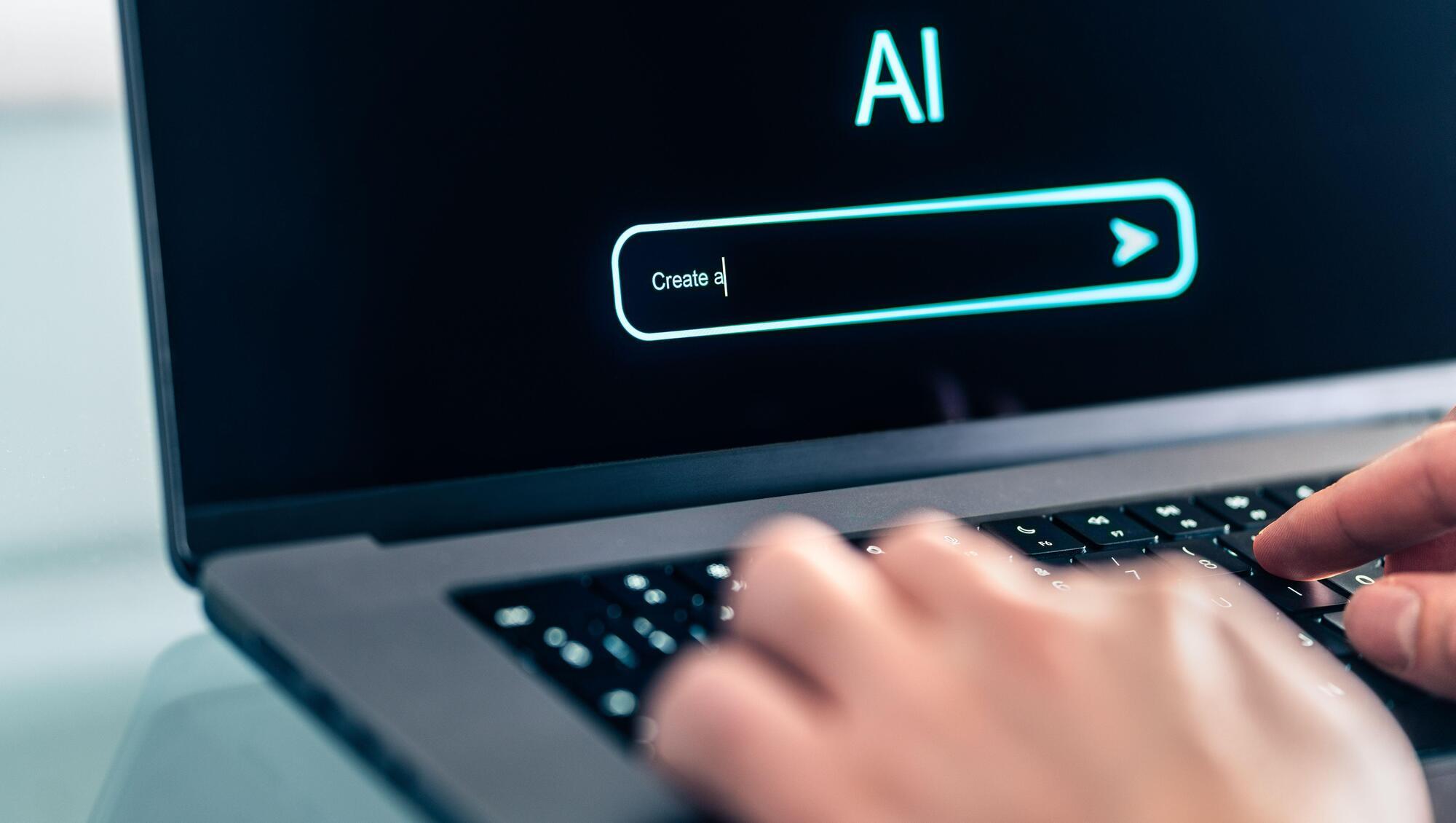
Artificial intelligence is capable of causing the most significant and far-reaching changes to human society since the invention and adoption of agriculture 10,000 years ago
'If the jobs that new immigrants compete for most successfully are better insulated from AI than other jobs, this will usher in a new more visceral xenophobia and isolationism in developed economies.' File picture

'If the jobs that new immigrants compete for most successfully are better insulated from AI than other jobs, this will usher in a new more visceral xenophobia and isolationism in developed economies.' File picture

The AI revolution is upon us and it will be as politically impactful as the highland clearances, the destruction of the monasteries, and the industrial revolution combined.

Artificial intelligence is capable of causing the most significant and far-reaching changes to human society since the invention and adoption of agriculture 10,000 years ago. AI is designed to abolish many well-paying jobs but it cannot abolish the people who lose them. These individuals are educated, hold confident life expectations, are well-enfranchised to vote.

Politicians and institutions will have to reckon with this or perish. We will witness a kind of sudden and fluctuating mass migration in many fields of employment and there will be both expected and unexpected winners and losers.

We may, for example, see something of a juxtaposition between “white collar” and “blue collar” workers. The organised unemployed may exceed organised labour as a political force.

If the jobs that new immigrants compete for most successfully are better insulated from AI than other jobs, this will usher in a new more visceral xenophobia and isolationism in developed economies. The burgeoning inequalities that western materialism and consumerism have sedated us against appreciating to date will land upon democracies like an anvil that is immune to both hammer and sickle.

The biggest and most pressing consequences of AI will probably be the ones we haven’t envisaged or thought about at all.

For example, it may be our instructions (and not our lack of boundaries) that impels artificial intelligence to harm us or our interests.

If the only certainty is change, then governments and policy makers need to think very seriously about the political consequences, and not just the economic ones. The tech bros have instilled in them to date a timidity that will be ruinous if it isn’t addressed.

The hoodies and flip-flops are all very charming but they seem to have hypnotised politicians into ceding all regulatory control to a group of spectacularly impetuous, morally immature and self-interested people.

Michael Deasy, Bandon, Co Cork

Halliday’s light burned bright

Denis J Halliday died on October 11. A Dublin blow-in, originally from Co Galway, and a Quaker, his light burned bright for humanity, as recognised by the conferral of the Gandhi International Peace Award in 2003.

After first volunteering in Kenya, he served in the United Nations for 34 years, reaching assistant secretary general level. In 1998, he followed his conscience and resigned from his role as UN humanitarian coordinator in Iraq, opposing deadly sanctions.

Defence of justice trumped personal loss for him.

Causes he espoused have lost none of their urgency. He was on board the Irish aid ship, MV Rachel Corrie, bound for Gaza to overturn the 2010 blockade. Denouncing US military use of Shannon Airport, he argued to keep Irish neutral, and for preservation of the triple lock. Instead of agreeing to violence as a solution, to devastate many lives and profit a few, far from the agonising frontlines, he called for diplomacy, accountability, and the rule of law.

Happiness, security, and growth wither without peace. Conviction, courage, and understanding were hallmarks of Denis Halliday’s character. May his life inspire others to keep the faith.

Caroline Hurley, Cloughjordan, Co Tipperary

Leap ahead in time

The concept of a leap year every four years is widely familiar. But what of the leap second — defined as a one-second adjustment inserted into Coordinated Universal Time (civil time) to keep atomic clocks synchronised with Earth’s irregular rotation (solar time).

Since the leap second system was introduced in 1972, there have been 27 such seconds added, most recently on December 31, 2016.

However, this week in Paris, the policy-making body of the International Bureau of Weights and Measures (BIPM), is due to change this adjustment method and allow the maximum value of the difference between civil and solar times to build up to 3,600 seconds (one hour).

This will get rid of the leap second, that few of us knew about in any case, and form the basis of the leap hour that our descendants will have to implement in several centuries time.

In the insanity of current times, I find myself awaiting a voice announcing: “We’re saving you a second today so your great-great-great-great-grandchildren can get a whole extra hour of sleep, and frankly, nobody could have negotiated a time trade like this, biggest time-management deal in history.”

Michael Gannon, St Thomas’ Sq, Kilkenny

Not everyone has time to protest

The Department of Children, Disability, and Equality announced it secured an additional €62m for disability residential services in budget 2027, with 212 new residential placements to be delivered.

This number won’t make enough of a difference for older parents caring for their adult children with intellectual disabilities.

When a child in Ireland turns 18 and becomes an adult, the State tacitly implies that the parents have done their job and that child then goes out into the world. I believe that there is legislative trickery here at play that turns around to parents and says: “No, it’s still your job and it’s forever going to be your job until the day you die.”

There’s a basic equality issue at the heart of this imbroglio.

One must remember that parents who have children with profound disabilities just don’t have the time in their full-time job as carers to be out blocking motorways and ports to get the concessions they need.

John O’Brien, Clonmel, Co Tipperary

Explore migration identity event

What an extremely successful three days we had recently at the Allihies Autumn School event, which took place in The Allihies Copper Mine Museum.

Exploring migration identity and the politic of the place through talks, exhibitions, film, and local voices, it was extremely educational and very well presented. Tadhg O’Sullivan and Klaudia Drozdzik welcomed everyone. It was their tenacious, impeccable, and intricate work efforts that made the whole three-day experience possible. Senator Noel O’Donovan officially opened the event on Friday and heaped praise on the organisers.

Our first presentation was an exhibition by Aubrey Edwards which is still open to the public until December, its viewing is highly recommended.

Aubrey Jaap and Lindsay Mulcahy, who travelled from Butte in Montana, gave an outstanding and most gripping presentation entitled ‘From Beara to Butte’ from The Silver Bow Archives, Butte, Montana.


Prof Mary Gilmartin, Maynooth University, gave another gripping presentation which she executed with precision on ‘Making sense of Migration’. An educator in top flight.

From Leadville, Colorado, we had Luke Finken and Kathleen Fitzsimmons who gave a top notch presentation on the ‘Leadville and Diaspora Memory’.

Teresa Buczkowska from the Immigrant Council of Ireland spoke on ‘Who Belongs in Modern Ireland’, an exceptional presentation..

Prof Flora Cornish presented an extremely beautiful presentation of her childhood and upbringing in Garranes, the current home of the well-known Buddhist Centre. It was a very warm, hearty presentation with film and photography that her family arrived there.

Saturday evening entertainment included a concert with the fabulous Scullion.

There were also local presentations and much, much more — too many to mention.

The event brought together researchers, archivists, artists, historians, and community voices from Ireland, USA. and elsewhere.

It was sponsored by the Bantry Credit Union and promises to be a very worthy annual event. By all accounts, preparation work has already begun for next year.

Michael O’Sullivan, Beara, West Cork

More in this section

Revoiced

Newsletter

Had a busy week? Sign up for some of the best reads from the week gone by. Selected just for you.

Cookie Policy Privacy Policy Brand Safety FAQ Help Contact Us Terms and Conditions

© Examiner Echo Group Limited