Top Eight: sizzling sausages — an extra link to our diet
The higher the percentage of pork, the less rusk mixed with water they will have, along with some spices, stabilisers, and the preservatives. Those in our survey with a high pork content were not too dense, as expected, so seek out high percentages for good value.

Sausages are a highly-processed food. The preservatives mixed with the meat really cannot be avoided if we are to be sure the meat is safe to eat when kept on shelves or at home for a few days.
The higher the percentage of pork, the less rusk mixed with water they will have, along with some spices, stabilisers, and the preservatives. Those in our survey with a high pork content were not too dense, as expected, so seek out high percentages for good value.

Generally, twice the amount of fats as protein in sausages — 20-30% fats, 12-14% protein, is not a perfect balance. However, at times when we need a little meat, but not a steak or yet another piece of chicken, a sausage or two can liven up nutritious vegetables and carbohydrates.
A sausage chopped into a tomato sauce served with pasta makes a quick meal. Add chopped or grated (for speed) seasonal courgettes, carrots, broad beans, peas, cauliflower. Heat until boiling, for a nutritious treat.
To minimise fats, avoid having sausages with more processed pork — rashers and black pudding — for breakfast. Instead try some seasonal grated raw courgettes with lemon juice, or grilled tomatoes.
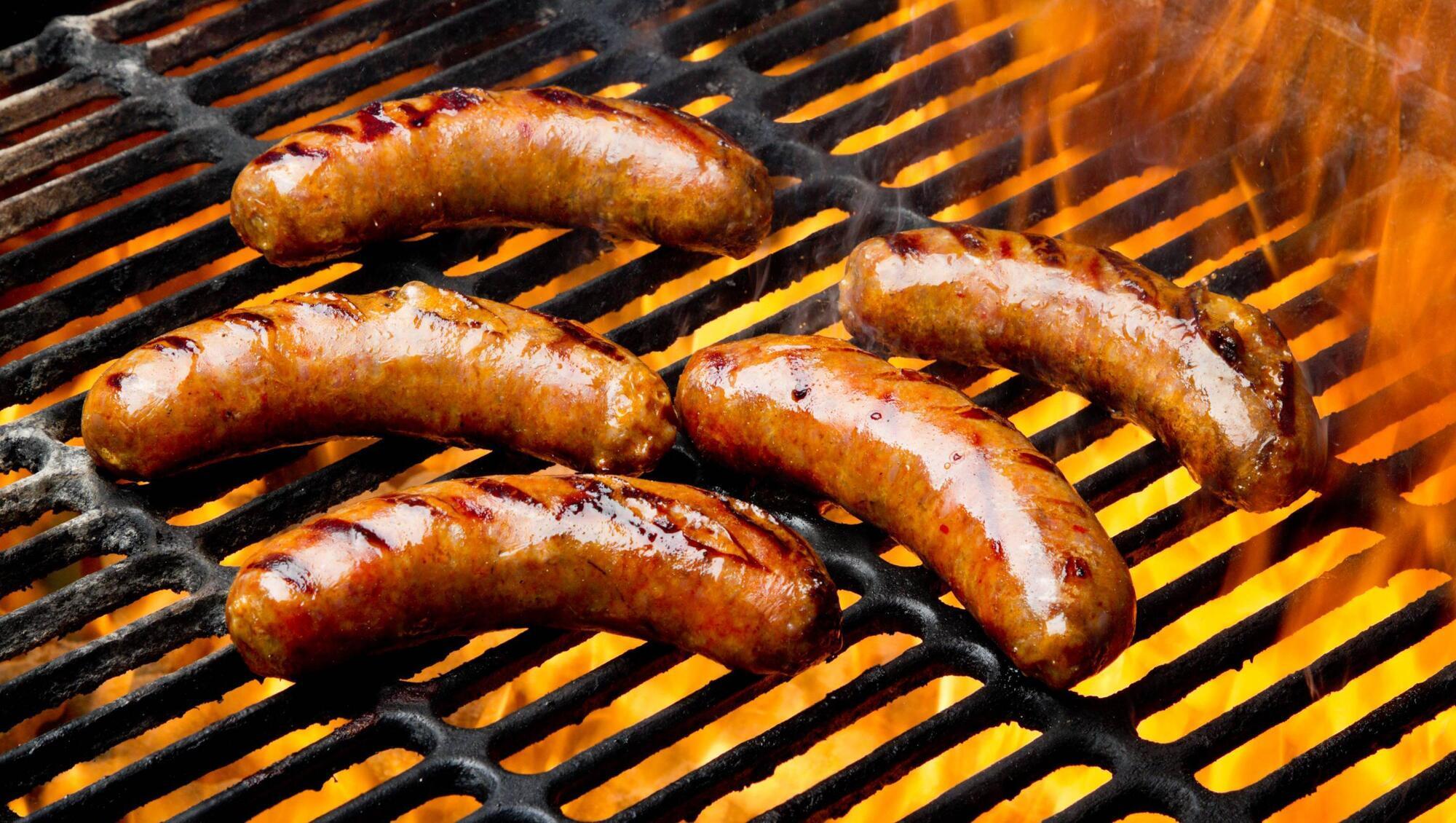
Regular sausages cook quickest on the barbecue. Avoid burning them by keeping the heat low, or wrapping in foil, making sure they are cooked through. Finish off unwrapped.

With 85% pork, from farms in Ireland, these are gluten-free with the crumb made from rice and chickpea flours, and cornflour.
Very good quality, slightly coarse, chunky pork has a natural, meaty flavour with gentle spicing of white pepper, nutmeg and 1.8% salt.
Quality pays.
- Score: 9.5

A low 55% Irish pork also has 8% pork fat, which leaves about 37% for water and rusk (more than many other sausages do).
The flavour enhancer is monosodium glutamate which a small cohort (including one of our tasters) is sensitive to. Salt is 1.9%.
This is a long-time favourite of many tasters who, tasting blind, recognised them immediately.
Smooth and meaty at the same time.
- Score: 8

Irish pork 85%, water, rusk, moderate salt 1.48%, which while lower than some other samples, one taster found a bit salty.
A good meaty texture made this one of the top scorers, especially for value.
- Score: 8.5

Made from 80% Irish pork, these skinny sausages lack a deep, meaty flavour.
Though at 1.6%, the salt content is slightly lower than our highest salt samples, it overpowered the other seasoning, so there was lack of spiciness.
- Score: 7

Named after the O’Flynn founding father, these have 70% pork with a gluten-free crumb made from rice flour and vegetable fibre. Tasters liked the coarse minced pork which has a little, gentle spicing of nutmeg and a relatively low amount of salt at 0.9%. A favourite of three tasters.
- Score: 9

80% Irish pork shoulder, carmine is the natural colouring, salt 1.6%.
A favourite of a few tasters who liked the spicing level and meaty, minced texture. “Doesn’t feel processed”, said one.
Available in selected Dunnes Stores. We bought in Bishopstown Court branch.
The most expensive of our selection.
- Score: 9

80% Irish pork, salt a moderate 1.35%. While meaty, the texture is a bit spongy.
While spices are listed, they are overpowered by the dextrose (a form of sugar), though there is a nice level of white pepper. The beef collagen casing is chewier than many other samples. Lacking a decent punch was the overall conclusion.
- Score 7.5

80% pork is less flavoursome than many others and has a more processed, spongy texture.
The flavour enhancer is monosodium glutamate as well as 1.6% salt. We had one MSG-sensitive taster on the panel.
- Score 7