How to make the perfect homemade jam and the common mistakes to avoid
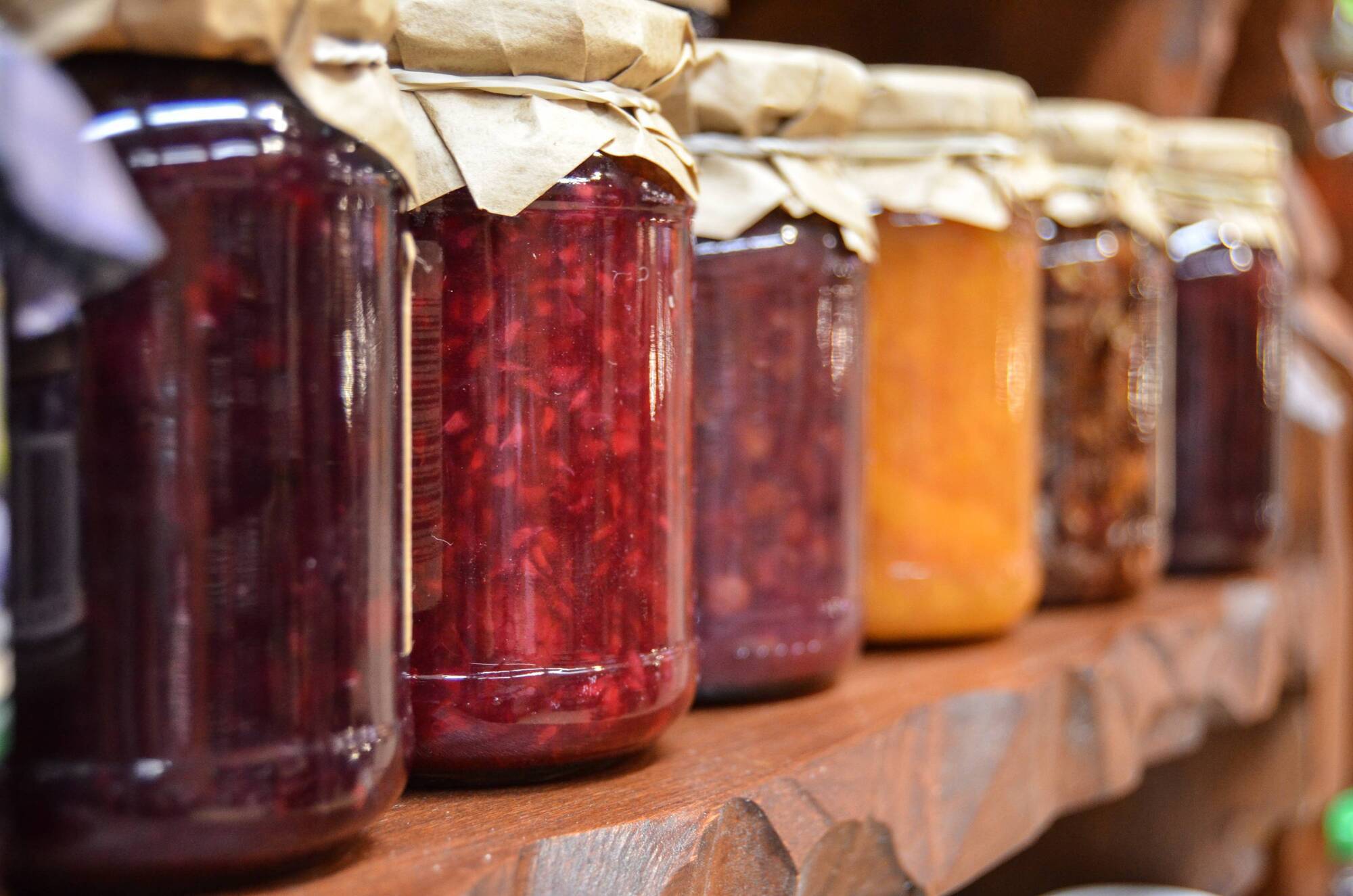
Homemade jam is ready in under ten minutes.
For really good jam, the fruit must be freshly picked, dry and unblemished. Slightly under-ripe fruit will have more pectin and so the jam will set better. Jam made from fruit that was wet when picked is more likely to go mouldy within a short time.
The best jam is made in small quantities â eg, no more than 3lbs of raspberries at a time; perhaps 1.8kg (4lbs) of strawberries with 150ml (5fl oz) of redcurrant juice to help the set. Small quantities cook in a few minutes, so both the colour and the flavour of the jam will be perfect.
Ideally one should use a preserving pan for jam-making. Choose your widest stainless steel pan with a heavy base and sides at least nine-inches deep. It goes without saying that the depth of the contents in the preserving pan and the rate at which they boil, determine how long the jam needs to cook.
Sugar is the preservative in jams, so it is important to use the correct proportion â too little and the jam may ferment, too much may cause crystallisation.
Citrus fruit peel, blackcurrants, gooseberries, etc, must be thoroughly softened before sugar is added, otherwise the skins will toughen and no amount of boiling will soften them, sugar has a hardening effect on skin and peel.
Stir well to ensure that the sugar is completely dissolved before the jam comes to the boil, (otherwise the jam may crystallise on top). For this reason it is better to add heated sugar, which dissolves more quickly. Stir with a wooden spoon until the âgritty feelingâ disappears.
Fruit should be simmered until the sugar is added, but from then on, it is best to boil as fast as possible until setting point is reached. Stir occasionally so it doesnât catch on the base of the saucepan.
If necessary skim near to the end of cooking. If there is only a little scum, dissolve with a tiny lump of butter stirred in after the jam has reached setting point.
Test for setting frequently so that the jam doesnât overcook â it will set when the temperature reaches 220C on a sugar thermometer â a handy but expensive bit of kitchen equipment that you can live without. Alternatively put a teaspoonful of jam on a cold plate, leave in a cool place for a few minutes, if the jam wrinkles when pushed with the tip of your finger it has reached setting point. Skim if necessary and pot immediately.
Wash, rinse and dry the jam jars (remove any traces of old labels or any traces of glue if recycling, sometimes pretty tricky but methylated spirit will usually do the job. Jars should then be put into a preheated oven for 10 minutes at 160C/325F/Gas Mark 3 1/2. Lids may also be sterilised in the oven â five minutes is fine. Fill the pots to the top to allow for shrinkage on cooling (use a jam funnel, to avoid drips). Cover immediately with sterilised screw-top lids if available or jam covers.
Screw-top lids should be sterilised in the oven or in boiling water before use.
One can buy packets of jam covers in most shops or supermarkets. These are made up of three elements, a silicone disc of paper, a large round of cellophane and a rubber band.
When the jam has reached setting point, pour into sterilised jars. Cover immediately with silicone discs (slippy side down onto the jam). Wet one side of the cellophane paper, then stretch the âdry sideâ over the jar, and secure with a rubber band. If the cellophane disc is not moistened it will not become taut when the jam gets cold.
Later the jars can be covered with doyleys or rounds of material or coloured paper. These covers can be secured with rubber bands (plain or coloured), narrow florists ribbons tied into bows or ordinary ribbon with perhaps a little sprig of dried flowers or herbs.
Really delicious jams are always a welcome present and are also very eagerly sought after by local shops and delicatessens.
Remember if you are selling your jams to cost it properly, taking jars, covers, labels, food cost, heat, etc, into consideration. A formula used by many is food cost times four. This would cover all the other items mentioned. If you are producing jam for sale you must contact the health authorities and comply with their regulations.
Pectin is the substance in fruit that sets jam. It is contained in the cell walls of fruit in varying degrees. It is higher when the fruit is under-ripe. Acid, eg lemon juice, helps in the extraction of pectin. Some fruits are higher in pectin than others, eg, plums, damsons, gooseberries, blackcurrants and apples, while others contain little or none, eg. marrow, strawberries and blackberries. In these cases, it is necessary to add acid in the form of lemon juice or commercial pectin.
Homemade jam
Sometimes when I'm trying to take the mystery out of jam-making for students, I put some scones into the oven, then make jam, and by the time the scones are out of the oven, the jam is made. It's that easy!
Servings
12Preparation Time
20 minsCooking Time
6 minsTotal Time
26 minsCourse
DessertCuisine
TraditionalIngredients
900g fresh or frozen berries
900g white sugar; use 125g (4oz) less if the fruit is very sweet
Method
- Wash, dry and sterilise the jars in the oven for 15 minutes. Put the berries into a wide, stainless-steel saucepan. Mash them a little and cook for 3â4 minutes over a medium heat until the juice begins to run, then add the warmed sugar and stir over a gentle heat until the sugar is fully dissolved.
Increase the heat, bring to the boil and cook steadily for about 5 minutes, stirring frequently (frozen berries will take 6 minutes).
Test for a set by putting about a teaspoon of jam on a cold plate and leaving it for a few minutes in a cool place. Press the jam with your index finger. If it wrinkles even slightly, it is set. Remove from the heat immediately. Skim and pour into three sterilised jam jars. Cover immediately.
Keep the jam in a cool place or put on a shelf in your kitchen so you can feel great every time you look at it! Anyway, it will be so delicious it won't last long!
From Forgotten Skills of Cooking by Darina Allen (Kyle Cathie, ÂŁ30) with photography by Peter Cassidy