Cork: Hot in every way
EACH night, before popes fall asleep, they pray fervently for the grace to some day attain the level of omniscience and infallibility that is the sole preserve of food critics and restaurant reviewers. We may admit to owning a copy of the gargantuan Larousse Gastronomique (the culinary encyclopedia) but only on the understanding it was long ago committed to memory, back when the taste of mother’s milk still lingered fresh on the tongue. Or so we would like you to believe.
You could pass a lifetime learning yet master no more than a fraction of the subject matter when it comes to food and only the brassiest of necks can deliver epicurean nuggets freshly purloined from Google, while passing them off as wisdom acquired at Nonna’s knee, high in the foothills of whatever cuisine we are discussing on the day.
Mind you, over recent decades there would have been little call for research of any description when it came to parsing the menu of your typical Indian restaurant in Ireland, this magnificent and ancient cuisine invariably reduced to a pale imitation, a token dish or two from a cross-section of myriad regional variations. You might as well open a restaurant in India selling ‘European food’. And we have only ourselves to blame — cautious, conservative diners who break out in hives if there ain’t chips to hand.
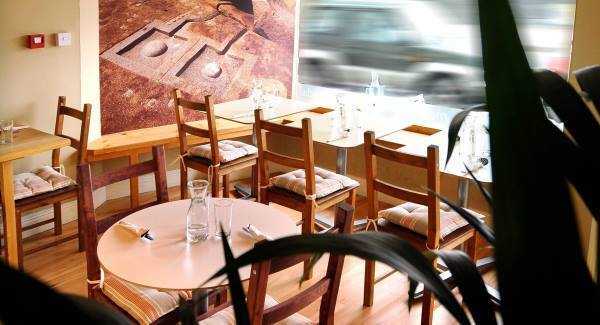
That is changing: authentic ethnic food in Dublin may now be streets ahead of the rest of the country but Iyer’s Cafe, a cosy little shoebox on Cork city’s quays, is a real Rebel County riposte.
Gautham Iyer, formerly an aeronautical engineer, cooks up food utterly typical of his birthplace in the province of Tamil Nadu, in South India, heavily indebted to ayurvedic tradition and also his Brahmin heritage — entirely vegetarian, seasonal, local produce (whenever possible), balanced, healing and nutritional. Another Brahmin tradition entails nothing is kept longer than 24 hours, a new menu each day. Hand-graters and stone-grinders are as high-tech as it gets and all produce is worked up from scratch, which entails 14 hours’ cooking, six days a week but he believes time spent in preparation is evident in the eventual taste.
Madras Thali is Basmati Rice, Sambar, Rasam, Chickpea Chole and Beetroot Masala, the locally-grown tuber elevated by a splendid sweet spicing. Sambar is a comforting yellow split-pea gloopy stew while Rasam, a traditional decongestant, is a sweet, spicy broth of tamarind juice and tomato and does an infinitely better job than any Sinutab.
Truly healing food, it goes down better than any medicine. Almost an afterthought is a ramekin of divine salad, including a nutty little off-white, semi-sprouted bean, black gram with the skin removed.
Adai are pillow soft crepes but the spiced filling has a mulish kick that has sister-in-law blowing hard and fumbling for the water.
The samosas are pretty special, a humungous amount of spadework (1½ hours of hand kneading, to be precise) replaces the more commonplace oil or ghee, yet the pastry still melts in the mouth like shortbread, revealing the vegetables within.
Despite a molten afterglow, my brave young progeny persevere, preferring to douse tongue fires later rather than give up on these little pyramids of perfection and, anyway, creamy, cooling, sweet kulfis of almond and mango, slide down like nectar, restoring normal temperatures.
I once enjoyed chilli as an extreme sport but have come to appreciate it more as a gentle glow rather than a roaring fire. It may be ignorant to suggest, but I’d wonder what would happen should Iyer do some — not compromise on tradition but ratchet back that all-pervasive chilli just a tad to allow the rest of his panoply of spices a bit more legroom.
And should he manage to build up his local supplier network (very much part of the plan) to an extent that allows him to truly engage with seasonal, local produce, I suspect he could add yet another vital chapter in the ongoing story of the evolution of modern Irish cuisine.