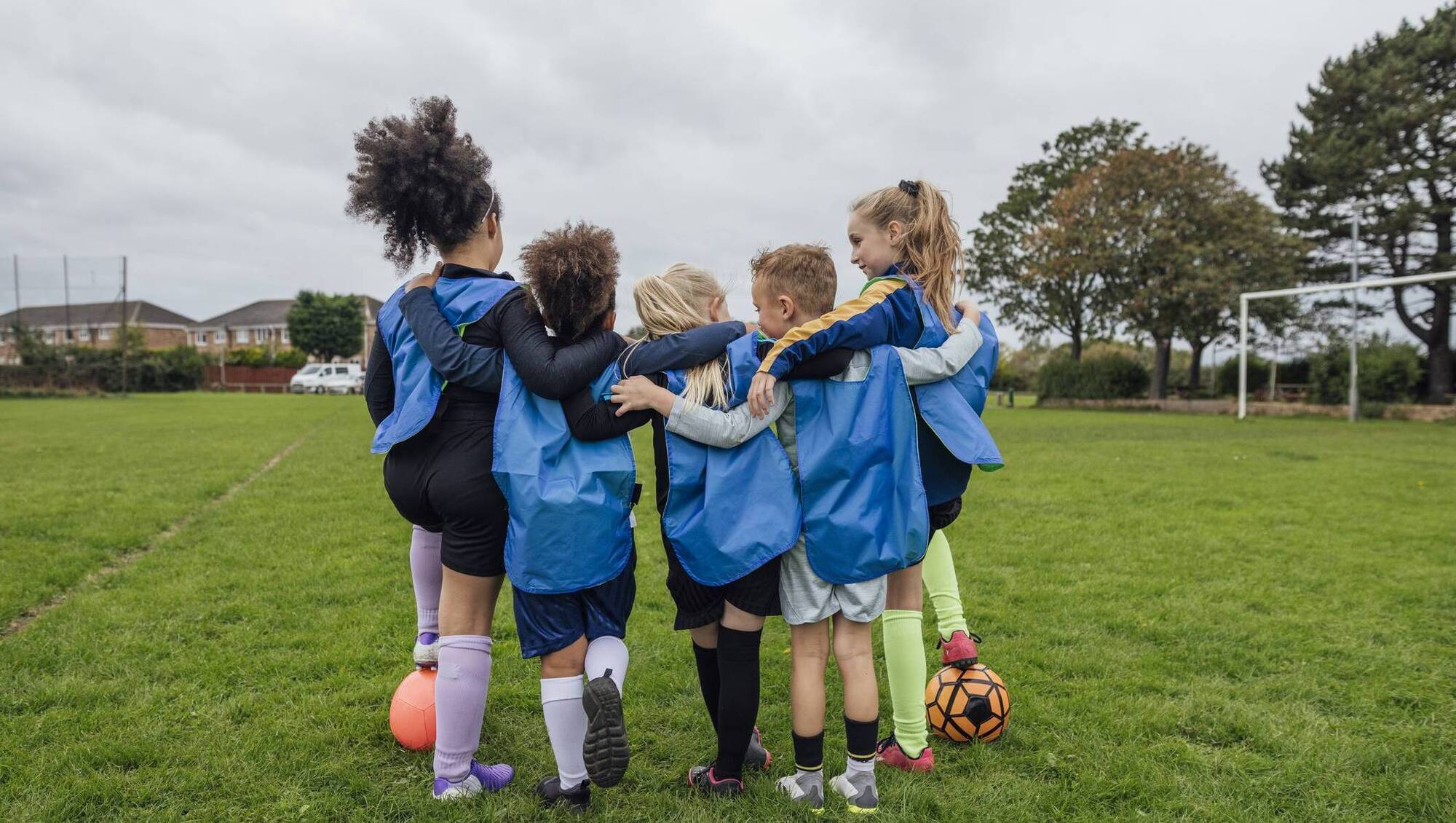
The more I watch children’s football, the more I find myself returning to one question: Why won’t they pass the ball?
As a parent and a coach, I see the same scenario. A child wins the ball and, despite team-mates in better positions calling for it, they either dribble past several opponents or take an ambitious shot. Possession is lost and the opportunity squandered.
Coaches accept that younger children overplay the ball. This is understandable. Between the ages of seven and 13, children are still learning to process information, recognise teammates’ positions, and make quick decisions. Many don’t notice an unmarked player because their attention is taken up with controlling the ball, avoiding defenders, and becoming the hero.
It would be easy to dismiss keeping possession of the ball as selfishness. Every generation of player has known ‘the gloryer’ who wants to score every goal. But through a child-development lens, we are witnessing something bigger than football, because passing is not merely a technical skill. It is a social one.
All passes require perspective, trust, and a willingness to sacrifice personal glory for the team’s benefit. These are psychologically sophisticated developmental skills that children acquire through experience.
We often talk about sport as a way to build teamwork, but it can equally reward status, dominance and individualism if adults around children reinforce those values. Children are not born recognising other people’s strengths or instinctively putting the group first. Like passing or shooting, these abilities develop through repeated practice.
The way we structure children’s games may unintentionally make learning more difficult. Many young players face too many teammates, all demanding the ball. For a child still developing decision-making skills, this cognitive load can be overwhelming, so they opt for the safest option and keep possession.
Former Dublin coach Mickey Whelan, who completed his PhD on Go Games (hurling, Gaelic football, camogie) noticed this overload and advocated small-sided games, using his rule of ‘your class, plus two’. Fourth-class children would play six-a-side, sixth-class eight-a-side. The principle recognises that decision-making develops gradually. Fewer players mean more touches, clearer passing options, and more opportunities to practise with others.
However, I increasingly see this reluctance to pass to teammates persist well beyond the age at which it once tended to disappear. Players who might previously have begun to appreciate the value of collective play still prefer individual glory.
SETU sports lecturer, PE teacher, and host of The Coaches Lab Podcast, Dr John Murphy, offers one explanation. In smaller GAA clubs, where numbers are limited, perhaps two physically stronger or earlier-maturing children end up carrying the team. Those players spend years solving every problem themselves, while team-mates learn to defer to them rather than take responsibility.
The effects can persist into adulthood. Players arrive in adult squads after years of being rewarded for carrying the ball rather than passing it. Building cohesive teams under these circumstances becomes harder, because everyone has rehearsed being an individual problem-solver rather than part of a collective. In that sense, failing to pass becomes less a technical weakness and more a developmental habit.
Highlight reels
Could the way children watch sport be influencing the way they play it?
Previous generations saw full matches, absorbing every pass, defensive recovery, and patient build-up. Today, many children see football on YouTube Shorts and TikTok. Algorithms reward bicycle kicks, dazzling dribbles, and spectacular long-range strikes because they generate clicks. Children can easily conclude that these moments define great football, even though they are simply the clips most likely to attract attention.
There has also been a subtle shift in who young people support. They used to primarily follow clubs. Increasingly, many follow individual players. Whether it is a Liverpool supporter wearing a Ronaldo Al-Nassr jersey or a child in Sligo proudly wearing a David Clifford jersey, admiration has become more personality-driven than community-based.
There is nothing wrong with celebrating exceptional athletes, but individual branding shines a brighter spotlight on personal brilliance than on collective responsibility.
Some might reasonably ask, ‘So what?’
For me, learning how to pass the ball is about much more than football. Thinking beyond yourself lies at the heart of healthy social development. Passing teaches children that someone else may have a better opportunity and that recognising it is a strength rather than a sacrifice. It asks them to place the team’s needs ahead of their own.
Passing to a team-mate is not merely football intelligence. It is emotional intelligence.
Coaches have an enormous influence over whether children learn this lesson. Team culture matters far more than tactics.
Some sport environments deliberately cultivate a passing culture. Joe Schmidt famously wanted Leinster Rugby to become “the best passing team in the world”. In those environments, mistakes are accepted because everyone is trying to solve problems together rather than individually.
Other sport environments unintentionally reward the outcome. The child who scores a hat-trick receives praise, while the assist goes unnoticed. Parents ask, ‘Did you score?’ instead of ‘Did you enjoy yourself?’ or ‘Were you a good teammate?’
Children are remarkably sensitive to what adults celebrate. If applause consistently follows individual success, they will naturally pursue it, not because they are selfish, but because they are learning our values. It is worth remembering that the developmental benefit comes from how sport is coached, not simply participation.
Children who make intelligent runs into space but never receive the ball eventually stop making those runs, because they no longer believe other players are looking for them.
Confidence grows through repeated experience of feeling competent, included, and valued. When children are regularly ignored because stronger team-mates refuse to pass, the team can begin to feel like a place where they don’t belong.
I have met many of these children in my therapy room over the years, some of whom eventually drifted away from sport because they did not feel valued.
Coaches recognise these dynamics, but addressing them is not always straightforward. Talented players score goals and win matches, putting pressure on coaches to let them dominate. Yet overlooking selective passing because a player is gifted teaches the entire squad that ability excuses behaviour.
We may produce technically excellent footballers while missing the opportunity to develop considerate team-mates.
A shared success
One of the privileges of my work is watching children gradually become capable of thinking beyond themselves.
Empathy, co-operation, and perspective all take time to mature and are strengthened through repeated opportunities to practise them.
When a child chooses to pass instead of attempt the impossible shot, they are doing far more than making a football decision. They are practising trust, recognising that someone else’s success can also be theirs, and learning that satisfaction does not always require personal recognition.
Of course, football should remain creative. We want children to dribble, express themselves, and occasionally attempt something audacious. Individual brilliance has always been part of the game’s appeal. But brilliance becomes even more meaningful when it is embedded in a culture of trust and teamwork. So perhaps the developmental progress is not just learning to pass the ball, but learning to recognise when the pass is the better choice.
In a world increasingly shaped by individualism, sport may be one of the few remaining places where young people work together.
The biggest cheer should not always be reserved for the child who scores. It should also be for the player who spotted the unselfish run, trusted the teammate still finding their confidence, or chose the simple pass rather than the spectacular solo effort. Those moments rarely make highlight reels, but they build something far more important.
Perhaps the greatest pass in children’s football is not the one that creates a goal. It is the one that tells a teammate, “I saw you. I trusted you. You matter.”
- Dr Colman Noctor is a child psychotherapist
No obligation. Ts&Cs apply.
CONNECT WITH US TODAY
Be the first to know the latest news and updates