Could you be a helicopter grandparent? 

Grandparents play an important role in their grandchildren's lives. But if a grandparent is involved in minding their grandchild, it can often be difficult to take a step back and respect the parents' rules. 
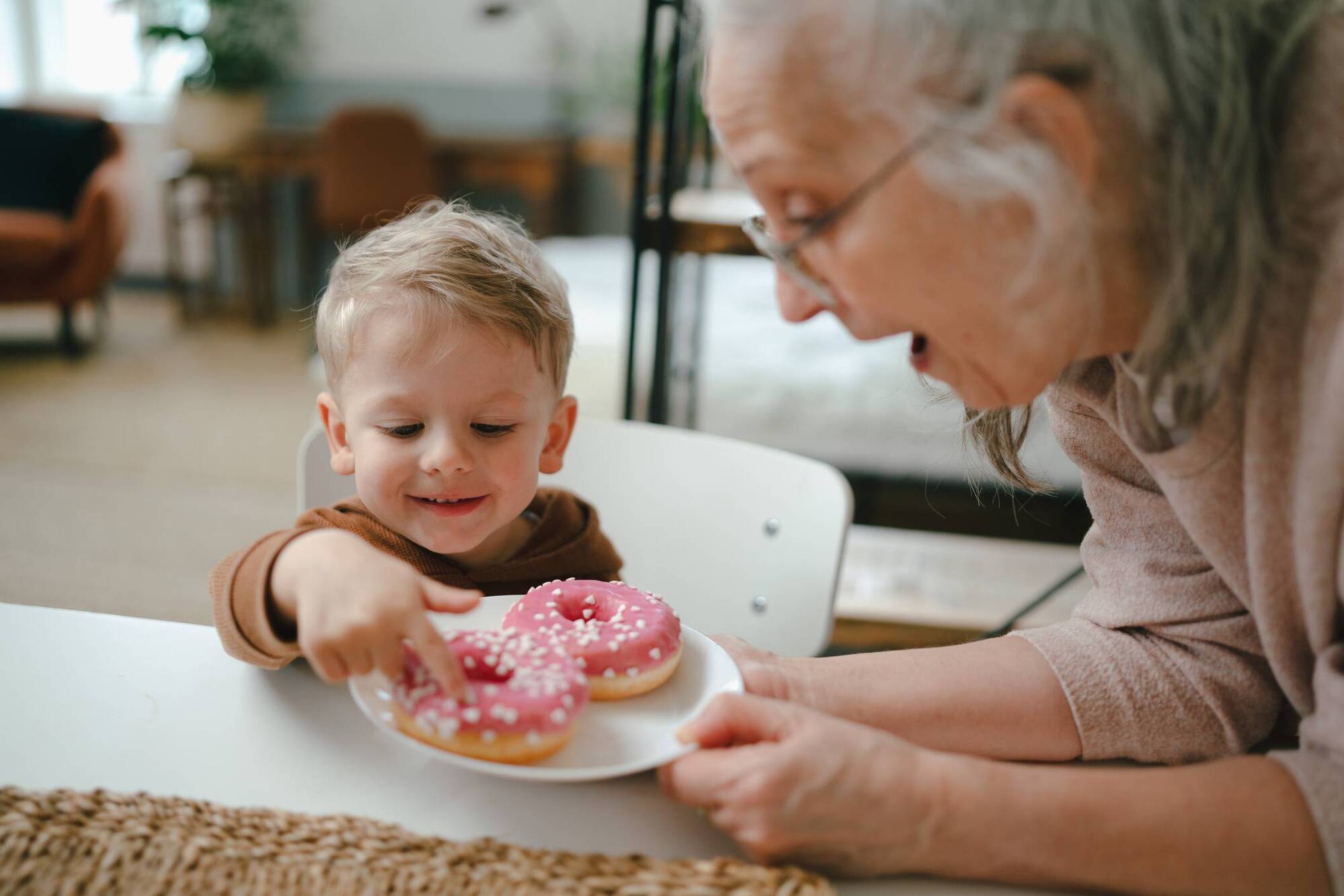
Keeping it sweet: Children need to know that their parents are the authority figures in their lives, and grandparents should never usurp that role. Picture: iStock

Keeping it sweet: Children need to know that their parents are the authority figures in their lives, and grandparents should never usurp that role. Picture: iStock

A you an over-involved grandparent? Do you try to bend the parents’ rules, constantly jump in with unsolicited advice, or ask 101 questions about the minutiae of your grandchild’s life?

Helicopter grandparenting can be an easy trap, says IACP-accredited counsellor Majella Kennedy. “Particularly if you’re in the role of minding your grandchild.”

As grandmother to a 13-year-old, Kennedy says she had to be “terribly conscious and keep reminding myself” of the boundaries. “The key piece was remembering that whether I agreed with the parents or not, it wasn’t my place to judge, to remember this is what the parents have decided in their parenting, and I needed to respect that.”

IACP-accredited counsellor Majella Kennedy says: Unless the child's safety is at risk, you should respect that the parent has chosen how they want to parent

As a psychotherapist, Bethan O’Riordan often meets over-involved grandparents. “A grandmother might say, ‘I’ve a great relationship with my daughter, but now she has children, there’s loads of tension’. And she’s wondering what’s going wrong. When we begin to explore, the grandparent finds there’s so much they can change.”

O’Riordan asks grandparents how long it had taken them to settle into being a parent. “They often say, ‘By the time they got to primary school, I felt I had a handle on things’. And they realise, ‘My daughter’s now where I was when I was trying to figure out things’.”

O’Riordan sees a place for grandparents to reframe what it is to parent an adult child who is now a parent themselves. “Even as a grandparent, you’re a parent first. If you can reframe your parenting, there’s less need for you to helicopter your grandchildren.

“It’s about figuring out how the grandparent can offer respect and grace to the parents as they’re growing into parenthood.”

What signs suggest you could be a helicopter grandparent?

You step into parenting mode too quickly — for example, comforting a grandchild before the parent gets a chance to do so.

If parent and grandparent are both present, the parent needs to give the child emotional security, says Kennedy. “A grandparent stepping in automatically undermines the parent. The child becomes confused as to who the authority figure is.”

Instead: “Take a step back, unless the parent invites you in to this comforting role.”

You criticise parenting choices in front of the grandchild. For example, ‘Oh, Mom is being a bit too strict, isn’t she?’

This is disrespectful to parents and humiliates them, says Kennedy. “It damages relationships in the whole dynamic. It’s confusing for the child, setting them up to lack respect for their parent.

“It divides loyalties and could feed poor behaviour: ‘Sure, Granny didn’t see anything wrong with this’. The child can manipulate the situation, setting parent and grandparent against each other.”

Instead: “Role model for grandchildren by how you interact with others,” says Kennedy, who recommends a calm, respectful conversation away from children’s ears.

“Be mindful you’re not criticising the parent. Outline positive things you’ve seen, then say, ‘I was a bit confused when I saw this happening. What do you think yourself?’”

Kennedy says this gives the parent an opportunity to reflect, as well as to outline the reasons for their decision. “The grandparent gets perspective from the parent, who knows the child better than anyone.”

You constantly offer unsolicited opinions, on any parenting issue, such as, ‘Why wouldn’t you let him stay up an hour later?’ or, ‘Why don’t you let him have the cake?’

There’s a judgement in constantly offering unsolicited opinions, says Kennedy. “Parents can become annoyed or feel resentful about it.”

She urges grandparents to remember that they are not the parent or authority figure. “Respect that the parent has chosen how they want to parent.”

Instead: “Say, ‘I can see you’re feeling challenged. Is there any way I can support you?’ If the parent says, ‘No, I’m fine’, you can’t really go in,” says Kennedy.

Unless for safety reasons. “For example, ‘I see Mary heading off down the street on her bike, no helmet on; she’s only three’. You’d have to say that, because safety has to be paramount.”

You ignore or bend house rules.

There can be an unconscious one-upmanship where grandparents want to insert themselves into the parent-child relationship, says O’Riordan. “They might say, ‘But I just want to care for the child, giving them a biscuit’. And yet the parent is trying so hard to carve out their identity as a parent and in creating the rules of the house.”

Instead: There are other ways to ‘spoil’ grandchildren: With love, attention, and care. “Children will remember the time you spent with them,” says O’Riordan.

Psychotherapist Bethan O’Riordan says a grandparent’s only job is to love.

She recalls her niece being brought on the bus for hours by her granny. “They’d be looking out the window at [passersby], people would come and chat with them, they’d have a ‘picnic’ and granddad would collect them on the other side. My niece loved it.”

You get defensive when the parent asserts their boundary.

There is almost a role reversal going on here, says O’Riordan. “The parent is almost trying to parent the grandparent in this scenario. And it can be a lot for a grandparent not to take it personally. There can be battles over treats, what time the child goes to bed, when people are in the trenches. This stuff can become huge.”

Instead: “Grandparents have to realise they’re a passenger, not the driver; decisions have been made by the parent and it’s the grandparent’s role to support these decisions. Grandparents don’t have to decide things, they just need to plod along.”

Grandparents supporting parental decisions is a huge gift to the whole family, says O’Riordan. “There’s emotional safety rather than tension-filled relationships. The grandparent is supporting the grandchild by supporting the parent.”

You ask for updates all the time. For example, ‘How did they sleep, feed, poo? How was school? Were they in trouble?’

“Any question you could think to ask, parents have told me grandparents want these updates,” says O’Riordan. The grandparent is trying to carve out their grandparent identity. “Lots of grandparents are retired, so they see the grandchild really filling this need in them to be needed.”

Instead: Grandparents must ensure their own needs are met: Their need for community, for their own interests. “You can’t live through your grandchild; that just smothers them.”

O’Riordan encourages grandparents to offer parents the help they are able to give without pressuring them to accept this help. “A grandparent could say, ‘These are the things I can offer. I won’t ask you again, because I don’t want it to be too much’. So the parents know the grandparents could do the school run, walk the dog, or come over on a Sunday; whatever it is that would make things easier.”

Ongoing, open conversations in a calm, non-judgemental way are key to developing and maintaining positive relationships. “Agree on the boundaries, particularly if grandparents are in a caring role. What are the rules we need to implement here? Consistency is important for children, otherwise they become confused. “What shared vision do we have for this child? What kind of adult do we want them to grow into? How do we want our child, grandchild, to look back on their childhood? When you know this, you will know what action to take to have that.”

Children do better with a community around them. “As a grandparent, you don’t have to raise your grandchild. Your only job is to love them.”

x

More in this section

Cookie Policy Privacy Policy Brand Safety FAQ Help Contact Us Terms and Conditions

© Examiner Echo Group Limited