Darina Allen: The secret to perfect homemade chips — with recipes
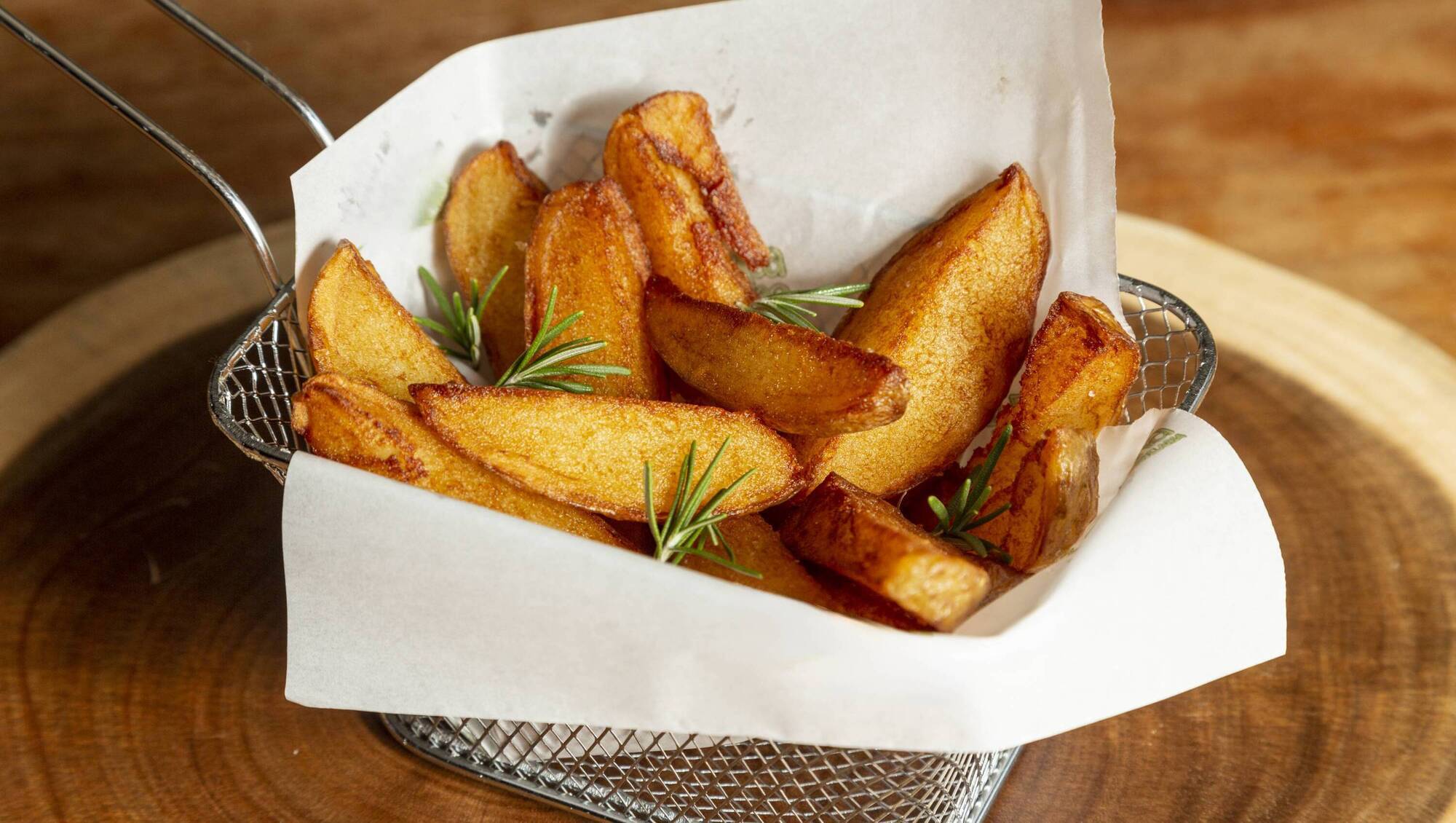
Darina Allen: Sales of frozen and pre prepared chips have sky-rocketed, so I feel many people have forgotten how easy it is to make chips at home.

Quality of oil or fat you use for frying really matters
This week, I’m writing about a kitchen staple – oil. Have you noticed how often the smell of deep-frying seems to pervade the air? Whole towns and villages often smell of that cheap chip oil.
Everyone loves chips, many eat them several times a week. But there’s no reason why chips shouldn’t be nourishing and delicious. Good potatoes with good oil or good fat are no problem.
The quality of oil or fat used for deep-frying really matters and affects both flavour and nutrient density of deep-fried food.
However, there is a growing concern about the damage many say all of the seed oils are doing to our health so it’s really worth doing a deep dive into the whole subject. Having done a considerable amount of research into the subject, I have to tell you that I am more confused than ever.
Some scientists argue that because of the high Omega 6 fatty acid content, seed oils can cause chronic inflammation.
However, to confuse the matter, other controlled trials found that Omega 6 fatty acids do not increase inflammation. One eminent scientist after another seems to contradict previous findings.
On and on, the debate continues. Seed oils were originally designed to grease and lubricate engines and wheels. But a few brilliant innovators like Benjamin H Thurman found a way to refine seed soils to make them edible. Soon they became a staple.
This process was first discovered in the late 19th and early 20th century. Proctor and Gamble led the way. So, how does the process work?
To refine seed oils, acids are neutralised to remove bitterness, any unwanted colour is bleached out and the oil is deodorised to eliminate strong taste and smells.
Well, in view of all of this, I have decided to follow my gut feeling, so I choose to source the most natural products for best flavour and nutrition.
Olive oil, tallow, or if you can access it, good lard from organic pigs.
Part of the appeal of the seed oils is of course the price. They are much less expensive than olive oil so are often a favourite of chip shops though some like Hawksmoor in Dublin and the brilliant Rick Stein’s establishment in Padstow favour beef tallow.
Olive oil, one of my favourites, produces a crisp golden chip with a subtle aromatic flavour.
Extra-virgin olive oil adds an extra fruity peppery note with a slightly softer crunch. Both are highly stable and have a smoke point of 210°C despite popular perception.
But I also love chips cooked in beef tallow, a saturated fat. It gives a deep savoury old-fashioned flavour, richer and more robust than neutral oils. It’s a saturated fat but it also provides Vitamins A and D.
For extra deliciousness and nutrients, Myrtle Allen always cooked chips for children’s tea at Ballymaloe House in tallow or beef fat. Myrtle didn’t serve chips at dinner, so parents regularly nibbled the chips off the kids’ plates, I still remember the squeals of protest... It’s not difficult to make tallow at home, this is how my mother showed me how to do it.
The best tallow is made by rendering down the suet from around the beef kidney. If you shop at your local butcher, you may well get it for free. Look out for organic if available. It has a high smoke point (350-400°C max). It oxidizes and degrades at a slower rate than vegetable or seed oil.
Lard gives chips a crisp golden crust, just a little bit more indulgent with a smoke point of 188-205°C. Like olive oil and tallow, lard can be used up to five times if carefully strained between uses. Tallow is also great for natural soaps and skin cream, but this is a cookery column, so you’ll need to ask Mrs Google for the recipes. That’s fun too.
1. Good quality 'old' potatoes e.g. Golden Wonder or Kerr’s Pinks.
2. Best quality oil, lard or tallow (beef fat) for frying. We frequently use olive oil because its flavour is so good and because when properly looked after it can be used over and over again. Avoid poor quality oils which have an unpleasant taste and a pervasive smell.
3. Scrub the potatoes well and peel or leave unpeeled according to taste. Cut into similar size chips so they will cook evenly.
4. Rinse quickly in cold water but do not soak. Dry meticulously with a damp tea towel or kitchen towel before cooking otherwise the water will boil on contact with the oil in the deep fry and may cause it to overflow.
5. Do not overload the basket, otherwise the temperature of the oil will be lowered, consequently, the chips will be greasy rather than crisp. Shake the pan once or twice, to separate the chips while cooking.
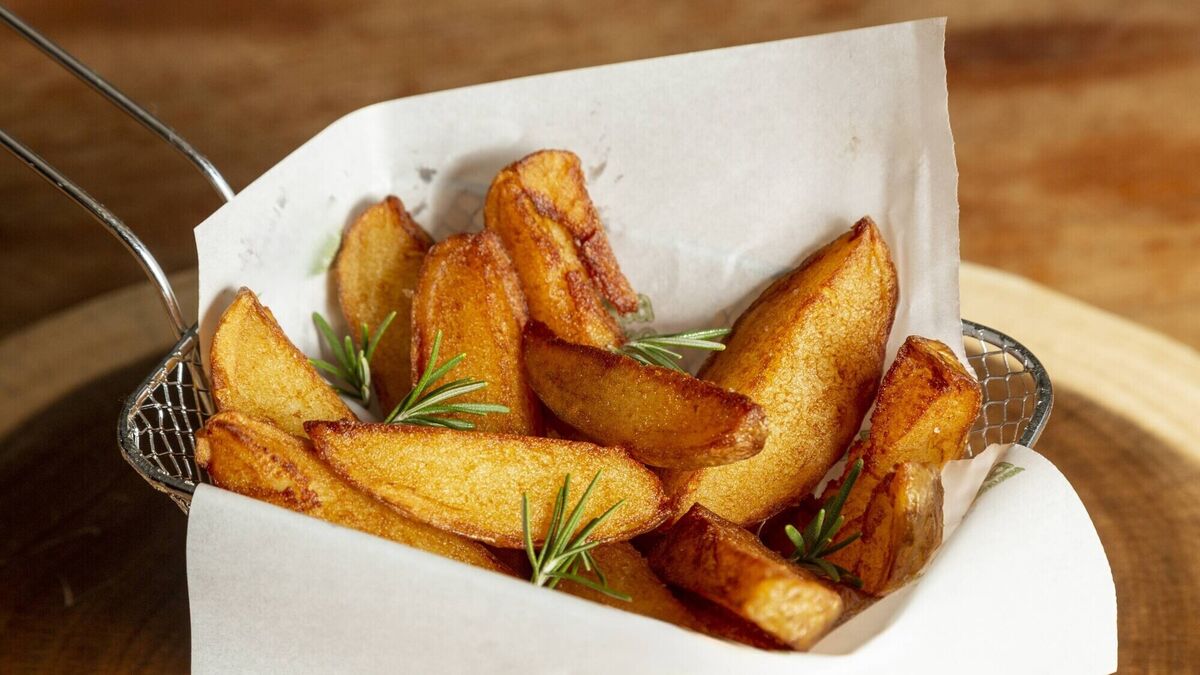
The Perfect Chip
Sales of frozen and pre prepared chips have sky-rocketed, so I feel many people have forgotten how easy it is to make chips at home.
Preparation Time
10 minsCooking Time
10 minsTotal Time
20 minsCourse
SideIngredients
Straw Potatoes: finest possible strips about 6.5cm long, cook quickly at 190°C until completely crisp.
Matchstick: similar length but slightly thicker, cook as above.
Mignonette – Frites: 5mm thick x 6.5cm long - blanch first at 180°C then finish at 190°C.
Pont Neuf: about 1cm thick and 6.5cm long.
Jumbo Chips: about 2cm thick and 6.5cm long.
Buffalo Chips: similar size to Jumbo but unpeeled.
Method
To cook the first two types: Fry quickly in oil at 190°C until completely crisp.
To cook the last three sizes: Fry twice, once at 160°C until they are soft and just beginning to brown, the time will vary from 4-10 minutes depending on size
Drain, increase the heat to 190°C and cook for a further 1-2 minutes or until crisp and golden.
Shake the basket, drain well, toss onto kitchen paper, sprinkle with a little salt, turn onto a hot serving dish and serve immediately.
Potato Crisps or Game Chips: A mandolin slicer is useful though not essential for slicing.
These are paper thin rounds of potato which are fried at 180°C until absolutely crisp, drain on kitchen paper, sprinkle with salt. Serve hot or cold.
Provided they are properly cooked they will keep perfectly in a tin box for several days. These crisps or game chips are the traditional accompaniment to roast pheasant or guinea fowl.
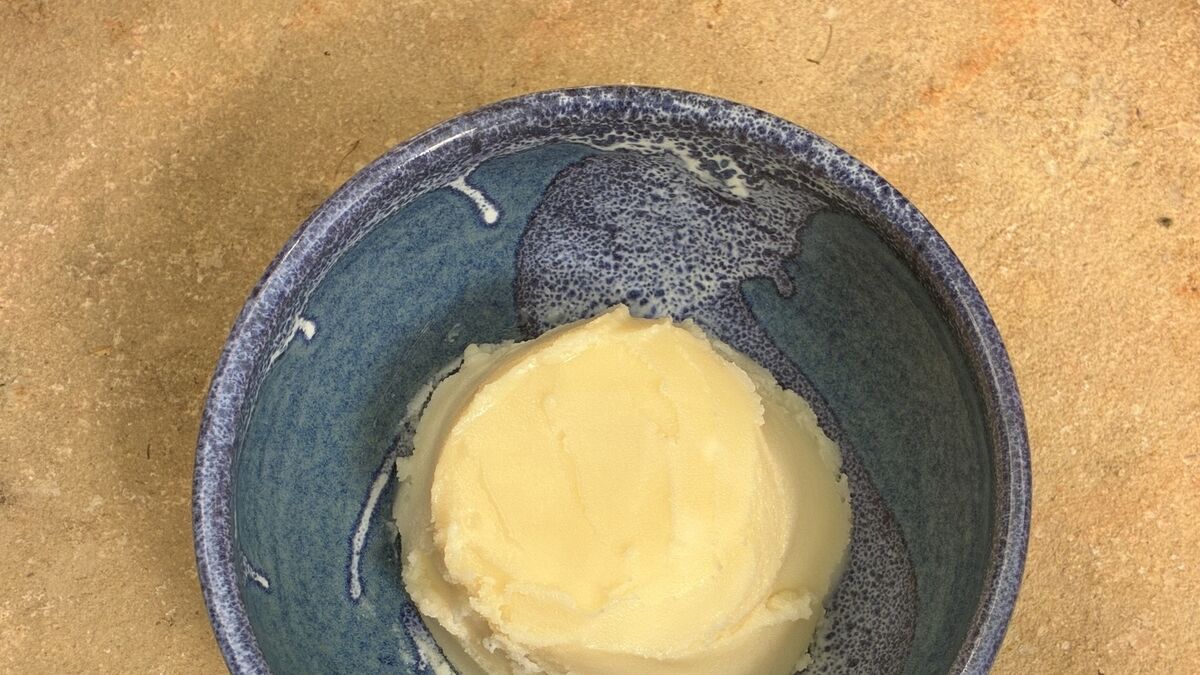
Tallow (Beef Dripping)
The best tallow is made from the fat that encases the beef kidney. Try to buy organic if possible. To melt beef fat, simply warm it gently. The fat will liquefy and can be used for roast potatoes or for deep-frying. Myrtle Allen always believed that th
Course
SideIngredients
- Beef fat
Method
Remove any traces of blood or plumbing.
Chop the fat into small pieces.
Put into a roasting tin and cook in a very low oven at 140°C/Gas Mark 1 for a couple of hours or until the fat has rendered out of the suet.
Pour off the liquid fat into a heat-proof bowl at regular intervals. Beef dripping solidifies and will keep for months in a fridge.
Tallow is rich in Vitamin D and, in my opinion, is far preferable both in flavour and health terms to the cheap and low-grade oil that is frequently used to deep-fry.
It’s important to strain the beef fat through a fine tin sieve after each use, otherwise the little particles of food will burn when the oil is reheated. Tallow can be heated to 230ºC/Gas Mark 8 provided the oil is strained and does not burn.
One can use it up to five times.
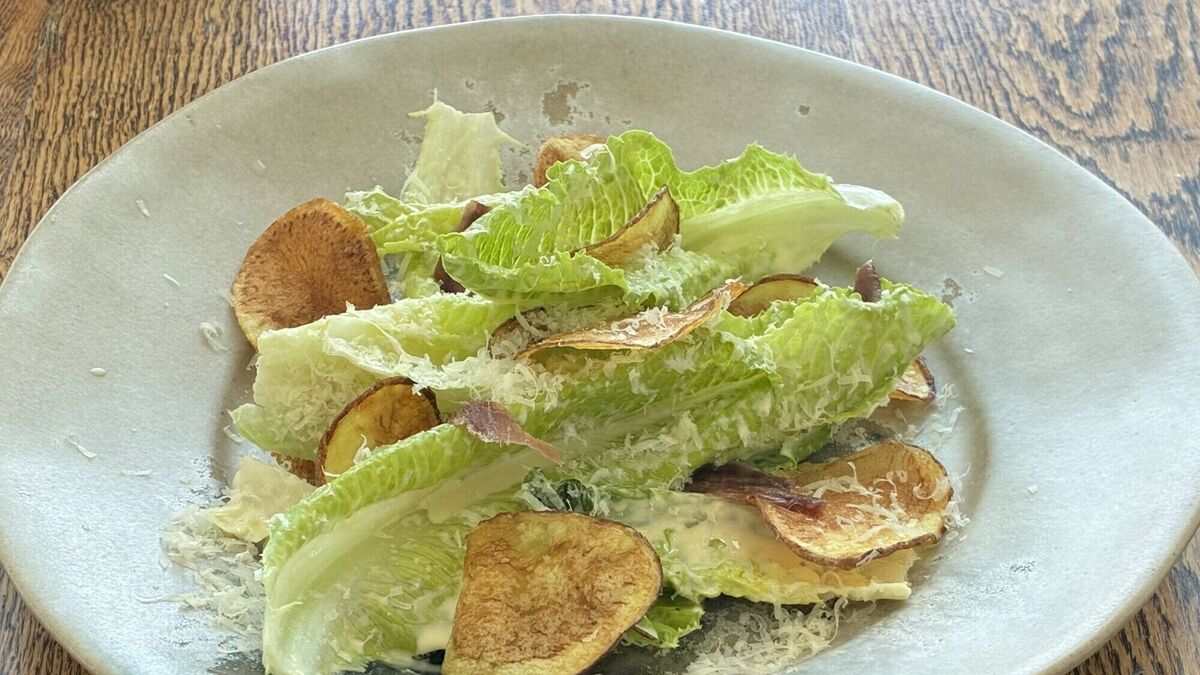
Caesar Salad with Potato Crisps
The remaining dressing will keep covered in a fridge for several days. I sometimes like to add a few little anchovy bits to the salad also.
Servings
4Preparation Time
20 minsTotal Time
20 minsCourse
SideIngredients
1 large head of Cos (Romaine) lettuce
50g freshly grated Parmesan cheese (Parmigiano Reggiano if possible)
Dressing
1 x 50g tin anchovies
2 egg yolks, preferably free-range
1 clove garlic, crushed
2 tbsp lemon juice, freshly squeezed
a generous pinch of English mustard powder
½ tsp salt
½ - 1 tbsp Worcester sauce
½ - 1 tbsp Tabasco sauce
175ml sunflower oil
50ml extra virgin olive oil
50ml cold water
Garnish
Potato Crisps (see recipe for The Perfect Chip)
Method
Wash the lettuce leaves, dry really thoroughly and chill lightly wrapped in a tea-towel in a bowl while you make the dressing.
I make the dressing in a food processor, but it can also be made very quickly by hand. Drain the anchovies and crush lightly with a fork. Put into a bowl with the egg yolks, add the garlic, lemon juice, mustard powder, salt, Worcester and Tabasco sauce. Whisk all the ingredients together. As you whisk, add the oils slowly at first, then a little faster as the emulsion forms. Finally whisk some water to make a spreadable consistency. Taste and correct the seasoning, this dressing should be highly flavoured.
To serve, put a tablespoon of dressing per person in a big bowl, add in the chilled whole lettuce leaves and about half the Parmesan. Toss the leaves gently but thoroughly in the dressing.
(This is done most effectively with the hand, but if this does not appeal to you, use salad servers.) Add more dressing if necessary to coat the leaves. Arrange the dressed leaves on individual chilled plates. Sprinkle the potato crisps and remaining Parmesan on top. Serve immediately.