Bernard Casey: 'The stories are in a fictional world somewhere between South Kerry and the sky'
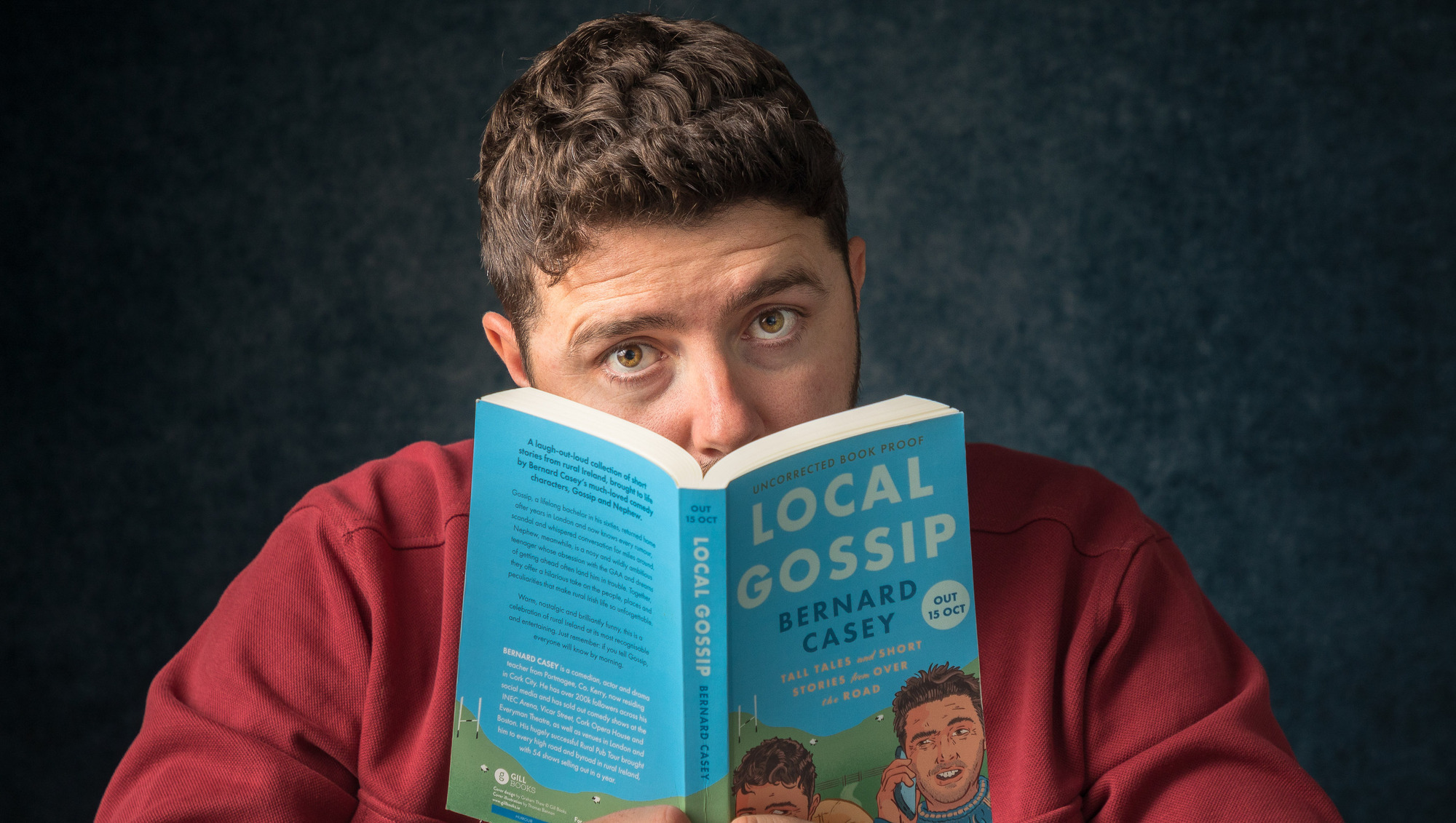
Local Gossip is a book of short comedy stories about life in rural Ireland. Julie Jay chats to its author, fellow Kerry native and comedian Bernard Casey
Comedian, actor and author Bernard Casey ahead of the publication of Local Gossip, a warm and humorous collection of stories that draws on the unique voices, local lore and colourful personalities that have long shaped rural Irish life. Picture: David Creedon
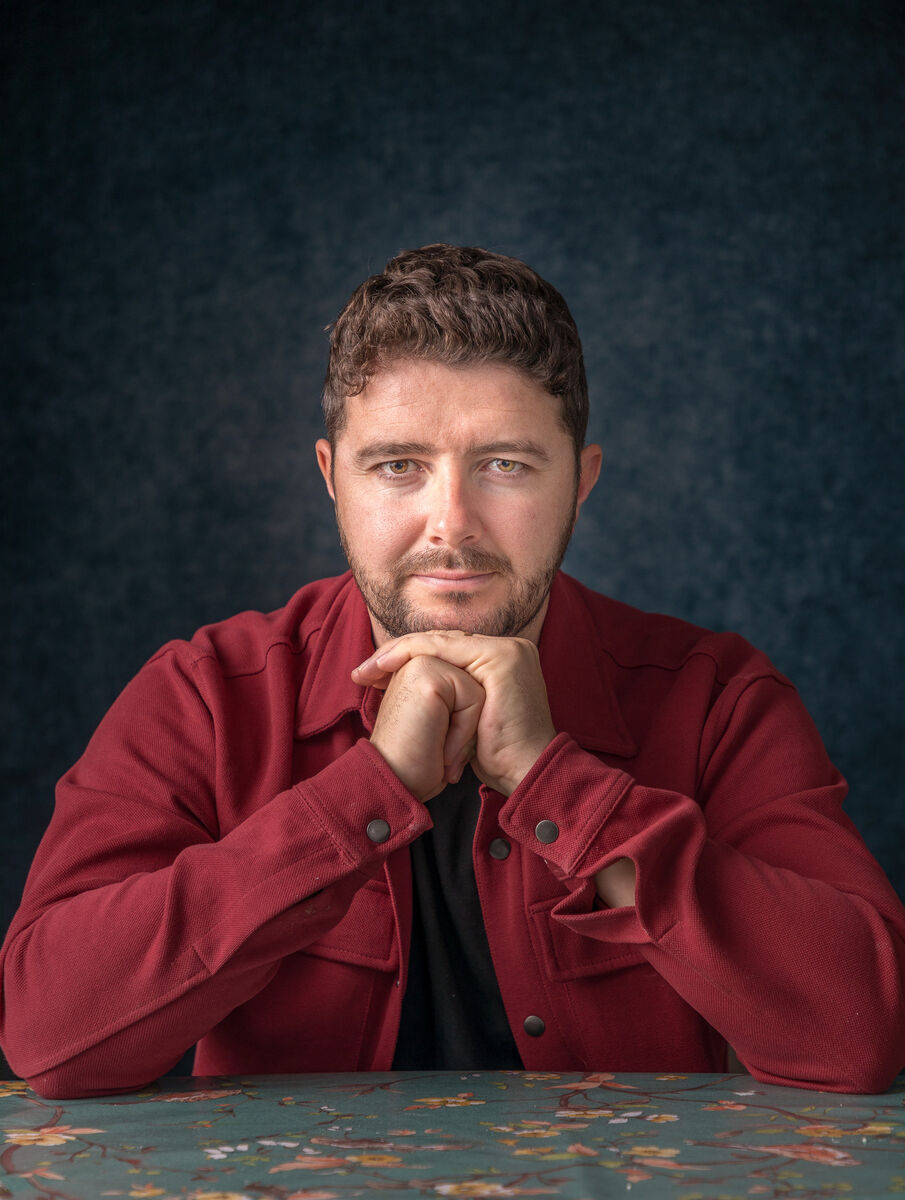
Comedian, actor and author Bernard Casey ahead of the publication of Local Gossip, a warm and humorous collection of stories that draws on the unique voices, local lore and colourful personalities that have long shaped rural Irish life. Picture: David Creedon

Julie: So, Bernard, what can readers look forward to with ‘Local Gossip’?

Bernard: Local Gossip is a collection of short fictional stories based on different kinds of social aspects and traditional cultural aspects in Irish society, primarily around rural Ireland. So I have primarily two characters: Gossip, in that kind of old-school style, tells what it used to be like in London back in the day. Nephew, then, is your deluded GAA young fella. You might laugh at him and you might make fun of him, but at the same time he’ll do you over faster.

And there’s the likes of the other characters, Kevin and Gerard, who are also so well-drawn.

Gerard is more of the guy that moved away up to Dublin, but nobody knows what he’s at. He’s kind of crafty and shady, and people aren’t sure about him. You know, he’s the kind of guy, say, if a family member of theirs died and you went to the wake and you saw him, you’re like: ‘Who’s this lad? I’ve never met him.’ Kevin is a completely different character. Kevin lives in his own kind of world, really, and has his own tendencies.

And in ‘Local Gossip’, you are really brought into Kevin’s world.

Yeah, and sometimes Kevin sees the picture better than the rest of them, like the rest of them are too caught up with the rivals and the minor stuff, but Kevin can see so clearly, in a way the others can’t.

Needless to say, your comedy has been a viral sensation. It feels like you really have changed the landscape of comedy in Kerry. Do you feel that?

No. I’ve never really looked at it that way. I was always a stand-up comedian first, and then everything else was to aid the stand-up comedy career.

So, be it doing a video or doing a sketch or anything like that, that was always the aim, to get people to see your stand-up comedy, and I guess yeah, it has helped. I understood the characters so well from doing the videos down through the years that a book was inevitable, but also I really wanted to do it.

I was intrigued that it was a collection of short stories. Is that one of the reasons you went towards that form? I would have thought that short stories was particularly tricky as a form.

Yeah, some people think that, and a lot of people don’t like it because they don’t get enough of the character. But here I have all the same characters going through the short stories. Then there’s one overarching arc between all stories, and there’s also callbacks. A callback is a huge thing in stand-up, and I love doing a callback, so the book was bound to have a couple of them.

Reading this, there is such a rhythm of speaking. It leaps off the page. You’ve really, really captured a specific rural cadence.

Well, I don’t know did I achieve that, but I do love words. ‘Wisht’ is a word I love, now — my dad would say it, and it’s a real one you hear being said in south Kerry with people over the age of 35.

That being said, the places that are mentioned here, although I hope they will feel familiar to readers, aren’t actually real. The stories take place in a fictional world somewhere between south Kerry and the sky.

Bernard Casey: Stand-up is shorter form. You’ve got to get to the point pretty quickly. Writing is different. Picture: David Creedon

Reading the book, it reminds me so much of Flann O’Brien. Would he be one of your literary heroes?

Definitely. I remember the first time I ever saw The Brother sketch on. I saw it when Eamonn Morrissey performed it and watched it on YouTube about 15 years ago, and I was mesmerised by it. I was like: “This is phenomenal! What a story!” I really, really enjoyed that. I guess you look at Flann O’Brien, and Blindboy Boatclub was inspired by him, and I was definitely inspired by Blindboy. And I love that kind of making something that sounds ordinary, but it’s absolutely ridiculous.

Rereading the book, is there any one story which still makes you chuckle?

I have a story in the book about how nephew’s father got his nickname, and it’s the most outrageous story that could possibly happen at an Irish wedding. But as you read it, you’re like, ‘This could happen’. I won’t spoil it for any of the readers. But it was probably my favourite part of writing the book.

In terms of the stand-up, because you’re known on the circuit as one of, I would think, the best storytellers out there, would you consider yourself more of a storyteller than a stand-up, or do you think they are two sides to one coin?

They’re the two sides to one coin, really. I would be a storytelling-style stand-up comedian; I bring you one way, take you the other within the story. That’s the way my mind works, I think, as a stand-up first, and then a storyteller, I guess.

Who are your favourite storytellers?

Michael Harding I really love, and Frances Kennedy, I’ve always loved Frances Kennedy. Just unbelievable timing, and she knows what words to put the emphasis on. You know, she doesn’t really curse in her stories, but when she does, it’s so funny because she knows how, she knows when to do it.

And comedy-wise?

Well, Tommy [Tiernan], of course. And Dylan Moran — back in the day I used to listen to Dylan Moran when I worked in a shop. If it was a really quiet day in the shop, I’d clean the shelves, clean the cold room, and all the while I’d have my iPod in, listening to Dylan. He’s a master of the absurd.

And tell me, how does writing a collection of short stories compare to writing stand-up? Because obviously, writing stand-up is notoriously difficult.

Stand-up is shorter form. You’ve got to get to the point pretty quickly. But with this, I really, really enjoyed it because you could get into a state of flow where you just write, write, write, and just ideas are popping into your head. You’re throwing them in, and you can get way more descriptive.

Yes, you know, we left the Happas Five, and we were driving out the road. The traffic at the Newlands Cross was really bad — you know, things like that. I love all that. Just normal everyday descriptions.

I was so struck by how much geography is central to the book

Geography is a huge part of this book. The place names, most of them — a lot — are made up. But we studied Irish diaspora in college, which was all about the Irish in London. That’s why, with this book, there’s a bit of history in there too.

The story of the Irish diaspora is such a thread in the book, isn’t it?

It’s a huge thread. The whole story is all about why we went to London. This book comes from a place of love, really. Like, you know, it comes from a place of love of your place and the people, and the ways and the means. So it’s definitely a celebration of these people who went away, and those who stayed too.

With this collection, people will be expecting it to be funny — and it certainly is — but there’s much more at play here too, a certain element of pathos?

It’s a massive part of it. Like with the characters, there’s a sadness and a tragedy to them as much as anything. But they’re kind of just, like, Irish people. They just get on with it. They accept that life isn’t always going to be easy, and they get on with it.

Is it a particularly, and again, not to announce any bias here, but is it a particularly Irish thing? To rehash Patrick Kavanagh’s quote here about tragedy being undeveloped comedy...

You know, I would say it’s part of us as Irish people. We love self-deprecation, you know? Like the person you like at the party is the guy who makes fun of himself. It’s not the guy who says: ‘I’ve got a job and I’ve got a car and I’ve got a house’. I don’t want to talk to him. He’ll never guess what happened to me on the way over. A bus splashed me, and then the bag, my bag burst out on the floor...

Why do you think people have connected with the characters in the way that they have?

Well, we all know them because they’re our family, our friends, ourselves too. But as well, the characters think they’re great, but they’re actually tragic. There’s maybe gulping moments, sad, very sad moments, kind of nostalgic longing for the past. You’d feel sorry for them sometimes. There’s a lot of empathy, but really it’s comedy at its core.

  • ‘Local Gossip’ by Bernard Casey is published by Gill

More in this section

Lifestyle

Newsletter

Eat better, live well and stay inspired with the Irish Examiner’s food, health, entertainment, travel and lifestyle coverage. Delivered to your inbox every Friday morning.

Cookie Policy Privacy Policy Brand Safety FAQ Help Contact Us Terms and Conditions

© Examiner Echo Group Limited