Burning issues: Are barbecue bans and fines needed to tackle wildfires at source?
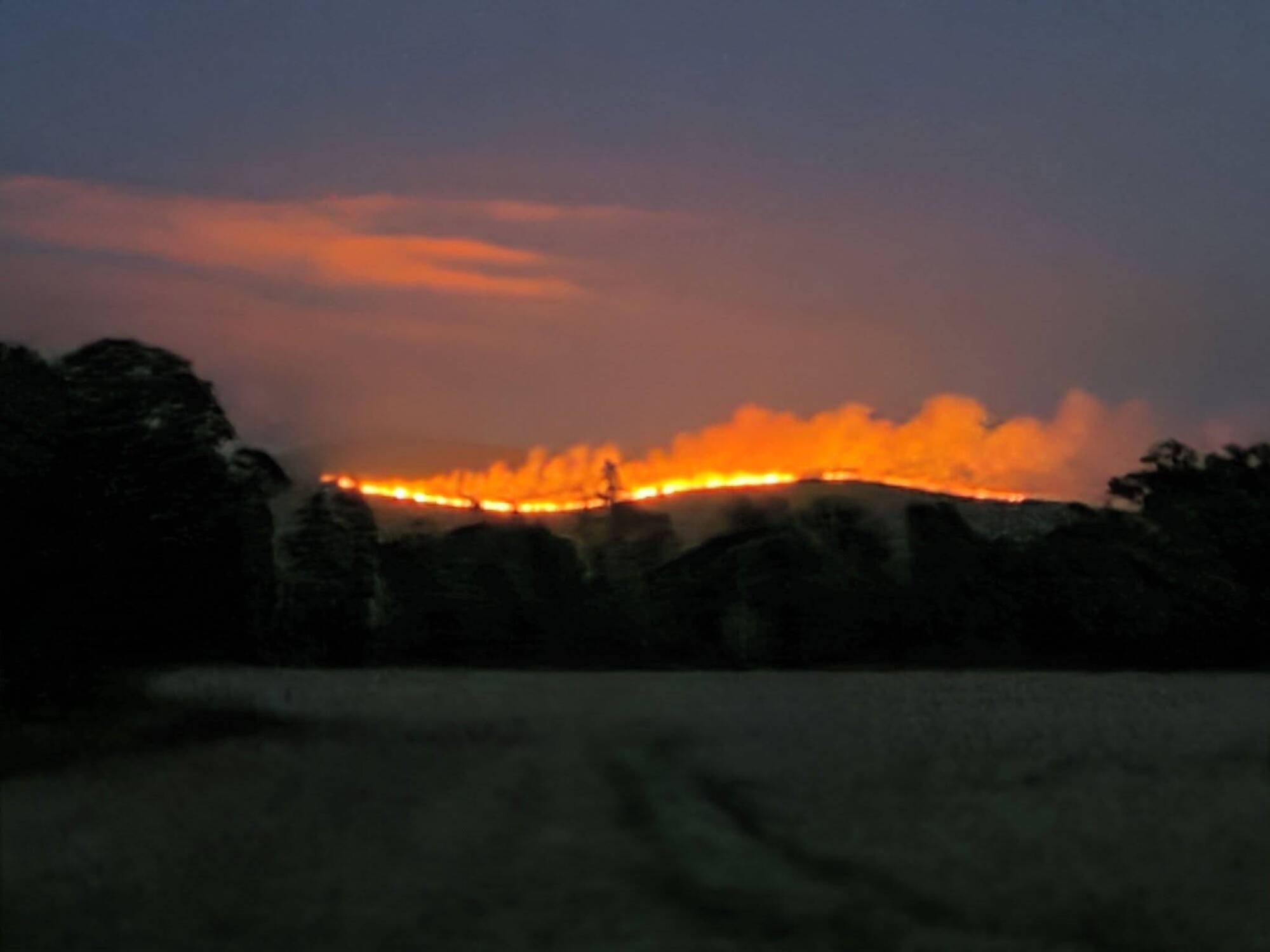
Wildfires rage on Slievenamon, Co Tipperary, this summer. Picture: Cllr Michael Brennan/Facebook
The hellish blazes that broke out across Europe this summer are a grim reminder that we cannot be complacent about wildfires, even on a rain-soaked island.
The fires served as a warning of what is likely to become an increasing threat, as drier spells turn human activity in nature into a tinderbox risk.
In Killarney National Park, a disposable barbecue discarded near a sign warning about such items saw damage extend to more than 20 hectares.
It is unknown what caused the fire at Slievenamon in Co Tipperary, which burned in the region of 1,250-1,500 hectares of open wildland, along with a few hundred acres of forestry.
There were five fires in the Dublin-Wicklow mountains area this summer all caused by human activity. The earliest of those fires, ignited high up in the mountains, were likely set deliberately for agricultural reasons.
A fire on Piperstown Hill, in the hinterland of Tallaght, was also thought to have been set alight deliberately, as it broke out at around midnight, and is being investigated by gardaí.
It burned 66 hectares and was difficult to extinguish due to the hot spell.
Most of the Wicklow and Dublin mountains are peaty, and so the fire service had to “babysit” the blaze, with council workers removing a trench of soil to stop the fire’s gallop.
Three weeks later there was a relatively small fire of 13 hectares on the White road at the Dublin-Wicklow border, which is believed to have been started by a discarded disposable barbecue.
The largest fire came weeks later and spanned from Cluan Aird to Glenasmole to Glencree and the Fetherbeds area, its origin being unclear.
It burned for three weeks.
“Normally you go out, and you’re able to fight it because you’ve got flames and you know what you’re dealing with,” said Andrea Webb, conservation ranger at the Wicklow Mountains National Park. “This was unusual in that it got into the peat. You could put it out on one day, and have tonnes of water dropped on it, and then a few days later it would pop up again.
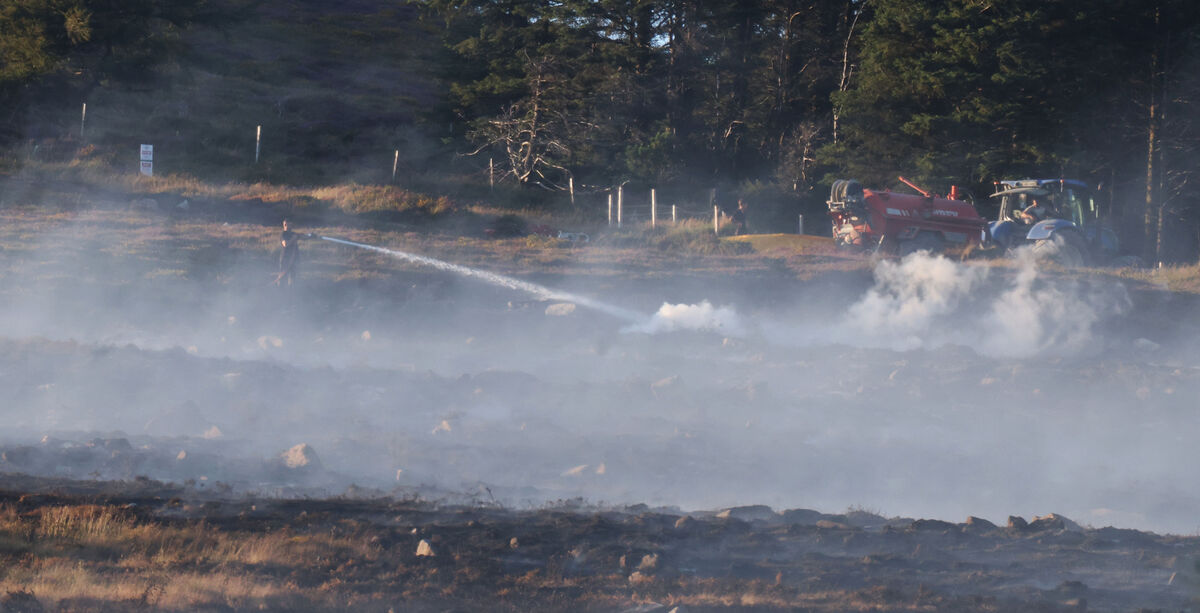
“The other week, my colleague and I were looking again, and there are still warm areas there after all this time, over a month later. When fire gets into peat, it can be very serious.”
Ms Webb said the fires this year were different from others in that they required a lot of “babysitting” to stop the spread.
Although wildfires in Ireland are not a new phenomenon, a rise in temperatures and prolonged heatwaves can dry the ground, vegetation, and mosses out fast, which leaves them more susceptible to being set alight by accident or on purpose.
“It is getting far more numerous, and the possibility of more fires happening more often is a harsh reality,” said Eamonn Meskell, the National Parks and Wildlife Service’s Killarney National Park divisional manager.
So how do you catch someone who started a wildfire?
It is difficult to trace back through the stages of a wildfire to find out how it started and who set it.
The cause can sometimes be deduced based on the timing or location of the fire — if it erupted near a camping hotspot, for example.
If the fires break out earlier in the year, they are more than likely set deliberately for agricultural reasons, to improve grazing for sheep. A disposable barbecue left behind on a wooden picnic bench, a discarded cigarette, or a campfire left smouldering can all evolve into a big blaze. Others can be caused by people burning rubbish in remote areas.
Tipperary chief fire officer John Shinnors said it was “next to impossible” to tell whether a fire was deliberate or not, as the damage caused by wildland fires will most likely also consume the cause of the fire.
“The scale of these fires can make it difficult to determine where exactly the fire started, let alone what started it,” he said.
“Due to the remote location of many fires, the presence of CCTV or security cameras will be very unlikely.”
Mr Meskell said it was fairly certain that the most recent wildfire in Killarney National Park was started by a disposable barbecue.
“It is just where the fire started, the area where the fire started, where our fire team went out to first, and that’s where we found the barbecue that had burned out,” he said.
“The unfortunate thing about that is, 50 yards away, where you walk in the trail to where the barbecue was, there was a sign erected by our rangers only a couple of months ago to say ‘barbecues are not permitted; camping and fires are not permitted’.”
Ms Webb and Mr Meskell both said that disposable barbecues should be banned, adding that it was “heartening” to see retail outlets stop selling them over the summer.
“I’ve seen them on wooden tables, on a grassy bank, or people leaving them inside the cardboard box, or they leave them unattended or don’t put them out properly,” Ms Webb said.
“They’re very handy, but they are detrimental because people don’t know how to use them properly.”
Asked if they should be banned, Mr Meskell said: “Anything that is going to help the situation should be considered.
“It’s not just a local or a national thing, this thing is becoming bigger. They are being sold, and they will be sold, but we have to be realistic and say there is danger there and these are the dangers.”
If disposable barbecues were banned in Ireland, the consensus is that there would be fewer wildfires.
However, is it worth banning them when the vast majority of people can use them properly and discard them afterwards safely?
“The disposable barbecue has its place in society,” Mr Shinnors said, “and there is very little evidence to suggest that they have caused many such fires.
New legislation relating to national parks is expected to strengthen park rangers’ powers. It is expected to allow bylaws to be put in place for national parks and allow fines for any breaches.
This has been welcomed by park rangers, who say it will make a difference in the small number of cases where people who, even after the rangers engage with them, refuse to co-operate.
“If we fine somebody who is lighting a fire, if you can impose a fine, then it’ll make people more aware that they shouldn’t do that, even though they know anyway,” Mr Meskell said.
“It’s human nature that people are willing to take a chance.
“The concept might be ‘light the fire, cook the sausages’, but the reality is, that’s not the way it should be because these areas are so susceptible to damage.
“Visitors need to be responsible when they visit these fantastic areas.”
Minister of state Christopher O’Sullivan has said previously that the fines for those prosecuted and convicted for starting wildfires deliberately are “too small”.
He said the maximum fine of €5,000 was not a deterrent and said that aspect of the Wildlife Act would be reviewed.
The general consensus is that the best way to prevent wildfires caused by human activity is through engagement with the public.
“A lot of it comes down to signage, it comes down to public awareness, it comes down to social media, all of which Killarney National Park is involved in,” said Mr Meskell.
A fire team was set up within the staff of Killarney National Park, with three members receiving training three years ago to allow them to go out on patrol during hot weather for early signs of smoke or fire and to engage with people.
Mr Shinnors agrees that public awareness and engagement are the best ways of preventing wildfires.
“Public awareness will be key, firstly in prevention and maybe concentrating on a few key areas such as barbecues, smoking, and the dangers of the same in certain environments,” he said.
He said the public should be encouraged to report any unusual signs of smoke or fires as soon as possible during periods of dry weather, as it could help fire teams tackle blazes before they become too destructive.
Ms Webb said that amid high temperatures and wildfires burning in Wicklow, people still lit barbecues.
“We had the status orange temperature warning, Slievenamon was burning, Glencree was burning, and we had people coming up to Glencree and lighting a barbecue just across the road from where the fire was burning.
“You’d say ‘this isn’t right, it’s not safe to do this’ and you’d have to point to the fire. This is what we do when everyone else is out enjoying the sun. We’re on fire patrol.”
Ms Webb said there are still people going up to the Wicklow mountains to burn rubbish, and while it is not a new issue, she said there appeared to be an uptick in rubbish burning. “Some people even try to burn electrical equipment,” she said.
“We need to start really basic. We need to inform the general public, because we’re not used to this kind of heat, and we’re more than likely going to get more of it.
“People have no idea the impact they have.”

CLIMATE & SUSTAINABILITY HUB
CONNECT WITH US TODAY



Be the first to know the latest news and updates