Winter is coming: Burren cattle head for the hills
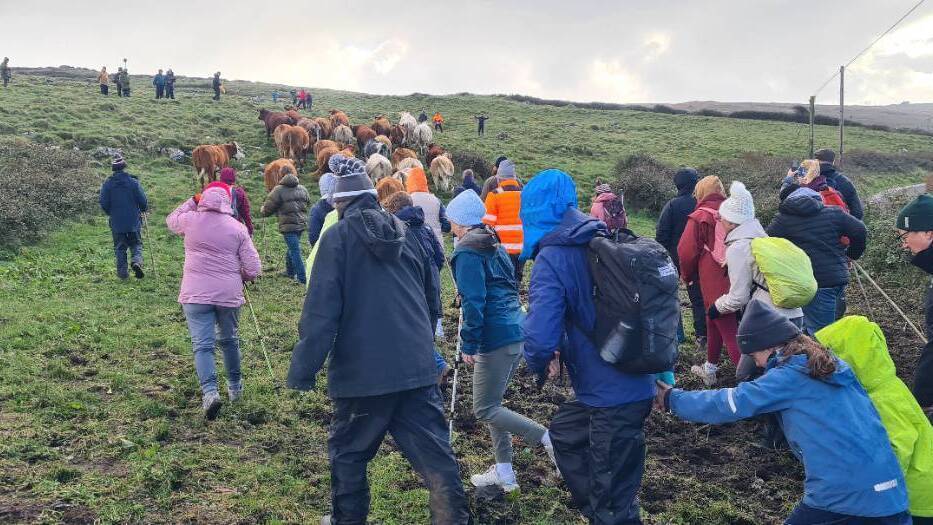
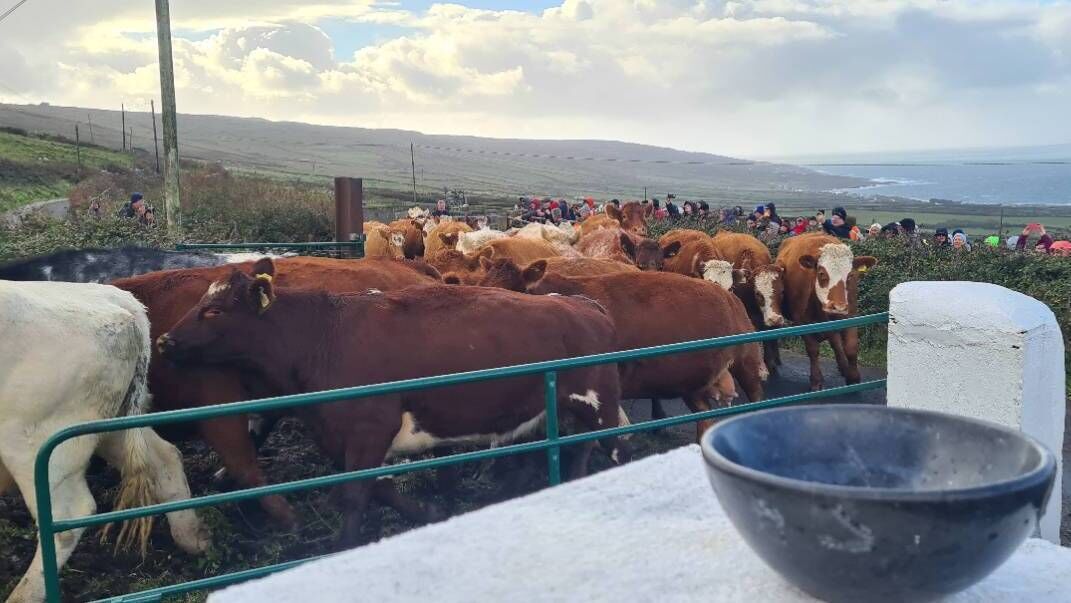
Cattle and participants of the Winterage Festival help drive the cattle to winterage pastures. Photo: Brendan Dunforth
In the Burren, a unique farming tradition thousands of years old is still practised today by local farmers.
The Winterage tradition is still carried out by farmers situated in the Burren, where cattle are herded up into upland pastures to graze for the winter.
The practice has no specific origins but is believed to have evolved as farmers worked with the seasons and adapted to the unique landscape, and is considered an “Intangible Cultural Heritage” by the government.
In the Burren, the October long weekend has been dubbed the “Winterage Weekend,” and locals and tourists join farmers in recreating the traditional herding of the cattle into winterage pastures.
The celebration of the tradition has been going on for the last 15 years and has been facilitated by local volunteers and farmers.
"When we started the festival, it was wanting to instil pride and recognition in these farming practices… And it's all done just with a good heart.
Read More
"The farmers volunteer, and then we have lots of volunteers to help with everything else. So it's a lovely, simple but significant event," explained Burren programme manager Brendan Dunforth.
The Burren practice is considered to be “reverse transhumance”. Transhumance is defined as the seasonal movement of livestock between summer and winter pastures.
The Burren Winterage is unique in the way that farmers send their cattle to upland pastures during winter, when more common practices, like in the Alps, transhumance usually marks the return of cattle from the mountains to lowland pastures at the end of summer.
The Burren spans 720 km² and is comprised of a karst landscape of exposed limestone with thin soil cover and sparse vegetation, with the majority of drainage systems below ground, and has been influenced by tectonic and glacial forces.
Despite this apparently harsh environment, the Burren hosts one of the richest biodiversities of any region in Ireland, containing almost 75% of the island’s native flora. As a result, most of the region, approximately 300 km², has been designated as Special Areas of Conservation (SAC) under the EU Habitats Directive.
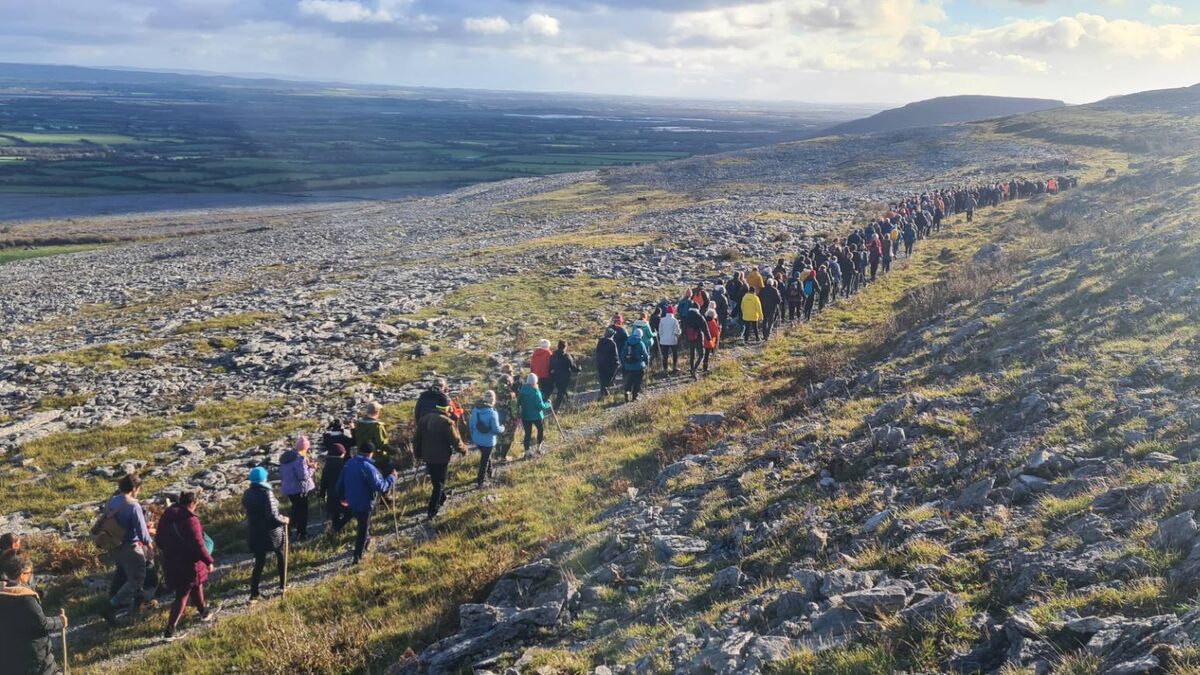
Under the Burren Programme, the Burren Life Project helped develop a blueprint for sustainable farming in the region. The Burren Programme ran from 2010 for 13 years, rewarding farmers for restoring and maintaining traditional grazing systems while protecting biodiversity.
In the last three years, the programme was succeeded by the department’s Agri-Climate Rural Environment Scheme (ACRES).
In summer, the Burren’s limestone hills are not comfortable for livestock due to limited water sources and hot, exposed stone. Vegetation during this time can also be very coarse, dry and unpalatable.
However, during winter months there is a plentiful supply of calcium-rich water and rainwater harvesters have also been established for livestock. The coarse vegetation becomes ‘standing hay’ following early frosts during winter.
The limestone itself also slowly releases the summer heat, providing “dry lie” conditions for livestock, while also enabling an extended growing season for grasses and herbs.
Mr Danforth explains:
Normally, livestock, mainly cattle, are herded onto the winterages from September onwards. They may be walked and/or transported by trailer.
Most cattle spend up until March or April out on winterage areas to forage on the rough grasslands with very little supplementary feeding, and only some returning to be housed at Christmas.
Nowadays some supplementary feeding of hay, silage or grain may be provided by farmers to help keep animal condition, but the ‘compensatory growth’, described by some local farmers as the cattle “turn inside out” when they return to lusher lowland pastures in spring, is a well-documented phenomenon that occurs alongside the tradition.
Today, approximately 500 farmers in the region maintain the practice of winterage on their farms. The practice has evolved and looks different to the earlier written histories of the practice.
In the 1800s up until the 1960s, Shorthorn stock cattle dominated the livestock seen in the region. Now, farmers prefer continental cross-bred sucklers, particularly Charolais, Limousin and Simmental.
Mr Dunforth explained that the rocky Burren terrain with its shallow soils can easily carry the heavier continental breeds without causing significant damage to the landscape and still reap the benefits of winter grazing.
Although an ancient practice, recent research has revealed that the winterage tradition helps with the rare biodiversity in the area. Winter grazing helps reduce fire risk by lowering vegetation fuel loads. Continued farming in the area is vital for conserving biodiversity, archaeology, landscape character and cultural heritage.
During summer, the Burren’s rich flora can flower and seed unhindered by grazing livestock. This same flora is then dormant during winter months, allowing livestock to graze the grasses and herbs which, if left unmanaged, would gradually smother the flora.
The decline of the traditional practice in a modern farming setting has been linked to scrub encroachment in the area, hindering biodiversity and restricting access to the area for the growing number of visitors to the region.
"If we want to keep these wonderful wildflowers that we have in the Burren, we've got the best repository of wildflowers in Ireland, we need to keep going with the farming traditions, particularly the winter grazing of the grasslands," Mr Dunforth said.
With the intensive nature of farming in the Burren region and the need for supplemented incomes for farmers that reduce the time available to be set aside for livestock, winterage and other traditional practices within the sector are on the decline.
"The one thing the winterages aren't is easy... The cost to the farmer is the labour, the effort involved in managing the land and that's the biggest challenge," Mr Danforth said.
In recent years, to encourage more young farmers to continue with the practices, pilot schemes testing the use of virtual fencing collars and drone technology to help monitor herds and lower the need for intensive observation and corralling on the harsh landscape have begun in the area.
Thousands of years after the first farmers began working with the Burren's unique landscape, cattle are still heading for the hills each winter. As locals and visitors gather each year to celebrate the tradition, Winterage serves as a reminder that some of Ireland's most valuable environmental and cultural assets have survived not despite farming, but because of it.