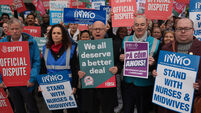
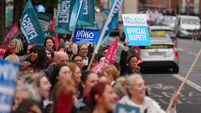
Public sector pay strike set to disrupt Dublin EU summit
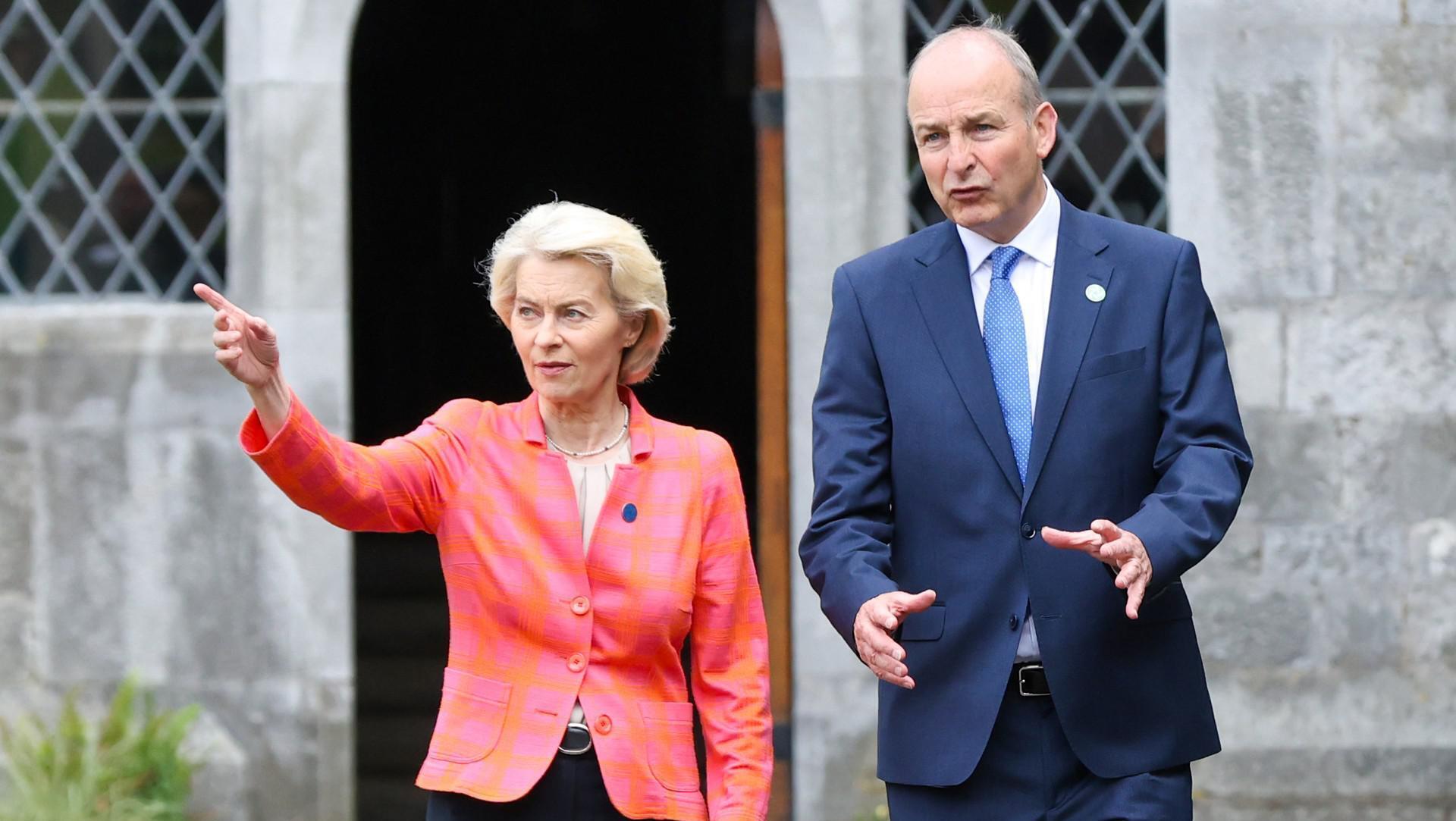
European Commission president Ursula von der Leyen and Taoiseach Micheál Martin at UCC at the first event of Ireland's presidency of the EU Council in July. The highest-level event of Ireland's presidency is on November 12 — the date chosen by public sector unions for a major one-day strike. Picture: Paul Faith/PA
The Government is facing the embarrassing prospect of 300,000 public sector workers striking on the same day as Ireland’s biggest event of its European presidency.
Unions have claimed the date of their strike, Thursday, November 12, was not rescheduled to coincide with the European political community (EPC) meeting in Dublin. November 11 had initially been signalled for the all-out strike after prolonged talks at the Workplace Relations Commission (WRC) stalled last Friday night.
Public expenditure minister Jack Chambers warned the latest action will “cause significant disruption to critical services that the public rely on while this industrial relations process remains ongoing”.
The strike could once again see the country grind to a standstill as teachers, nurses, civil, and public servants intensify their industrial action.
An independent group will meet both sides today, Tuesday, in a bid to break the deadlock between the Government and the unions.
Talks at the WRC were adjourned late last Friday with the unions saying an “impasse” had been reached and at that point
Kevin Callinan, chairman of the public services committee of the Irish Congress of Trade Unions (ICTU), said unions were considering a strike on Wednesday, November 11.
However, following a meeting of the public services committee, the date was moved to November 12, the same date as the EPC meeting in Dublin, the biggest event of Ireland’s EU presidency.
It will see 50 European leaders jet into Dublin to attend the gathering at the Convention Centre. An informal meeting of EU leaders is also scheduled to take place on November 13.
The event will also be impacted by a garda work-to-rule.
Mr Callinan denied that the strike had been moved to coincide with the EPC event.
“This was more driven by logistical considerations and the fact that previously we had a strike on a Wednesday, and it was felt that we should vary it for various reasons,” he said.
“The intention is that we will have a march and rally in Dublin and in other regional centres.
“Over the course of the next 24 hours, our operational teams in each of the individual unions will work together to ensure that we bring this together as quickly as possible.”
Read More
He said the strikes will be different from October 14’s day of action, including a change in approach to derogations. He has warned that work to rule will intensify after next week’s strike.
The Department of Foreign Affairs did not confirm on Monday night whether it would seek a derogation for its staff to work at the EPC.
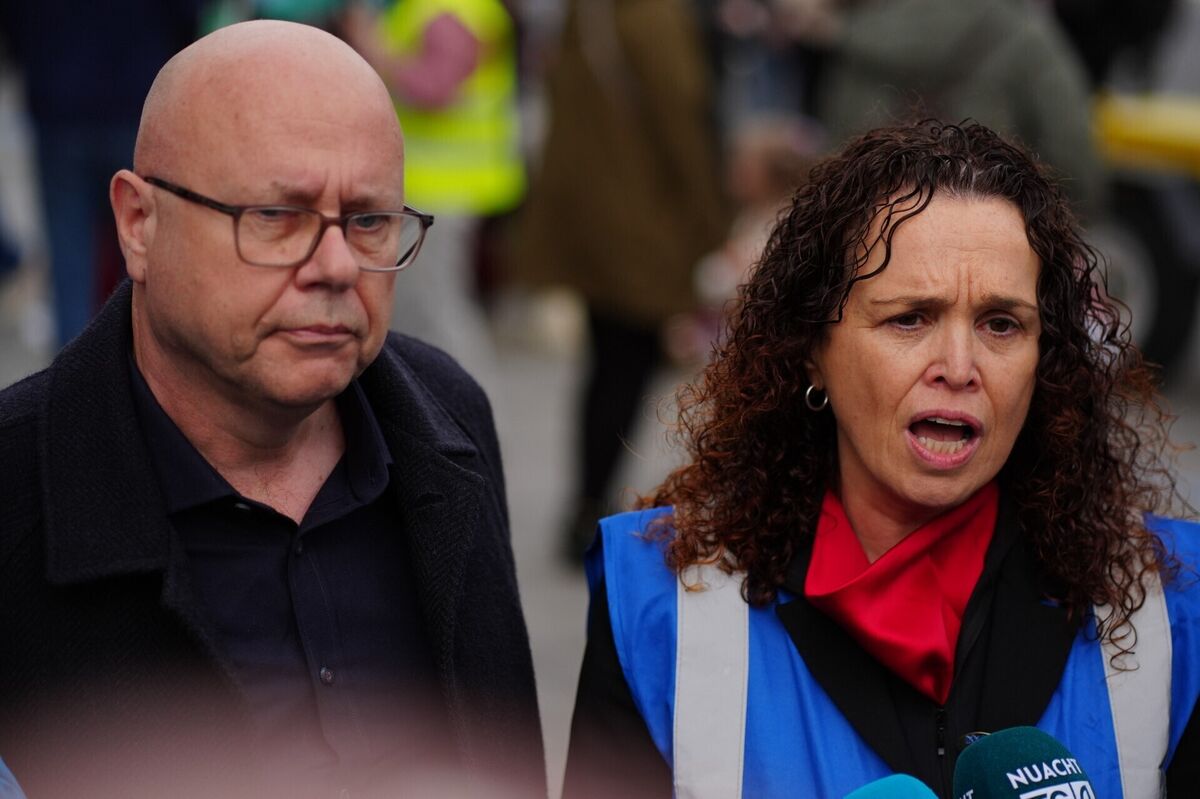
Mr Callinan said the Government had come up “short” on pay, arguing that the unions had “put a lot of effort over the last two weeks into responding to their preferences in relation to the duration of an agreement and in relation to the productivity ask”.
“We now find that they haven’t responded sufficiently in relation to the cost of living, and they simply haven’t stepped up to the mark on things like local bargaining and other related matters, including the position of low-paid workers,” he added.
Mr Chambers said it was “extremely regrettable that ICTU have chosen to escalate matters further by announcing a strike day for the November 12”.
He said: “This will cause significant disruption to critical services that the public rely on while this industrial relations process remains ongoing.”
He argued that Government “wants an agreement that gets the balance right by delivering a pay deal that is fair and credible to workers and is fiscally responsible and sustainable for the country”.
On Monday night, Government sources said they did want to pour “fuel on the fire”, but several expressed hope that a pathway forward could be found to get the talks “back on track” and reach a deal.
The Government-appointed group, consisting of Kevin Foley, Oonagh Buckley, secretary general at the Department of the Environment, and ICTU’s Owen Reidy, will meet both sides separately today, Tuesday.
- Louise Burne, Political Correspondent

CONNECT WITH US TODAY



Be the first to know the latest news and updates