Jersey crosses join Teagasc’s ‘Next Gen’ herd for the first time
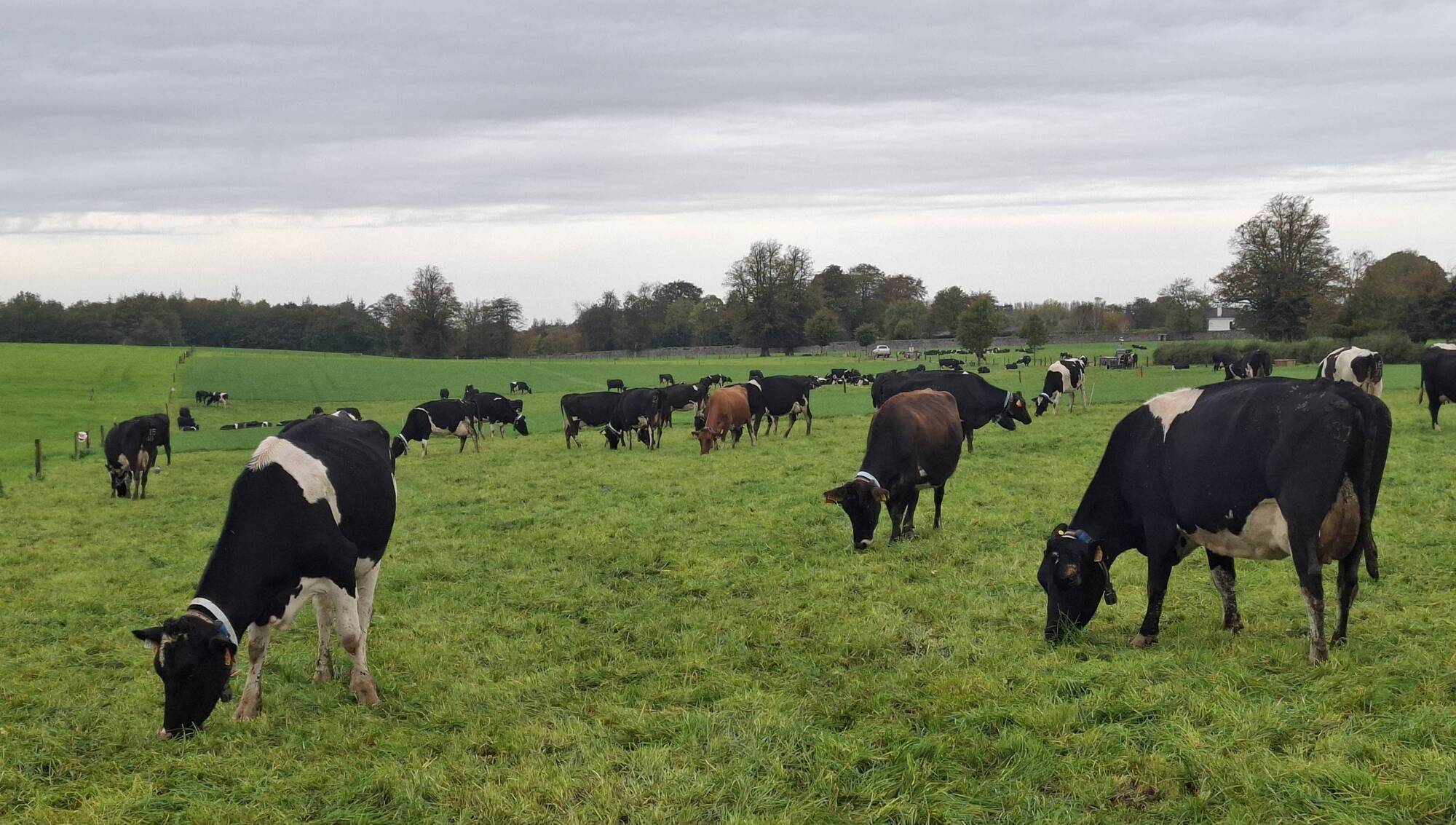
For the first time, Teagasc has included Jersey crosses in the 'Next Gen' research herds.
For the first time, Jersey-crossed cattle have been included in Teagasc Moorepark’s “Next Gen” herd.
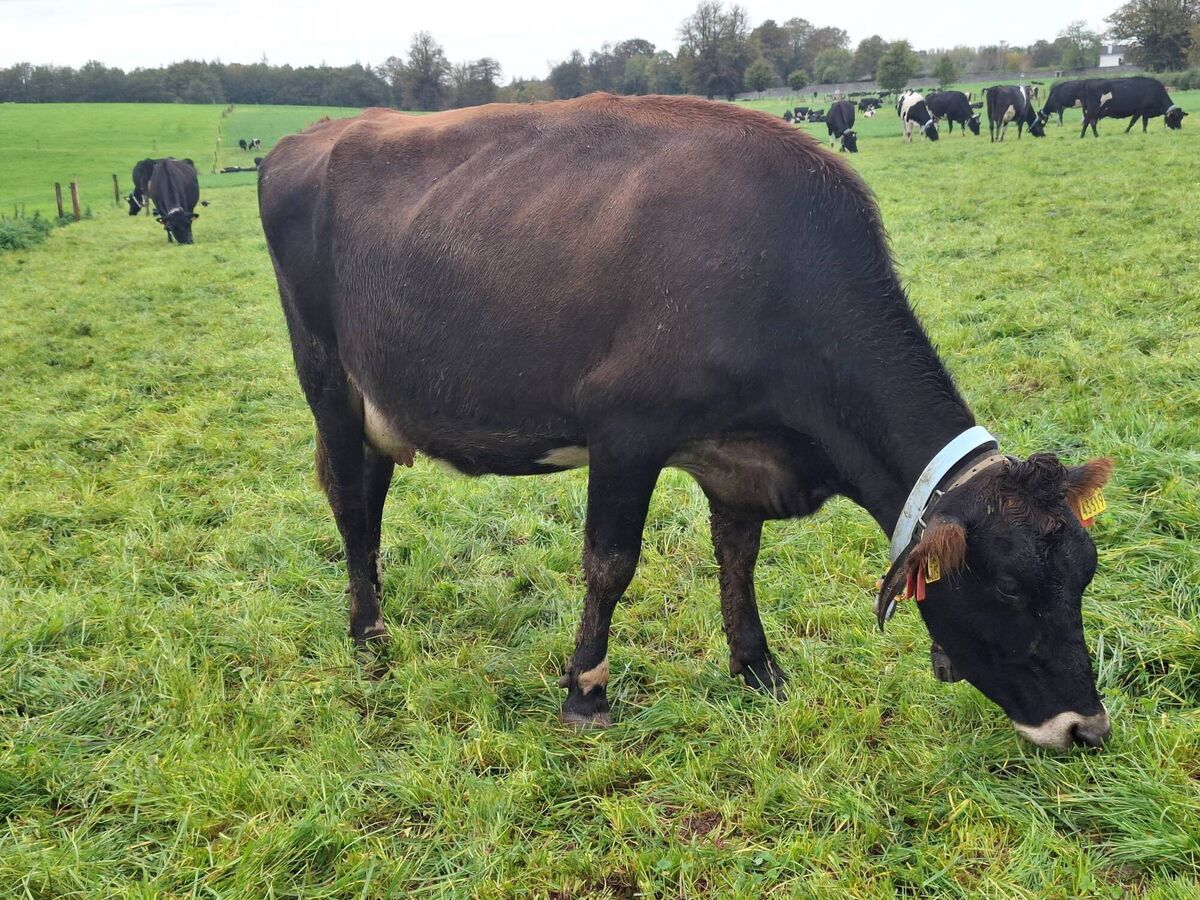
The Next Generation herd is in its second iteration and is overseen by Brian McCarthy. Within the herd, there are three cow genotypes: National Average (NA) EBI Holstein-Friesians, Elite EBI Holstein-Friesians (Elite), and elite Jersey Holstein-Friesians (JX).
The NA cows have an average EBI of €139 and are comparable to the national average population in Ireland, with fertility and production sub-indices closely matching the national herd.
The Elite cows have an EBI of €235 and are comparable to the top 5%, and the JX group have an EBI of €221 with strong production and fertility sub-indices. The JX cows aren’t all first cross (F1) Jerseys, with the crossbreed cows ranging from 37% to 60% Jersey genetics.
“So the cows here are very much representative of what the national average cow is in the national herd,” Mr McCarthy explained.
The current age of the herd is relatively low, with 23% of the herd in their first lactation, 42% of the herd in their second lactation, with the remainder (35%) in their third or fourth lactation.
The herd has four main objectives with its contribution to research:
- Continued validation of the Irish dairy breeding selection index.
- Evaluate and compare the environmental footprint of dairy cows with differing genotypes across pasture-based production systems.
- Assess the effect of organic N stocking rate on the economic and environmental efficiency of pasture-based systems.
- Evaluate the feasibility of a strict mating strategy to optimise dairy sexed semen use for replacement generation and high-merit beef semen to enhance non-replacement dairy progeny.
Currently, the herd is split into three groups based on organic nitrogen (N) stocking rate; each treatment has 66 cows, with 22 cows of each genotype. This experiment began in 2025 and will run until 2029.
At the time of creating the study, it was unclear whether derogation would be renewed.
Mr McCarthy explained that: “We wanted to try and generate some data for potential conversations on the derogation about if we lost the derogation, what would that look like.”
The low stocking rate group receives 170kg organic N/Ha with 1.89 cows/ha, the medium stocking rate receives 220kg organic N/ha with 2.44 cows/ha, and the high stocking rate group receives 270kg organic N/ha with 3.00 cows/ha, with methane emissions also being measured for each group.
Read More
The target fertiliser of 185kg/ha was applied to all three groups, and the concentrate target of less than 600 kg concentrate/cow/year was also applied across all three stocking rates to isolate the impacts of organic nitrogen without introducing differences in feed or fertiliser inputs.
With the drought this year, the herd received 650 kilos of concentrate and collectively 300 kilos of silage in the year, with the herd receiving only silage and meal during the drought.
For the low stocking rate, the Moorepark team found it hard to manage the amount of grass before the drought.
“For the first half of the year it was impossible to manage grass on the low stocking rate… I thought we'd get more milk out of them at low stocking rate because we had loads of grass but we failed to achieve it this year,” Mr McCarthy explained.
At the time of writing, the herd’s recent progress report issued October 11 showed that cumulative figures from this year saw the low stocking rate recording a milk yield of 5,065kg/cow with 444kg/cow milk solids at 840kg/ha.
The medium stocking rate recorded a yield of 4,925kg/cow, also at 444kg/cow milk solids or 1,083kg/ha. The high stocking rate group produced a milk yield of 4,918kg/cow at 440kg/cow milk solids.
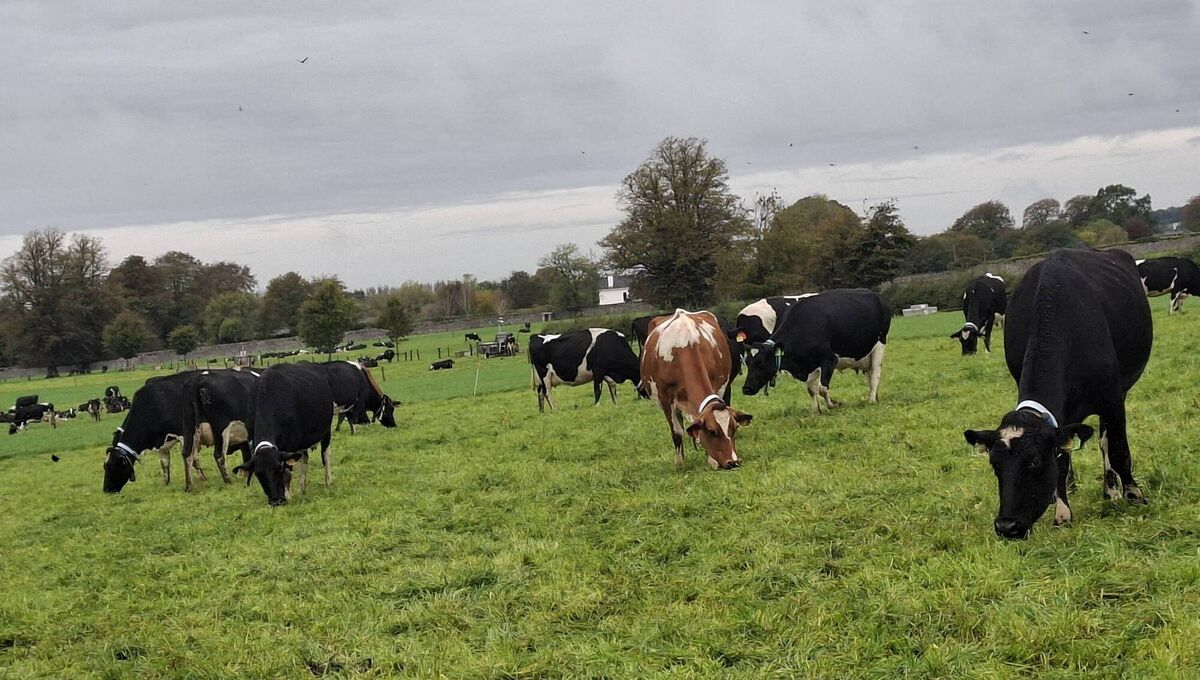
Across the low, medium, high stocking rate groups fat percentages were 4.92%, 5.15%, and 5.11% and protein percentage consist of 3.85%, 3.89%, and 3.86%, respectively.
Focusing on genotypes, the NA cows achieved a milk yield of 5,190kg/cow at 430kg/cow milk solids, and the Elite cows recorded a milk yield of 5,007kg/cow at 449kg/cow milk solids. The JX cattle recorded a yield of 4,711kg/cow at 449kg/cow milk solids.
Across the three genotypes, the NA, Elite and JX recorded fat content of 4.64%,5.09%, and 5.45% and protein content of 3.65%, 3.89%, and 4.07%, respectively.
This year, the Elite and JX cows had 68% conception at first service, and the NA cows recorded 59% conception at first service. The management team use collars for heat detection.
For the first three weeks of the breeding season, 35% of cows got dairy sexed semen, and approximately 20% got conventional dairy semen.
“The reason for using conventional and sexed is so not all the top bulls are available sexed. So to make sure that we're trying to get the highest genetic gain possible, we were using the young bulls that weren't available sexed; we were using them as conventional,” Mr Carthy explained.
The lower EBI and late calvers coming into heat, and any repeats that were previously served, received Angus semen.
As part of the study, the team are also investigating the effects of different genetic merits on carcass weight in dairy-beef calves.
Their team of four beef bull sires split between high and low carcass weight merit have similar DBI and calving sub-index but differing carcass weights ranging from a value of 3 kilos to 13.8 kilos.
“So those two teams of bulls then are basically assigned to all the cows in equal amounts to each of the three genotypes, and the aim is to breed about 120 calves, about 40 from each genotype, 20 high merit and 20 low merit progeny,” Mr McCarthy explained.
At four weeks of age, the calves go to Teagasc Grange to be raised till slaughter. This year, 120 beef calves were sent up to Grange.
As of September 29, High-merit sire progeny were around 20kg heavier than low-merit sire progeny, suggesting that sire selection appeared to have a greater effect than dairy cow genotype.
Low-merit progeny from NA cows had an average body weight of 191kg, Elite cow progeny had a body weight of 187 kg, and the JX progeny had a body weight of 192kg.
High-merit progeny weighed at the same time saw NA progeny at 221kg, Elite progeny weighed at 209 kg, and JX progeny weighed at 214kg.
Although still in the early stages of establishment, this new Next Generation herd at Moorepark will provide insight into how genetics, stocking rate and management practices interact to influence productivity, profitability and environmental performance in Irish grass-based dairy systems.
By comparing elite, national-average and Jersey-cross cows across different stocking rates, the research will help generate important insights into fertility, methane emissions and dairy-beef integration, helping to shape future breeding, management and policy decisions for the Irish dairy sector.