New policy aims to expand share of agricultural land under organics to 10%
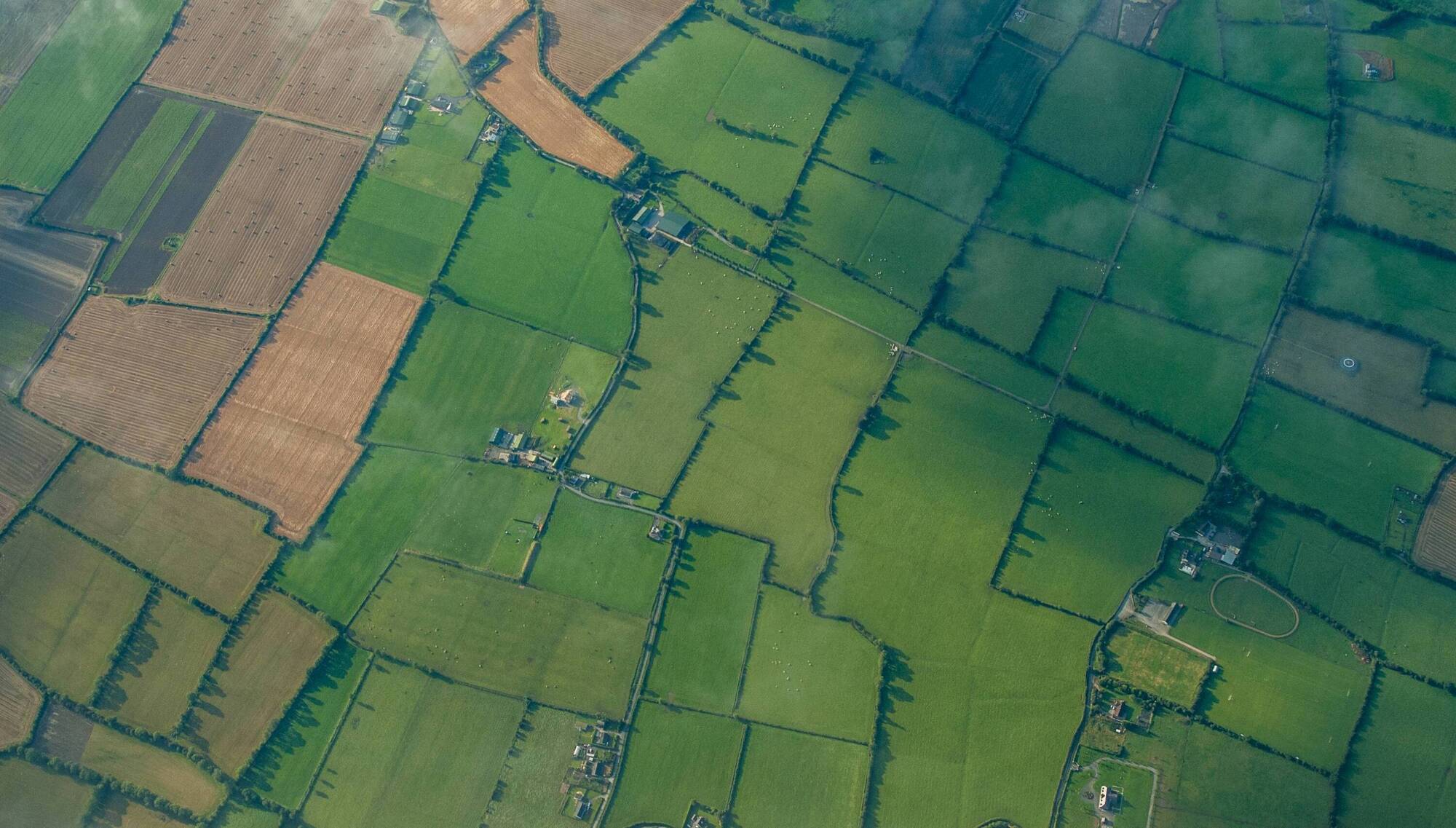
The new ‘Our Rural Future’ policy aims to support local economies and strengthen communities in rural Ireland.
A new Government policy has set its sights on expanding the organic sector to span 10% of agricultural land by 2030.
The commitment is an effort to provide opportunities for farmers to diversify production and income while delivering benefits for biodiversity, soil health and water quality.
The new Our Rural Future policy aims to support local economies and strengthen communities in rural Ireland, with a strong focus on supporting farming, fishing and forestry sectors that underpin rural employment and economic activity.
The policy compiles commitments from across Government to ensure that rural communities have the infrastructure, services and supports needed to regenerate rural towns and villages.
Agricultural commitments fall under pillars one, three, four and five, ‘Thriving rural places,’ ‘A Strong and Diverse Rural Economy,’ ‘Resilient Rural Communities,’ and ‘Sustaining our Rural Environment,’ respectively.
In 2025, the sector employed over 171,000 people as a primary job, representing 6.1% of the total workforce.
Read More
It spans more than 133,000 farms, approximately 2,000 fishing vessels and aquaculture sites, and over 2,400 food and beverage production enterprises, sustaining livelihoods across diverse rural communities.
Despite ongoing economic shocks and external uncertainties, the sector remained a significant contributor to the Irish economy, with agri-food exports reaching €20.8bn in 2025.
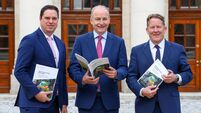
Speaking on the launch of the new policy, minister for enterprise, tourism and employment, Peter Burke said: “Rural Ireland plays a vital role in our national economy, with a strong and diverse enterprise base and enormous potential for further growth. From agri-food and tourism to emerging industries and innovative businesses, rural areas continue to contribute to Ireland’s economic success.
“This new 'Our Rural Future' policy will build on these strengths, supporting enterprise and employment, encouraging innovation... Our ambition is to strengthen rural economies and ensure they continue to play a central role in our national economic development.”
Under pillar one, the policy commits to seeking more funding for the LEADER programme as part of the Common Agricultural Policy (CAP) post-2027 to strengthen the Rural Development Investment Programme (RDIP).
Under pillar three, it aims to commit to strengthening the role of the agri-food sector alongside tourism, safeguarding the interests of farmers and rural communities through advocacy for a strong, well-funded CAP and the continued prioritisation of the LEADER Programme.
The policy also proposes targeted supports to drive innovation, encourage diversification and improve the long-term viability of the agriculture, fishing and forestry sectors in line with Food Vision 2030.
To address generational renewal and gender balance challenges, it highlights the Women in Agriculture Action Plan, as well as the Commission report on Generational Renewal in Farming, which will help inform future measures.
Under pillar four, agricultural shows are highlighted as key community events. The Department of Rural and Community Development and the Gaeltacht have allocated more than €6.3m to agricultural shows since 2017.
These shows are seen to make an important contribution to rural communities via volunteering, bringing together communities and boosting local economies through tourism and hospitality.
The policy has also announced a new co-funded pilot initiative between the Department of Rural and Community Development and the Gaeltacht and the Department of Agriculture, which will explore locally based innovative approaches to addressing rural isolation, with a particular focus on farmers, strengthening social connections and enhancing well-being in rural areas.
Under pillar five, the policy commits to supporting farmers, fishers and foresters in developing more sustainable production systems, while also investing in renewable energy infrastructure, the bioeconomy and the increased focus on the circular economy within Ireland.