New joint programme between Dairygold and Teagasc launched
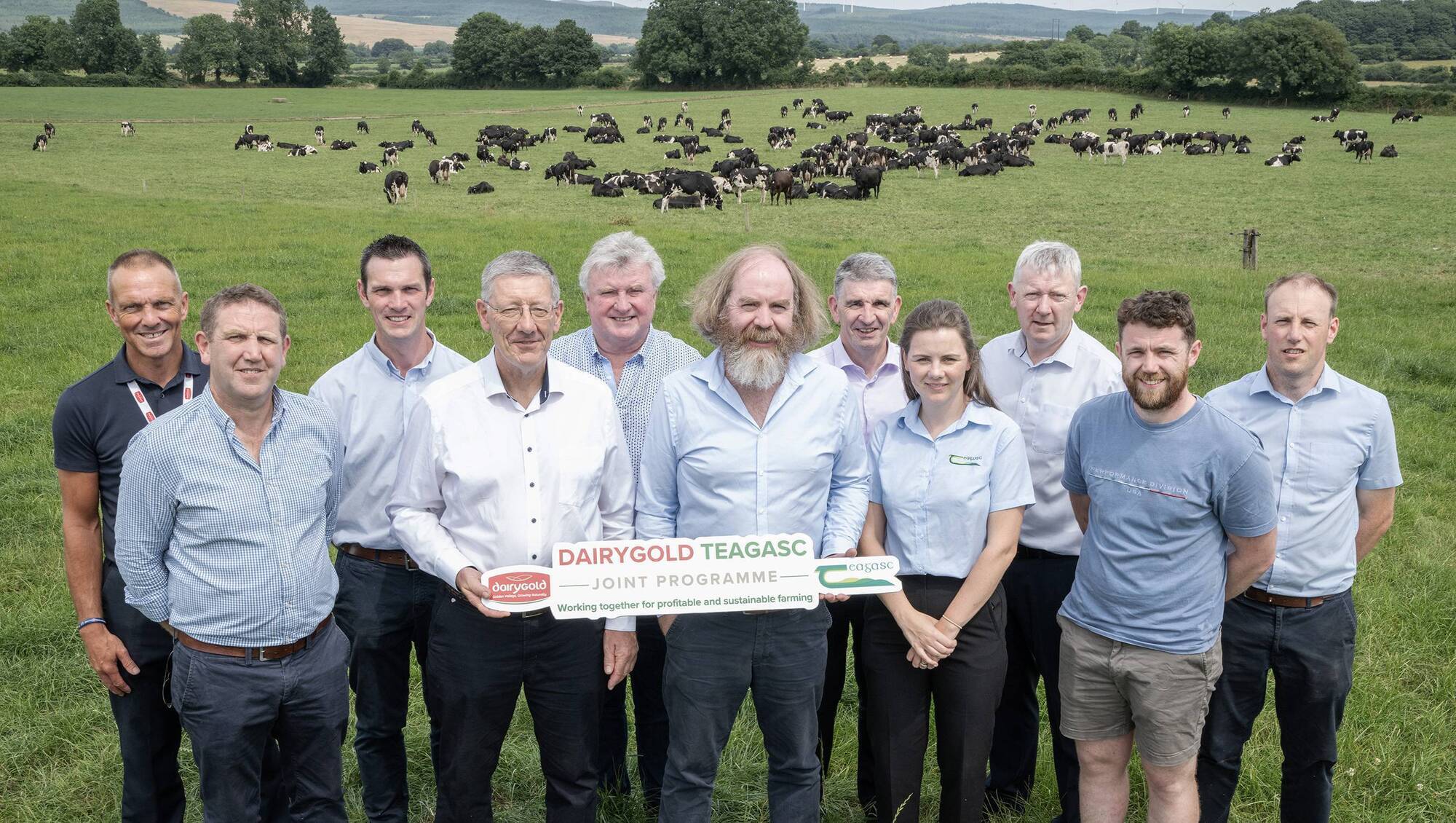
In Buttevant, Co Cork, at the launch of the Dairygold and Teagasc new joint programme to support profitable and sustainable dairy farming are Paul O'Connell, Dairygold milk supply and farm succession manager; host Kieran Kennedy; Stuart Childs, Teagasc programme co-ordinator and dairy specialist; Pat Clancy, Dairygold chairperson; Brendan Hinchion, Dairygold board member; Joe Patton, Teagasc head of dairy knowledge transfer; Michael Harte, Dairygold chief executive; Orlaith Quigley, Teagasc; Billy Cronin, Dairygold head of member services and engagement; Colm Kennedy, host; and Shane O'Donnell, Dairygold business manager. Picture: O'Gorman Photography
A new four-year programme to support Dairygold suppliers in improving sustainability, resilience and profitability has been launched with Teagasc.
Designed to provide practical support to all Dairygold milk suppliers, the programme will run until 2029 and focuses on four key priorities: strengthening farm profitability through technical expertise and advisory services; enhancing environmental sustainability; supporting succession planning; and long-term farm viability.
Launched on the farm of Kieran and Colm Kennedy in Buttevant, Co Cork, the programme builds on the partnership between Dairygold and Teagasc, which began in the early 1990s.
Speaking at the launch, Dairygold chairperson Pat Clancy said: "At a time when farmers are managing a wide range of economic, environmental and regulatory challenges, access to trusted advice, practical guidance, and the latest research and learnings from our demonstration farms has never been more important.
Read More
"By combining Teagasc's research and advisory expertise with Dairygold's strong supplier network, we can help farmers achieve enhanced business performance while continuing to make progress on sustainability and environmental goals.
"Importantly, the programme is also focused on supporting the next generation of dairy farmers and helping to secure the future of farming in our region.”
Teagasc head of dairy knowledge transfer Joe Patton added: "The programme is focused on providing practical, on-the-ground support based on research and science that helps farmers improve farm performance while meeting sustainability goals. It recognises the importance of balancing continued productivity gains with meaningful progress in environmental performance, while also helping farm businesses plan confidently for the future.”
The programme will be delivered through four pillars:
- Demonstration farm network — featuring eight farms located across the Dairygold region;
- Technical and business planning services;
- Farm development services;
- Discussion group support.
The demonstration farm network will play a key role in showcasing on-farm gains and overall best practices. Suppliers across the Dairygold region will have opportunities to engage through farm walks, workshops, technical consultations, innovation events, videos and peer-to-peer knowledge sharing.
Over the next four years, the programme will support improvements in areas such as grass utilisation, milk solids production, breeding performance, fertility, and overall farm profitability.
It will also help deliver progress in key sustainability areas, including water quality and biodiversity, and provide support for succession planning, young farmers and new entrant development.
Working alongside the programme, Dairygold's advisory team will support the activities and help guide suppliers in implementing the practices and learnings at the farm level.
Teagasc programme co-ordinator and dairy specialist Stuart Childs said: “The strength of this programme lies in bringing research, technical expertise and farmer experience together to create opportunities for farmers to learn from one another.
"Through a combination of on-farm demonstrations, discussion groups, knowledge transfer activities and advisory services, suppliers will gain practical tools and insights to help strengthen the resilience, sustainability and profitability of their farming businesses.”