James Horan: Gaelic football teams ruling out attacking options before trying them
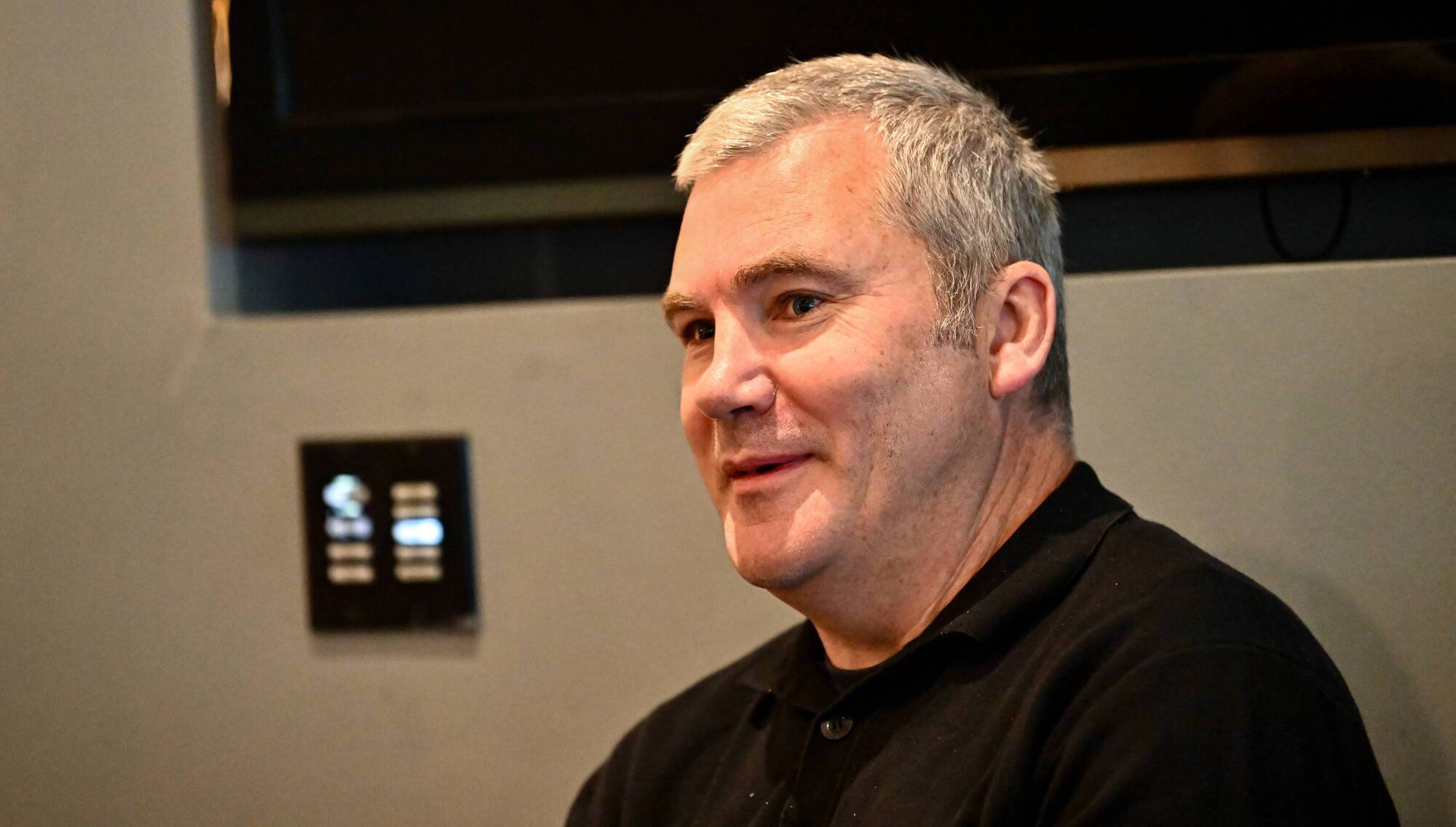
James Horan: 'Gaelic football is never going to be A to B to C. It’s based on principles, on what you see, what the opposition have done and what you want to do with the ball.' Pic: Piaras Ó Mídheach/Sportsfile
James Horan believes that Gaelic football teams have far more attacking options available to them than are being used. The former Mayo manager and footballer challenged the notion that facing a set defence requires endless handpassing and a prescribed attacking pattern to break it down.
"When you have the ball, you can shape things, no matter what the opposition do," Horan said on the Irish Examiner's Gaelic Football Show.
"Now they’ve only 11 that can play in their half. If you’re creative and you have tempo on the ball, and you create space well, there are going to be several different options.
"Even in a set defence, that kickpass is on. That Alan Brogan long handpass from outside to the full-forward coming out. You move the ball quickly side to side and one-on-ones are created very quickly. Have you guys that can take those on? The long kick inside is on as well.
Read More
"You’ll try a couple of those. It’s a bit like two-pointers. If one or two of them doesn’t work, so what? The third one might be a flick-in goal.
"There are all these different options that people rule out straight away: 'There are 11 there. We need to do A to B to C.' Gaelic football is never going to be A to B to C. It’s based on principles, on what you see, what the opposition have done and what you want to do with the ball."
Horan also explained how important researching the tendencies of a referee can be in a big game.
"Put yourself in the ref’s shoes: biggest game of the year, biggest crowd, now it’s on TV," he said. "Everyone wants it to be a good game. The refs can feel that and sense that around the thing.
"Human nature is you buy into that. You want to let it flow a little bit more. You want the game to be good and you want to be associated with a good game. Everyone wants to be associated with, or have some part in, a good game.
"You look at the ref in the couple of games up to it and then you work on a strategy. You bake it into how you prepare for the game because county finals can be so tight. One or two decisions going your way can be the deciding of it. That’s a huge part now of how you prepare for games."
A week after suffering disappointment in the Cork hurling final, St Finbarr's also lost the football decider. Horan said that even in a club committed to allowing players to line out in both codes, it's hard for individuals to be at their peak in both football and hurling.
"If they’re in two codes, no matter how good or how fit they are, there’s a physical and a mental toll," he said.
"Then you mix that with the fact they can’t be in two places at once. They can’t train with both teams, so there are agreements. To get that mix right for big-game day is such a difficult task.
"Some clubs have brilliant arrangements. They work hand in hand for what’s best for the player. But even with that, it’s so hard to have players at their absolute peak when you need them, based on the amount of games they play."

CONNECT WITH US TODAY



Be the first to know the latest news and updates