Trial finds white clover could add €400/ha to Irish farm profits
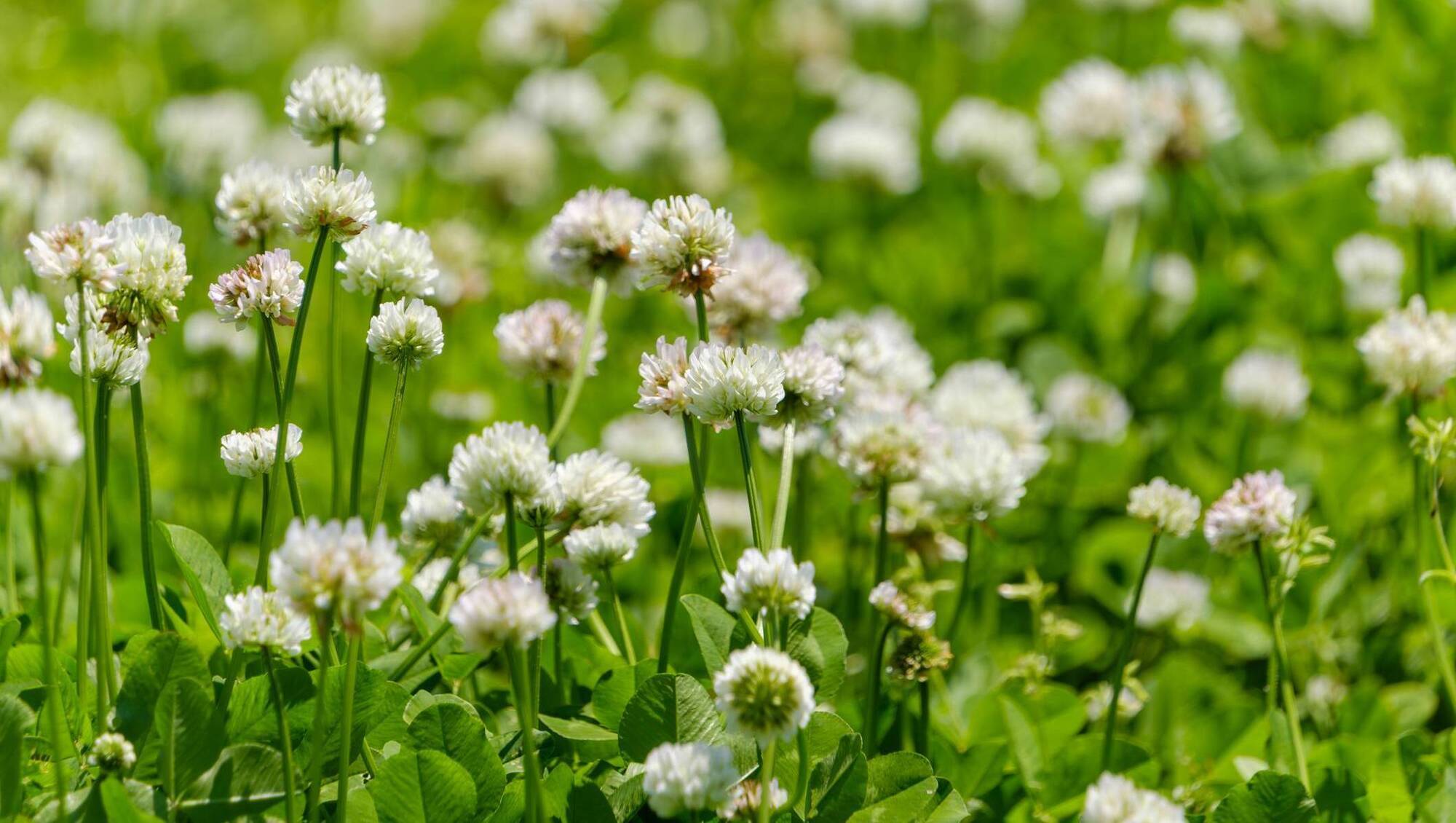
Both swards were fertilised with the same rates for the first two rounds, and then from mid-May onwards, fertiliser was only applied to the PRG swards. File picture
The results of recent Teagasc research showed that white clover can be successfully incorporated into swards, even on heavier-type soils.
Helena Walsh, a PhD student with Teagasc, reported on this breakthrough in a recent podcast.
“There's limited research on wetter soils, and this has questioned the suitability of white clover in these areas”, she explained. Most previous Irish clover research was on drier, more freely draining soils.
”It was really positive to see how successful our white clover establishment was and the continued persistence of the white clover throughout the study when we weren't too sure ourselves how successful it would be, starting out,” she said.
“We actually had very successful white clover establishment, particularly during the sward renewal phase, the first part of the trial, with high levels of clover content achieved. This was averaging about 28% during this phase.
“In terms of our persistency, we had quite large variability between our paddocks and our seasons and years. And it was also quite variable between the two establishment methods, reseeding and oversowing. On average over this established phase, white clover contents were about 19%,” Walsh explained.
“Timing was essential, particularly when you're over-sowing, so we had very good establishment on over-sown swards in our first year of over-sowing because we timed it correctly. Mid-May was the optimal time for soils within the region, because soils are slower to warm up in spring. It's that bit drawn out compared to more southerly locations.
“In the second part of our oversowing, we were a bit later in the year to do it, and we just found that the establishment was much poorer”, she said.
“Firstly, ensure that soil fertility is optimal in terms of your pH and your Ps and Ks, before conducting any type of sward renewal”, she advised.
“We also found that you need to avoid damaging the sward, particularly at each end of the grazing season. In early spring and then into November, when conditions are wetter and the soil retains the water a bit more, there's a higher possibility to damage the sward, and that can impact on white clover persistence then”, Walsh explained.
“We achieved an additional tonne of dry matter in our white clover swards, compared to our perennial ryegrass-only swards, and this was achieved with a reduction in chemical nitrogen applications. This highlights that it's possible to reduce our nitrogen inputs while increasing our pasture productivity in our white clover swards,” Walsh said.
“On average in this trial, our white clover swards received about 120kg of chemical nitrogen per hectare, while our perennial ryegrass-only swards received about 200kg of chemical nitrogen per hectare.
“For our strategy, both swards were fertilised with the same rates for the first two rounds. And then from mid-May onwards, fertiliser wasn't applied to our white clover swards, provided that white clover content was sufficient. That was about 15% onwards.
“And we found that this strategy was very effective, as we increased our pasture production while also making significant savings in our chemical nitrogen. We had about a saving of 80kg of nitrogen per hectare in our white clover systems compared to our perennial ryegrass systems,” she explained.
“Cows grazing white clover swards were grazing a high-quality pasture with increased protein and lower fibre, compared to our perennial ryegrass-only swards. The inclusion of white clover in the diet increased our milk yields by 194kg/cow, and our milk solids yield by about 12kg/cow,” Walsh explained.
“In addition to our two sward types, we also had our two concentrate feed levels. We had our high group which received about 1,200kg/cow annually. Then we had a medium group which got about 750kg/cow annually,” she said.
“We found that our medium concentrate group required greater silage supplementation compared to our higher groups. Both milk and milk solids yields were increased in our high groups, with an additional 316kg of milk and about 26kg of milk solids produced.
“Although the aim was to reduce our nitrogen inputs in our medium concentrate group, the total imbalance was actually similar between the two groups as a consequence of this increased silage supplementation”, she explained.
“Establishing white clover means reducing your chemical nitrogen applications and this can provide savings of about €150 per hectare. Cows grazing white clover swards are on a higher quality diet, which improves milk production and provides an additional €228 per hectare for the farmer. Overall, white clover can increase economic returns on family farms and this equates to about an additional €400 per hectare profit,” Walsh summarised.