Signpost: The results are in for Eamon and Donnchadh's 2025 silage
Signpost: The results are in for Eamon and Donnchadh's 2025 silage

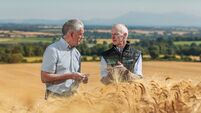
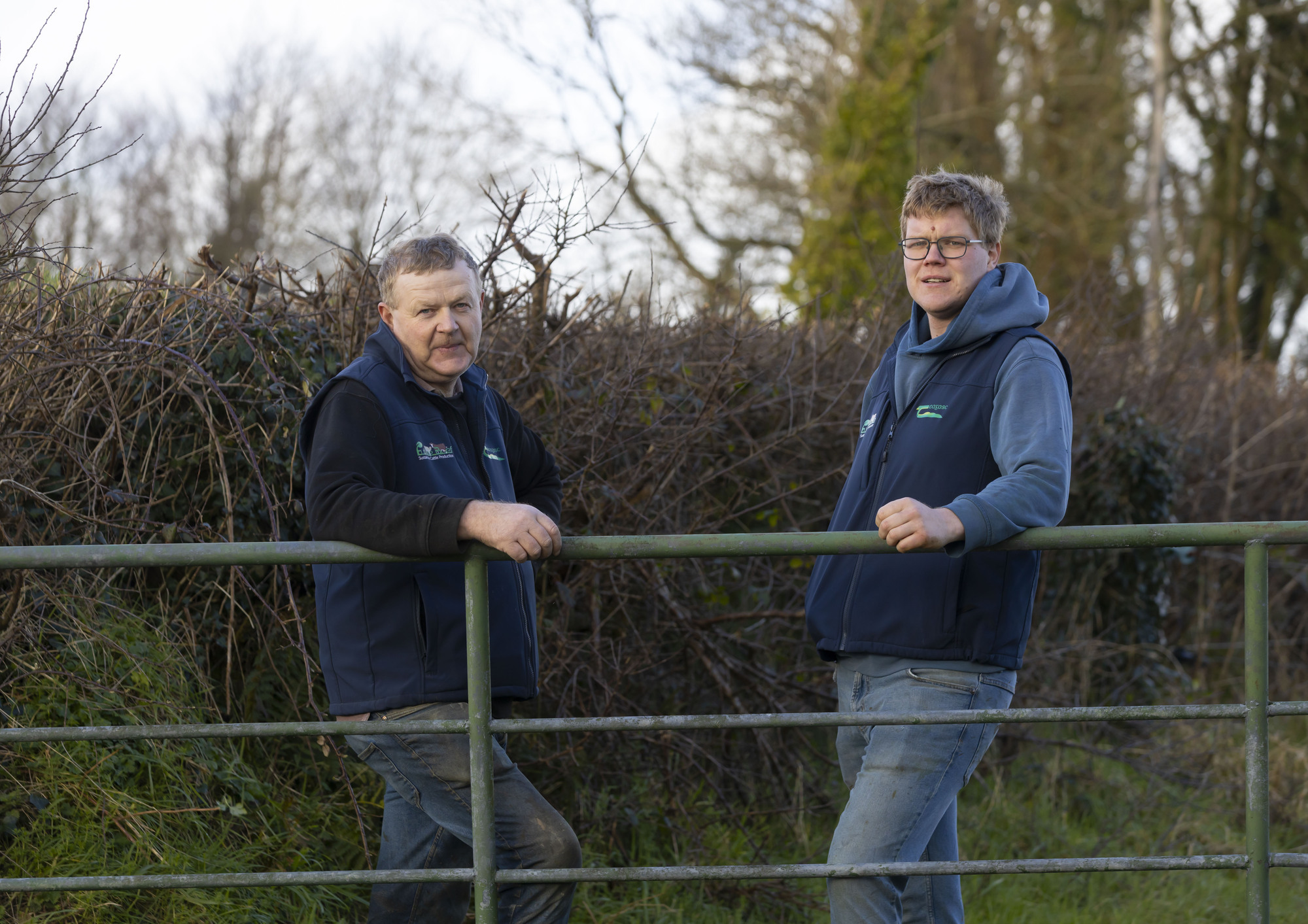
Eamon & Donnchadh McCarthy on their farm at Carrigeen, Youghal, Co. Waterford. Picture: Patrick Browne

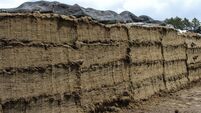
We got our silage analysed and are very happy with the results for first, second, and third cut silage. All silage made on the farm in 2025 has high DMD (Dry Matter Digestibility). The first and second cuts had a DMD of 75% while the third cut had a DMD of just over 71%.

Best practice was adopted when putting in place a plan for silage making on the farm. The silage ground was grazed early in spring and then received 2,500 gallons of cattle slurry and nitrogen in the form of protected urea plus sulphur. The silage was harvested seven weeks later. For the second cut, 2,500 gallons of cattle slurry was applied per acre, plus a top-up of nitrogen in the form of protected urea to make up 80 units of nitrogen in total.


The second cut was harvested 8 weeks later on July 5. We applied 15 units of sulphur per acre for each cut. The third cut received chemical fertiliser only, as all cattle slurry had been spread earlier. A period of low grass growth delayed the third cut until September 11.

The benefits of making high-quality silage for us include shorter days to finish, less concentrates fed to achieve target daily gains, and lower fixed costs such as slurry and labour. We see the same benefits when higher DMD silage is fed to weanling cattle.

Because we operate a split-calving herd, the autumn calvers require good-quality silage. On the flip side, spring calving suckler cows in good BCS require lower DMD silage. This means that straw may be fed to dilute the energy of the diet for the spring calving herd.

This sometimes suits us as, although we made enough fodder for a four-and-a-half-month winter, silage stocks can be saved by feeding some straw to the well-conditioned spring calving herd. This can be important when the housing period is longer than planned.

The weanlings on the farm include young bulls targeted for finishing at 16 months of age. These animals will not benefit from compensatory growth next spring after turnout, so it is important that they continue to gain 1kg or more a day after housing. 

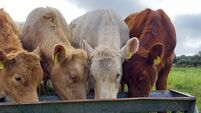
We are feeding the weanlings 2kg of a 50:50 mix of home-grown rolled barley and a 13% crude protein high-energy beef ration plus ad lib silage. The finishing bulls are receiving 11–12kg of the same 50:50 mix plus silage ad lib. All animals are performing well on their diets, with the bulls gaining on average 2.17kg per day. The earliest bulls will be drafted for the factory in early December.

After the recent wet weather, all animals will be housed this week. The new shed is ready, aside from some small features to add over the next few weeks. We are very happy with both the finish and the construction process from start to finish. The shed will make a huge difference to us from a labour efficiency point of view.

Breeding update 

As we mentioned earlier, the breeding season commenced with heifers on October 4 and cows on October 13. The heifers were served to the Angus bull Westellen Boss AA9860. Boss was chosen for the heifers as his calving difficulty on beef heifers is 4.6% (73% reliable) and he has a high carcass weight PTA of 19.5kg. Calves off this bull would also be suitable for breeding, as his replacement index is €185 with a strong emphasis on milk (PTA 5.60kg) and fertility (PTA -4.50 days calving interval).

For the cows, bulls selected for their maternal traits include the Simmental bull Rathlee Pirate (SI1434: carcass weight 26.8kg, milk 10.6kg) and the Limousins Erebos (LM6172: carcass weight 23.5kg, milk 8.10kg) and Shannon Stan (LM9379: carcass weight 33.8kg, milk 4.8kg).

Sires selected for terminal traits are the Charolais bulls Lapon (CH4321: carcass weight 42.7kg) and Recif (CH8571: carcass weight 46.2kg).

Our three-week submission rate for the cows was almost 94%. Cows that had not cycled were placed on a CIDR-based synchronisation programme. The breeding period will take place over six to eight weeks and no longer to maintain a compact calving period for both the spring and autumn herd.

  • Eamon and his son Donnchadh are farming in Carrigeen, Glendine, Youghal, Co Waterford, and are part of the Teagasc Future Beef programme with the Signpost programme. They run a suckler-to-beef enterprise, split into 60% spring and 40% autumn-calving, consisting of 55 suckler cows. The males are finished as under-16-month bull beef, while the heifers which are not retained for breeding, are finished at 18-20 months.
x

More in this section

Farming

Newsletter

Keep up-to-date with all the latest developments in Farming with our weekly newsletter.

Cookie Policy Privacy Policy Brand Safety FAQ Help Contact Us Terms and Conditions

© Examiner Echo Group Limited