Signpost: Counting stars at Denis Hickey's Midleton calf-rearing unit
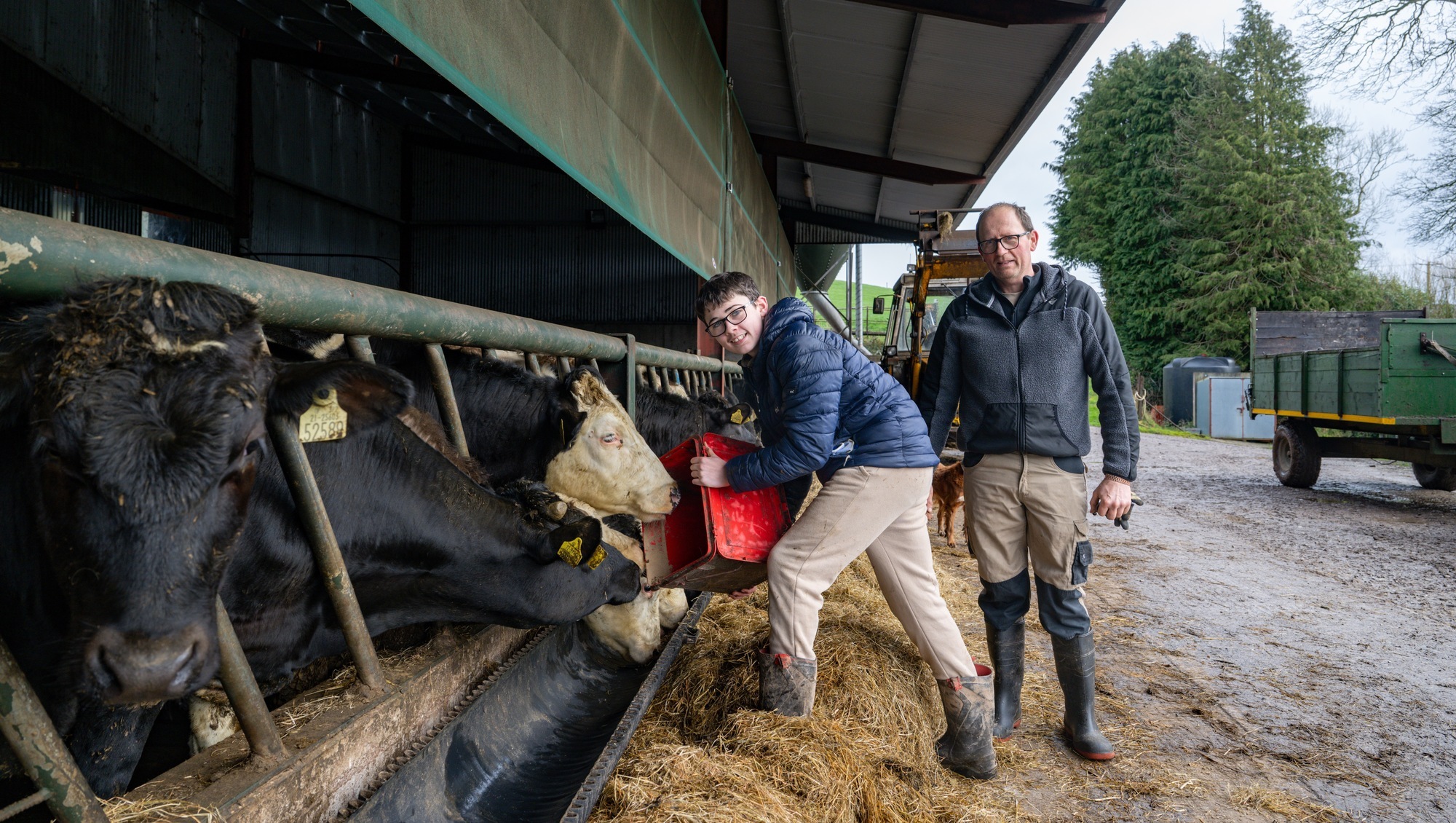
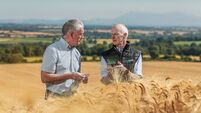
Dylon feeds the cattle as his father Denis Hickey looks on at their dairy beef farm just outside Midleton in Co Cork. Picture Chani Anderson
After a slower-than-usual start to the purchase of calves, I now have all my calves purchased for 2026. Despite the initial challenges of sourcing calves and the significant price rise of calves earlier in the spring, I am delighted that I was able to reach my target of 100 calves bought.
Currently, we have 101 calves on farm, 63 bull and 38 heifer calves. The calves' date of births range from January 19 to March 22, with an average date of birth of February 16, 2026.
Read More
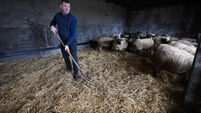
Most of the calves bought in this year are Aberdeen Angus but I also bought in 32 Friesian bull calves. Twenty-three of the Friesian bull calves came in reared, and they currently have access to grass during the day and can come in and out to a shed where they receive two kg concentrates per day, whilst also having access to straw and water.
Most of the rest of the calves are still being reared on the blue teat feeders. I have started weaning the stronger calves, these are on a step-down diet and are only being fed milk once a day. Their concentrate intake has increased significantly, and I will be happy to remove milk fully when they are eating at least 2kg for a couple of days in a row.
Each year, I am trying to place more emphasis on buying calves with good commercial beef values (CBV). We have found over the last few years that the CBV is a good indicator of how the animals will perform during their lifetime.
Looking at my group of calves for 2026, the dairy-bull sired Friesian bull calves are averaging 3.5 star, with the dairy-beef cross heifers averaging four stars, and dairy-beef cross bull calves averaging 4.25 star.
It will be interesting in two years’ time to analyse these animals to see if the higher star animal performs better with the same management.
The yearling cattle are out grazing in two separate groups. There are 48 steers in one group and 45 heifers in the other. Last week was quite wet here, and they started to do a bit of damage around the headland of paddocks.
Hopefully, we have now turned a corner, and the weather will pick up for a few weeks. These animals were weighed on April 20, and the heifers are currently averaging 380kg, with the steers averaging 410kg.
There is quite a range in weights, with 144kg of a difference between the heaviest and lightest heifer and a 136kg difference in the steer group. This range of weights in groups of cattle on farms across the country is a common trend.
In a smaller number of cases, it could be simply down to an individual animal getting sick and requiring treatment when they were younger.
- Denis Hickey runs a calf-to-beef operation outside Midelton, Co Cork. His Teagasc DairyBeef500 advisor is Gordon Peppard.