Paula Hynes: It's all go in Aherla as the calf pens start to fill up

Paula Hynes: It's all go in Aherla as the calf pens start to fill up

When we say the start of calving season is hectic, let me tell you I wasn’t prepared for how hectic our home life was this week. 

Becky has been troubled with a back injury, which has been going on for a while. It just decided to flare up this week and Georgie decided to go out in sympathy with her by turning upside down on black ice outside the school gates one morning. 

Thank God for the hot water bottles and knowing a few exercises to help them stretch out their backs - both are on the mend. 

Meanwhile, Pete attended the recent spring dairy seminar run by Drinagh Co-op, where he gave a talk on the importance of mental well-being to farmers, and then he headed for Kildare, where he was speaking about our farm's sustainability at the DSM Ruminant Nutrition Conference. 

As if that wasn't enough to keep us busy, the same day Becky was off to Limerick for her interview for the Certified Irish Angus Schools Competition- but she couldn't hang about for long as she was straight back to school for the transition year Dance Off fundraiser for Marymount Hospice.

Making the most of our old buildings

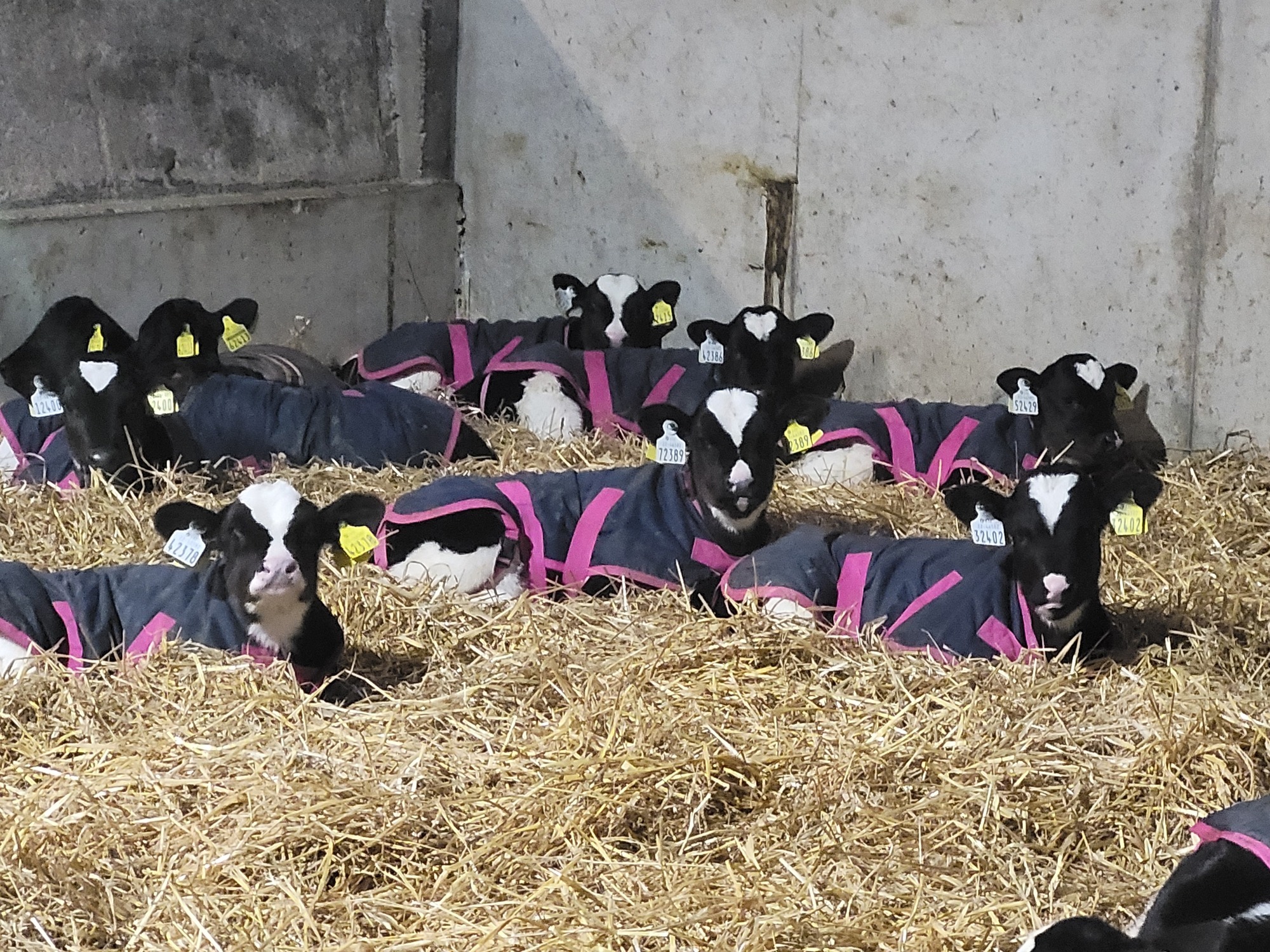
Back on the farm, I am like a swan - calm on the surface but paddling away underneath. My calf jackets are ready to go and stored in boxes. 

I noticed on social media recently a lot of talk regarding the use of calf jackets; some people say they are great, while others see no benefit to them at all. 

I always find the opinion of others on things that I do on my own farm interesting. 

So why do I use them? I use them because I find them to be very beneficial; calves perform better at a temperature of 15-20 degrees, but they can't do that sufficiently until their rumen is fully developed. 

If the calf is colder than 15 degrees, they use up more energy trying to stay warm, and it will affect growth rates and compromise its immunity. 

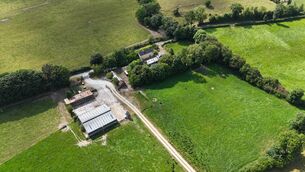
My farmyard is made up of old buildings. It's been around for a long time and holds a lot of history within its walls. I don’t have the perfect purpose-built calf shed with the ideal ventilation, and I have worked hard to convert old sheds into suitable calf sheds in recent years.

We decided a few years back that we were going to rear our calves longer so as to offer a stronger calf to our buyers.

We converted an old silage shed into a calf shed two years ago now, and it is draughty (there is no point saying it's not!).

So for that reason, I choose to put calf jackets on all calves in that particular shed. The calves in the shed further up the yard don’t need them as there are no draughts, so it's warmer for the babies. A good bed of clean, dry straw where they can nest and the calves are happy.

Another trick I've learned is to hang a temperature gauge in the shed and keep an eye on it. 

Doing the simple things right and not complicating things makes for an easier calving season. A motto I live by is to "always do what's best for your farm and your animals" - all farms are different, and what works on one farm mightn't necessarily work on someone else's. Do what works for you.

Becky and Billy. Picture: Chloe Hynes

Billy the calf has made major strides in his road to recovery; he is flying around the place, and the splint will be a distant memory soon. It goes to show that with the little effort that one puts in, you get huge job satisfaction.

As the calving season looms, the welfare of the newborn calf must be given the highest priority.

Sometimes prioritising welfare comes at a high financial cost to the farm, but ultimately, it is part and parcel of our social license to produce milk.

My least favourite thing on the farm is having to say goodbye to some of my ladies, and the time came for four older ladies to go. 

It always breaks my heart to see them go, but at the end of the day, we are trying to run a business, and as much as I would love to I can't keep them all.

They went to Macroom mart averaging €1,250 per head, which I was delighted with, considering we had milked them right through the winter.

We also recently scanned the autumn herd, where 66% held to first serve with sexed semen, so we were happy with that. 

I found it a lot trickier picking up the repeat heats in the autumn herd compared to our spring herd. Cold weather in December seemed to make cows quiet, but we are addressing that issue for next winter. 

I still find it weird saying the autumn and spring herd - it's a new thing for us, but we are learning a lot as we go, and it's more exciting doing it with Becky as the autumn herd is her passion. 

We got a few cows classified with the IHFA as well recently, and we ended up with three GP84s on their first lactations, two VG86 second-calvers, and were really delighted with our fifth-calver scoring EX94 - so all in all, it was a good day.

More in this section

Farming

Newsletter

Keep up-to-date with all the latest developments in Farming with our weekly newsletter.

Cookie Policy Privacy Policy Brand Safety FAQ Help Contact Us Terms and Conditions

© Examiner Echo Group Limited