Dairy outlook likely to improve despite challenges according to Mark Voorbergen
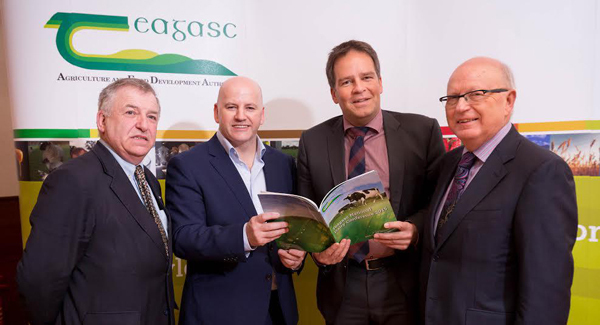
The independent dairy consultant was a guest speaker at yesterday’s Teagasc National Dairy Conference in Kilkenny.
He told attendees that the first half of 2016 will be a critical period for Irish dairy farmers, while adding that a global market turnaround may take longer than expected.
Mr Voorbergen suggested the EU oversupply and import challenges in China Russia were unlikely to turn around in the short term.
However, he said the long-term outlook was positive, especially for dairy farmers, in favourable production circumstances for milk and with access to the global market.
Tom O’Dwyer, head of dairy knowledge transfer in Teagasc, suggested that dairy farmers would need different thinking and a change in farm practices to perform in the new operating environment.
“Larger herd sizes, increased levels of employed labour, greater borrowings and price volatility are just some of the changes which farmers are dealing with, and will have to deal with in the coming years.
"Now more than ever, farmers must focus on research-based technologies which will allow them to improve their farm business performance, while remaining profitable and sustainable,” said Mr O’Dwyer.
Teagasc Authority chairman, Dr Noel Cawley, said that it is difficult to forecast the outlook for dairy markets, but the question is whether the Chinese and Russian markets perform before the peak milk production period in Ireland in 2016.
He said that the returns to farmers during the peak in 2015 were reasonably good but the challenge will be to maintain the 2015 average price through the peak next year.
Sean Gallagher, entrepreneur and business writer, talked about his experiences with small and medium sized businesses and how principles applied here are relevant to dairy farmers.
He said: “Farming is a business and you need to be prepared to invest in yourself to improve as a business person.
"You need to adapt to change and embrace technology to drive change.”
He stressed the importance of having a strategy for your farm business.
The conference featured a series of workshops.
The main messages for farmers covered topics such as soil fertility, managing reduced labour demand in February and March, optimum stocking rates aligned to grass output, and cash flows.