One law for farmers? Ragwort row reaches Leinster House
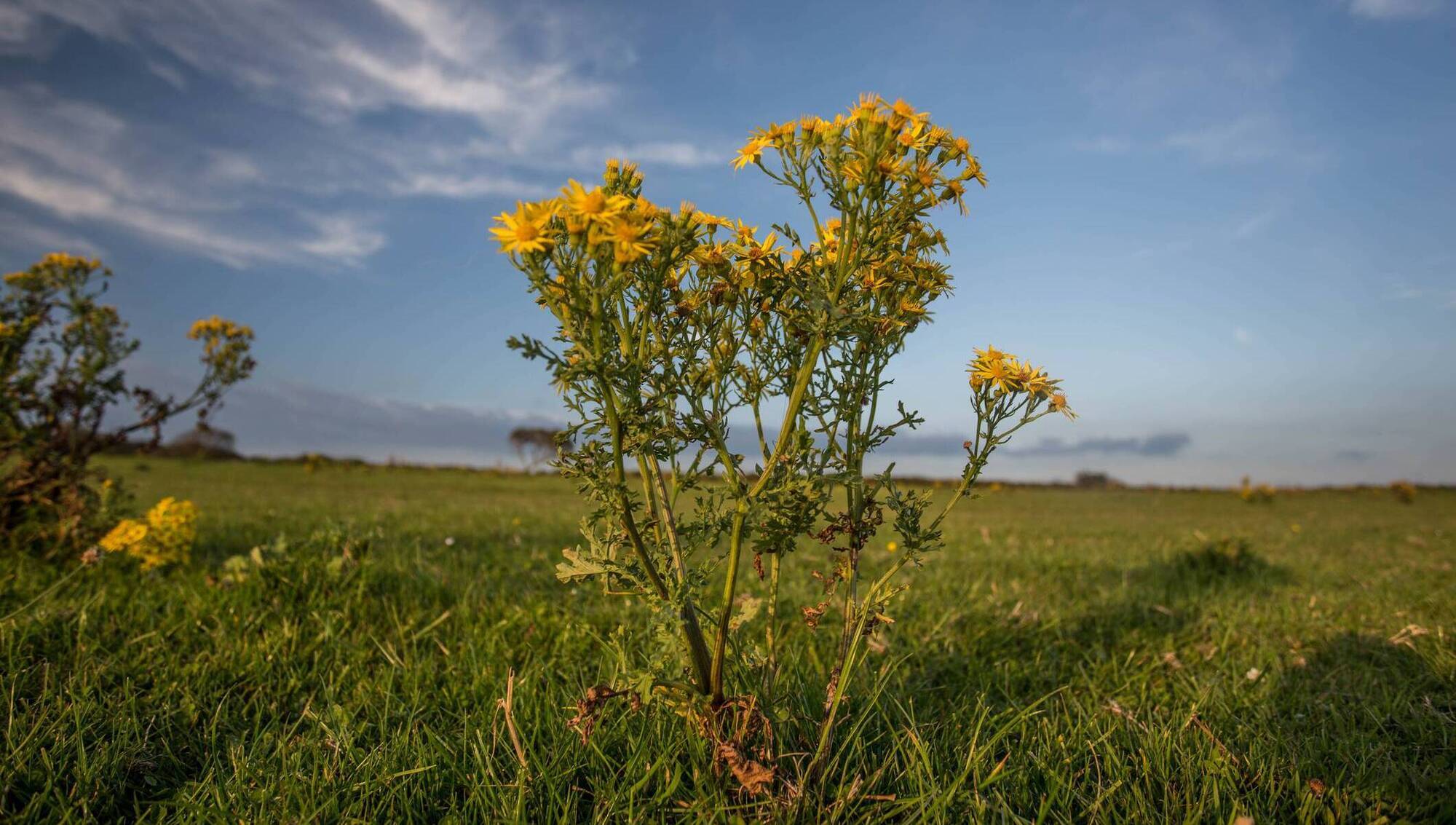
While it creates a colourful picture postcard image that is much admired by visitors to the country, Ragwort is a lethal plant for animals.
It is that time of the year again when passions rise across rural Ireland over the spread of ragwort, the noxious weed with a bright yellow flower and dark green leaves.
While it creates a colourful picture postcard image that is much admired by visitors to the country, it is a lethal plant for animals.
Ragwort, or buachalán buí, as it is traditionally known, contains alkaloid poisons which could cause liver damage in cattle and horses and can be fatal.
It spreads primarily through massive seed production. A single plant can release up to 150,000 seeds. Wind carries lighter seeds up to 50–100 meters, while heavy ones drop near the parent plant.
The noxious weed also spreads via root fragments left in soil, contaminated hay, and moving dirt. Controlling it and preventing it from spreading is a nightmare for farmers.
If it grows on roadside ditches, it can be easily spread by the wind on to adjacent farmland with potentially devastating results for cattle and horses.
Read More
Seeds also hitchhike in agricultural crops, farm machinery, and baled hay. Damaged roots or incomplete pulling let broken pieces regrow into brand-new plants.
Landowners and local authorities have a legal duty to prevent its growth. Failure to do so can result in a fine of up to €1,000 under the Noxious Weeds Act 1936.
Farmers also risk cuts or reductions to their area-based European Union scheme payments through conditionality and cross-compliance checks for failing to comply.
The Department of Agriculture can issue formal destruction notices to landowners. Direct court prosecutions are rare, however, with authorities mostly relying on compliance inspections, notices and penalties.
Ragwort is regarded by environmentalists as a native wildflower that provides significant benefits to biodiversity, supporting over 30 species of pollinators and more than 170 to 200 insect species.
However, Senator Paul Daly told the Upper House last year that ragwort and other invasive species are very destructive on agricultural land. The onus is on all landowners to remove these species, and that includes local authorities and roads authorities.
“However, on reading the small print, the farmer is obliged to look after it under the good agricultural and environmental condition, GAEC, 8.
“If farmers do not fulfil their duty under that condition, they will suffer deductions to their area-based payments,” he said, stressing that farmers are good custodians of the land and do not need that stick.
Senator Daly said the condition says that if noxious weeds are reported and found on non-agricultural land an assessment will be conducted by a Department of Agriculture officer and if there is no threat to agricultural land, then no enforcement or further action should be taken.
Senator Daly said:
He said local authorities should be treated the same way as farmers in relation to noxious weeds such as ragwort.
A department inspector going out and saying there is no threat to agricultural land from a noxious weed because it is on the side of a road is “pure and utter lunacy,” he said.
More recently, Senator Aubrey McCarthy told the Upper House it was hard to ignore the ragwort growing on the lawn coming into Leinster House.
“This is the house that makes the laws. There is an argument that ragwort should not be illegal and then that would be fine.
"However, we cannot ask farmers, councils and ordinary people to uphold the law if we do not do it ourselves. We are the ones who make the law. Either we change the law or we uphold it; we should not be seen to tolerate it,” he said.
Independent TD Danny Healy-Rae also sought answers in the Dáil on the action the Department of Agriculture is taking regarding the spread of ragwort, especially on Kerry roadsides.
Agriculture minister Martin Heydon said his department wrote to all local authorities last year reminding them of their obligations under the legislation and requesting their assistance in the eradication of noxious weeds from public lands.
Under this legislation, a person responsible for land may either be the owner, occupier, user or manager of the land.
A local authority continues to be deemed responsible for the maintenance and control of public roads and adjoining areas and, as such, has responsibility for the control of the noxious weeds on these roads and lands, he said.