Committed to fighting fire all year round
One of the earliest known references is in a manuscript relating to the monastic town of Clonmacnoise in the 10th century.
The early “fire engine” contraptions were, for the most part, clumsy carts pulled by slow horses, carrying limited amounts of water. And their appearance when needed was very much a matter of luck, and not something to be counted on.
By the 19th century, fire services had begun to develop, with fire brigades run by insurance services. The buildings that were protected had the insurance company’s name over their door, and a bonus would be paid for those who got there first.
Until 1940, the service still depended largely on the Towns Improvement Act of
1850. This enabled fire fighting and relevant equipment to be provided in towns of over 1,500, at the discretion of the local authority. Unfortunately, this power was only used in a limited number of cases.
It wasn’t until the Fire Brigades Act of 1940 that we had the beginning of the first countrywide service. The authorities — both rural and urban — were required to make provision for “the prompt and efficient extinguishing of fires and for the protection and efficient extinguishing of fires in their area and the rescue of persons and property”.
Modern legislation in the form of the Fire Services Act of 1981 finally established the fire authorities and made provision for the organisation of a fire service. Training of personnel, techniques, and fire safety all became an integral part of the service.
There can be little more frightening than for a family to wake in the night to discover that their house is on fire and there is little they can do except call the fire department. Or there has been a serious car accident, and the “jaws of life” are needed to cut you out.
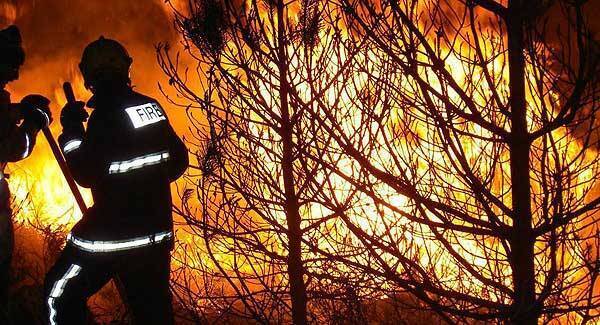
In the country, there is another fear around this time of the year. It is the indiscriminate burning of land — usually rough ground in inaccessible places. I remember once being woken in the night by an enormous gorse fire that had swept across the far side of the glen, burning everything in its path. If it had jumped the road, it would have reached my house. And my water supply had dried out several weeks earlier.
Luckily, the road did act as a barrier, and firemen from several areas gathered, to spend many hot, dangerous hours to ensure the fire was out. But this happens every year, and has, of course, happened for many thousands of years, probably since human kind became in any way domesticated.
However, when there are people living nearby and wildlife to consider, burning should be done at the allowed time only, and with the great-est of care. Gardaí should be informed, as should the fire service. And since there is rarely any access to water when fighting these mountain fires, the job for the fire-fighters is a tough one.
The fire service has developed over the years from its traditional role of putting out fires and rescuing persons and property. It now has a role in relation to fire safety standards in the design of new and improved buildings, and fire aspects in the day-today use of buildings.
The service is also a first responder to all sorts of other emergencies such as road traffic accidents, incidents involving dangerous chemicals, pollution, and flooding. There are 220 stations throughout the country with 3,330 serving fire personnel.
Shortly after the Easter weekend, I spoke to Ian Vickery, station manager at Bantry’s Fire Station. He and his crew hadn’t had much sleep. A fierce fire had burned for days.
>> Yes, and there have been several crews involved. We’re all on call 24/7, and we have to live within one mile of the station. If the crew want to leave the area, they have to get permission first, a day in advance. So it’s a big commitment. We’re on a retained service, and there’s no one full time. It’s the same for a lot of the smaller stations. In Dublin, there might be full-time staff, but not here.
>> I’ve been doing this for 14 years now, and I absolutely love the work. It was a lifestyle choice as much as anything. I’d always been interested in fire-fighting, and I really welcomed the chance of working with a crew for a change. Like all fire-fighters, I went into training and eventually I was promoted to station manager. Now I make sure that everything is running smoothly, equipment, hoses etc are all in perfect working order, and I oversee the crew’s operations. We have an amazing crew here in Bantry, and we all work very closely together.
>> We would always be keen to encourage farmers to burn safely, with the help of the proper authorities. These hill fires can be very dangerous. The wind can change very quickly. and it might take several days to control them. If the crews are up the mountain, what worries us is what’s going to happen if there’s a serious road accident or a house fire? We are often in a very rough location when we’re putting out these fires. We also ask people to take care with campfires and barbecues during the summer. Light them in a safe place and always make sure they are out.”
>> I think that whatever event we turn out to assist at, it’s probably the worst thing for the people who are involved. And of course, some of the things we see can be pretty difficult, especially if you attend a road traffic accident that involved someone you know. That can happen in rural areas. We make a point of setting out time for counsellors. That’s critical to us.